
Aseptic Filling Machines for Diverse Pharmaceutical Production Scales
Aseptic Filling Machines for Diverse Pharmaceutical Production Scales
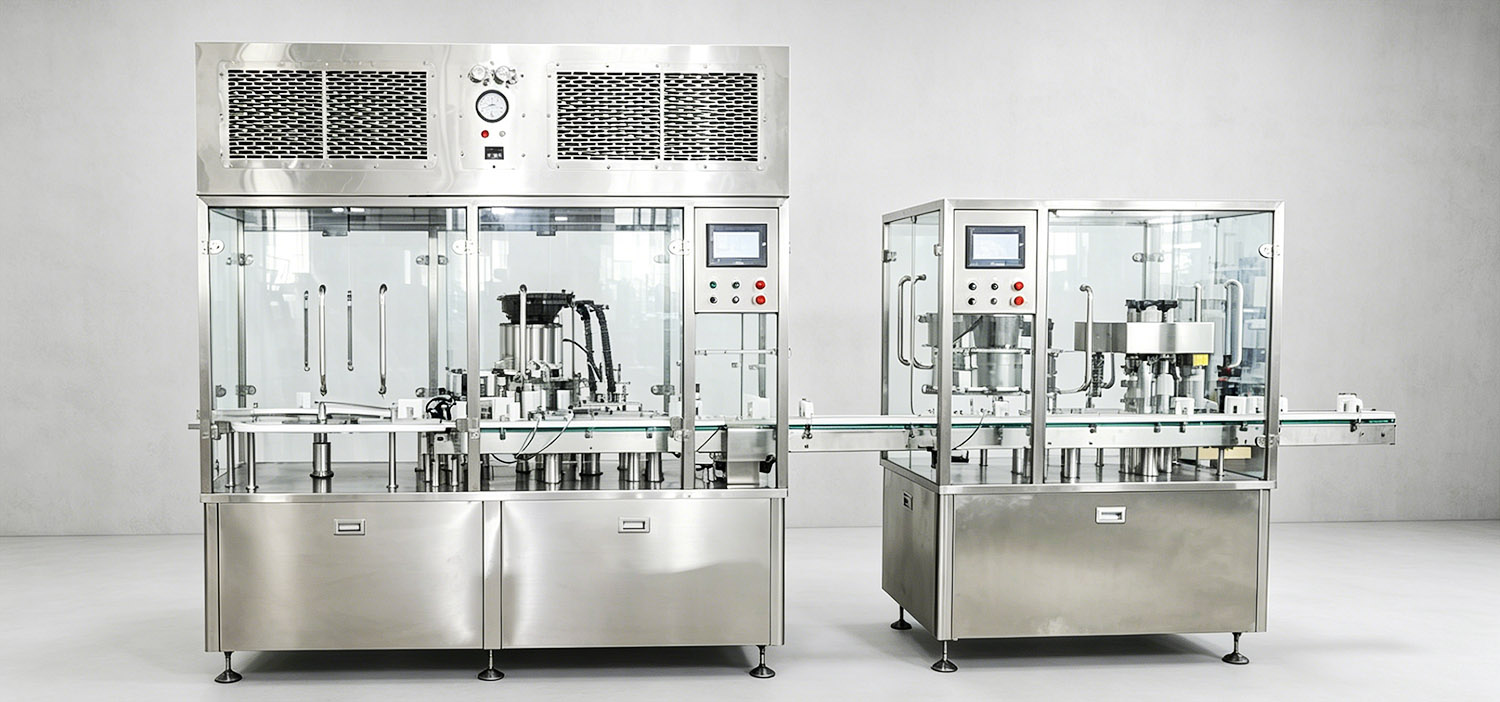
Have you ever wondered how life-saving vaccines, biologics and even common eye drops are filled into tiny glass vials without being contaminated by any germs throughout the whole process? The answer usually lies in one core piece of equipment: the aseptic filling machine. Pharmaceutical enterprises vary widely in scale, so a flexible startup developing breakthrough gene therapies has no need for the same large-scale production line adopted by major generic drug manufacturers churning out millions of doses every day. Modern aseptic filling machines therefore offer flexible adaptability to diverse production scales, and they can handle pilot batches of hundreds of bottles as well as non-stop industrial mass production scenarios. This article therefore explains the working principles of such equipment, the core sterility assurance logic and the key selection criteria in plain language.
What Is an Aseptic Filling Machine?
Let us start with the basic definition. An aseptic filling machine is specifically designed to fill sterile liquid pharmaceutical products such as injectables, biologics and ophthalmic solutions into pre-sterilized containers including vials, syringes and cartridges, and it maintains an absolutely sterile environment from start to finish. Unlike conventional filling processes where finished products are sterilized collectively after filling, such as pasteurization for milk, aseptic filling achieves microbial control through a comprehensive ultra-clean system that consists of purified air, sterile contact surfaces and sanitized components. Operators therefore normally work inside isolators or Restricted Access Barrier Systems, which are commonly referred to as RABS, and the core objective is to ensure that no viable microorganisms can be detected in the final sealed products.
Why must this strict standard be followed regardless of production scale? Whether you are filling fifty vials for clinical trials or fifty thousand units per hour for global supply, the fundamental sterility requirements remain unchanged, but the implementation methods do differ. Small-scale equipment is often equipped with glove isolators and manual feeding systems, while high-speed production lines integrate fully automatic depyrogenation tunnels, online particle counters and robotic stoppering devices. No matter the equipment size, all machines must comply with stringent regulatory requirements including FDA regulations and EU GMP Annex 1. The capability to fit diverse application scenarios therefore reflects the maturity of industry technology, and this enables customized solutions for every stage of a drug's lifecycle without compromising product safety and quality.
Main Types of Aseptic Filling Machines
Five mainstream machine types are available on the market for procurement and selection, and the decision is mainly determined by production capacity, container specifications and available workshop floor space:
1. Rotary (Carousel) Fillers
Containers rotate synchronously along a circular turret while filling nozzles move in tandem. These machines feature outstanding throughput and can fill more than four hundred vials per minute, so they are ideal for high-volume production lines. Continuous operation shortens station residence time, yet these machines come with higher procurement costs and they also incur expensive cleaning and changeover fees for small-batch manufacturing.
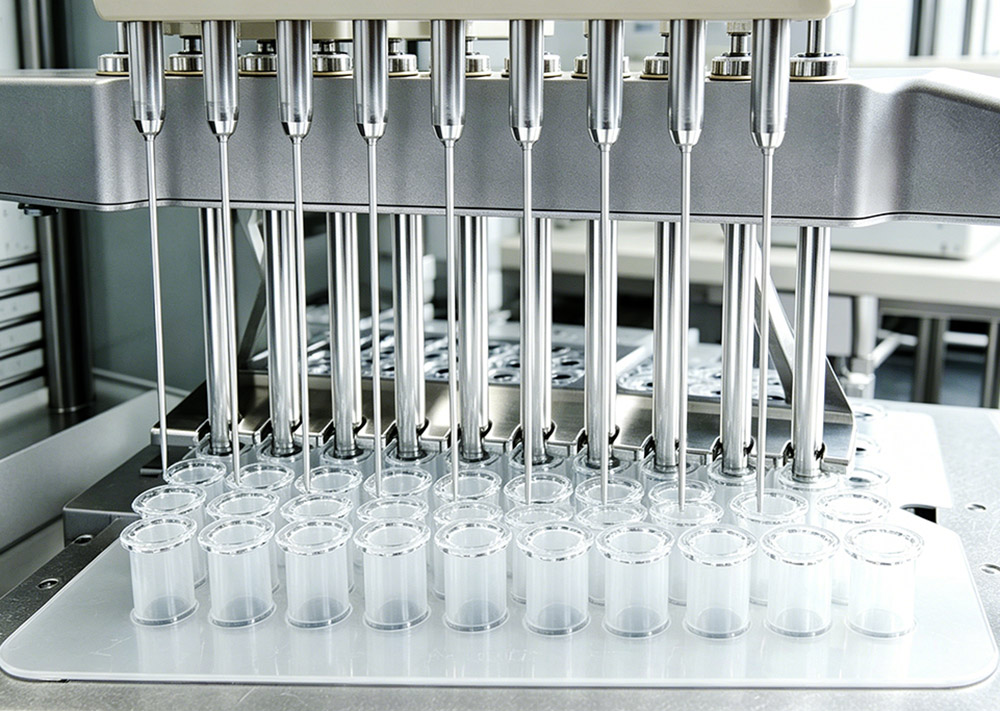 |
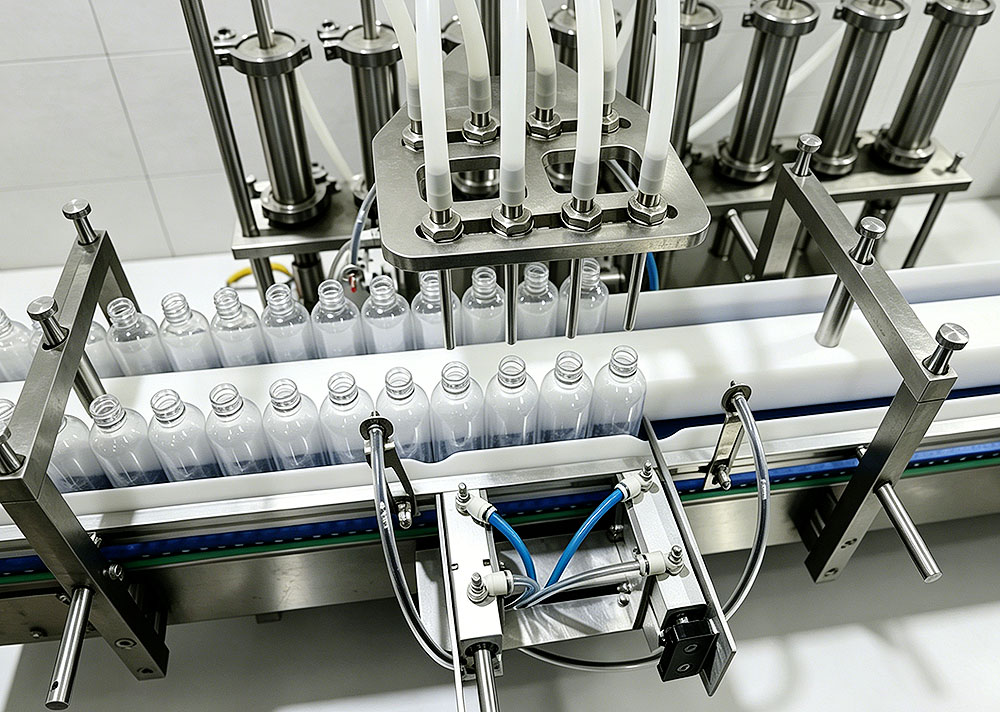
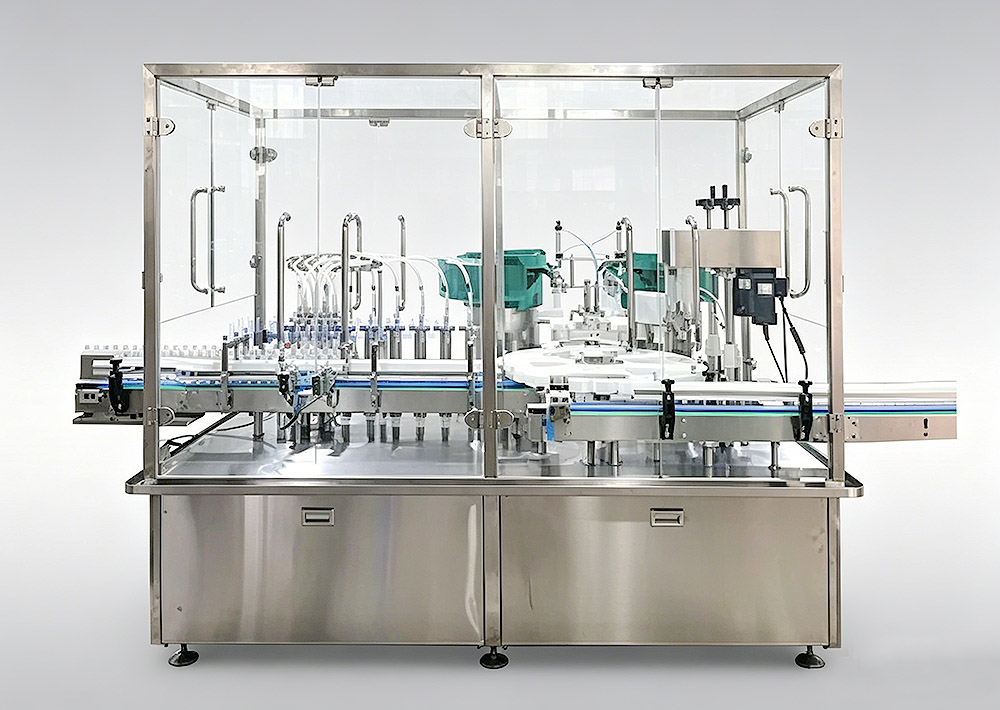
2. Inline (Linear) FillersContainers are conveyed linearly along a conveyor belt and filled at designated stations. These machines have a lower throughput ranging from fifty to two hundred vials per minute compared to rotary fillers, but they allow rapid conversion between different container sizes. They are therefore the preferred choice for contract manufacturing organizations that handle frequent product changeovers. 3. Piston Pump FillersThese machines use volumetric metering pumps that are commonly fitted with ceramic or metal pistons to deliver highly precise dosing. They are widely adopted across both small and large production lines, and they minimize liquid wastage, which makes them particularly suitable for high-value biological pharmaceuticals. |
4. Peristaltic Pump Fillers
Liquid is conveyed via rollers squeezing flexible tubing, and the drug only contacts the tubing instead of the pump body. This design works well for shear-sensitive and high-viscosity materials. Disposable tubing assemblies greatly simplify cleaning validation, so these fillers are optimal for multi-product co-production workshops.
5. Time-Pressure Fillers
Filling volume is controlled by regulating tank pressure and valve opening duration. These machines boast a simple structure and low procurement cost, so they suit low-speed production lines and low-viscosity liquids. They are slightly less accurate than piston pump models, but they remain reliable for manufacturing conventional mature pharmaceutical formulations.
Working Process of Aseptic Filling Machines
Contrary to the misconception that these devices merely inject liquid into bottles, the entire procedure actually constitutes a standardized, highly coordinated workflow of sterilization, filling and sealing within a laminar airflow cleanroom environment. The detailed steps are listed below:
1. Container Pre-Treatment
Empty vials and syringes are first sent into depyrogenation tunnels to eliminate endotoxins at temperatures above three hundred degrees Celsius. Pre-sterilized ready-to-use containers only require unpacking inside a sterile environment before production begins.
2. Clean Environment and Airflow Control
The filling zone is classified as Grade A, which corresponds to ISO 5, and it is supplied with unidirectional laminar airflow filtered by HEPA filters. Pressure differentials prevent the backflow of unfiltered ambient air from the workshop, and isolator or RABS chambers are kept under constant positive pressure.
3. Filling Procedure
Containers are accurately positioned beneath filling nozzles for precise dosing via pump or time-pressure systems. Nozzles retract slowly to avoid droplet splashing and particulate contamination, and inline vision systems monitor fill volume in real time.
4. Stoppering and Sealing
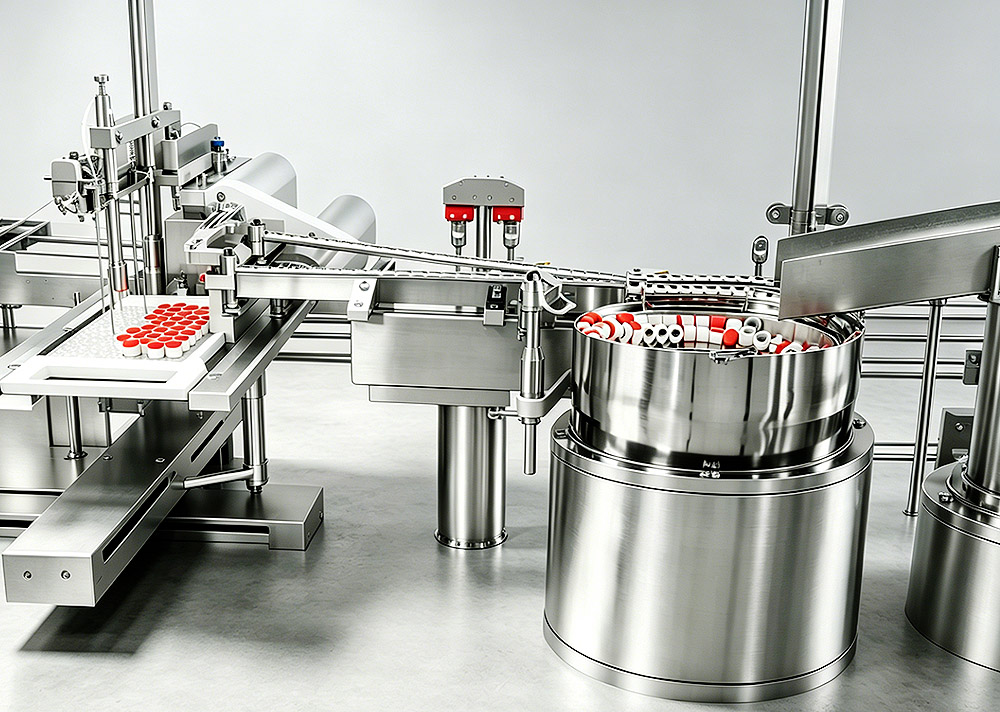
Pre-sterilized rubber stoppers are fed via vibratory bowls and pressed onto vial mouths after filling. Vials can be half-stoppered prior to lyophilization followed by full stoppering, while liquid products undergo full stoppering immediately before aluminum crimp sealing.
5. CIP/SIP and Product Changeover
After each batch is completed, the machine executes Clean-in-Place and Steam-in-Place cycles to eliminate biofilm on internal surfaces. All product-contact components are cleaned, rinsed and steam-sterilized, and a full cycle typically takes two to four hours. This duration directly determines the maximum number of batches the workshop can run daily.
Matching Equipment Specifications to Production Requirements
No universal one-size-fits-all aseptic filling machine exists, so deploying laboratory-scale equipment designed for ten-liter trials in five-thousand-liter commercial mass production would lead to severe inefficiency, whereas installing large-scale lines for small-batch trials would result in substantial waste. Equipment selection should therefore align with throughput, batch volume, container types and corporate development plans:
1. R&D / Clinical Trial Scale
These machines handle batch outputs ranging from ten to two hundred units, and they mostly adopt manual feeding and single-use fluid paths. Their priorities are operational flexibility and minimal material loss rather than high production speed.
2. Pilot / Small-Scale Commercial Production
Semi-automatic equipment with an hourly throughput of two hundred to two thousand units fits Phase III clinical trials and orphan drug manufacturing. These machines enable size changeovers within thirty minutes.
| 3. Medium-Volume Commercial Production Lines Fully automatic modular lines delivering two thousand to twelve thousand vials per hour are widely used for generic drugs and mature pharmaceutical products with stable market demand. 4. High-Speed Mass Production Lines for Blockbuster Drugs Multi-head rotary fillers achieving an hourly capacity of over twelve thousand to forty thousand vials are integrated with lyophilizer loading systems and robotic handling equipment. These lines require dedicated cleanrooms and high-capacity utility infrastructure. 5. Flexible Multi-Purpose Production Lines These lines are capable of switching between vial, syringe and cartridge production within a single shift, and they reach a maximum throughput of approximately eight thousand units per hour. They slightly sacrifice running speed for outstanding versatility, so they are highly favored by contract manufacturers. |
 |
Core Components Determining Equipment Performance
Stable and reliable aseptic filling machines rely on five key subsystems to guarantee dosing accuracy, sterility safety and operational uptime. Familiarity with these core components facilitates objective evaluation of supplier proposals:
1. Filling Pump / Dosing System
This is the core component governing volumetric precision. Ceramic piston pumps offer excellent wear resistance, peristaltic pumps eliminate cross-contamination risks, and time-pressure systems feature a simple structure yet require regular calibration.
2. Filling Nozzle Assembly
Most nozzles are designed with anti-drip and anti-foam structures, and some are equipped with back-flushing functions to prevent blockages. They are commonly manufactured from 316L stainless steel or coated materials, so nozzle selection must match the physicochemical properties of pharmaceutical liquids.
3. Container Handling System
This system comprises star wheels, indexing conveyors and grippers, and it ensures precise alignment for accurate nozzle insertion. Misalignment may cause bottle breakage and liquid leakage, which would result in costly raw material losses.
4. Laminar Airflow Unit
This unit is equipped with HEPA filters and air blowers to maintain ISO 5 cleanroom conditions, and it is fitted with air pressure monitoring and alarm sensors. The machine will shut down automatically once airflow velocity deviates from the standard to protect products from contamination.
5. Control and Monitoring System
This system features a PLC touchscreen HMI interface and SCADA compatibility for automatic batch record generation. Modern systems store all filling parameters and environmental data in real time, trigger automatic deviation alerts and fully satisfy audit traceability requirements.
Five Core Selection Criteria for Pharmaceutical Facilities
Selecting an aseptic filling machine differs vastly from purchasing household appliances and cannot rely merely on user reviews. Comprehensive assessment covering operational, financial and regulatory factors is therefore essential. Five critical questions must be clarified before placing a purchase order:
1. What is the target output per shift?
You should evaluate peak production demand objectively because over-specification leads to capital idleness while undercapacity creates production bottlenecks. It is recommended to calculate based on eighty percent equipment availability to reserve time for changeovers and routine maintenance.
2. What types and specifications of containers will be manufactured?
Vials, pre-filled syringes and cartridges require dedicated nests, positioning fixtures and filling nozzles, so you must ensure the selected machine is compatible with both current and future packaging portfolios.
| 3. How frequent are product changeovers? For weekly frequent product switching, you should prioritize tool-free quick-change machines with shortened CIP/SIP cycles. New-generation models reduce changeover duration from four hours to less than forty-five minutes. 4. Are the cleanroom classification and floor space compatible? Rotary fillers demand larger floor space and higher ceiling clearance, so you should verify in advance whether on-site utilities including compressed air, steam and power supply can meet equipment load requirements. 5. What is the annual budget for maintenance and consumables? Peristaltic tubing, seals and filters are recurring consumable items, so you should confirm the equipment's Mean Time Between Failures and local after-sales service capacity. Unplanned downtime often incurs far higher losses than equipment procurement costs. |
 |
Operational Best Practices for Stable Production
Even premium-grade equipment is prone to frequent breakdowns without proper operation and maintenance, so the following five standardized management practices ensure stable machine performance and continuous compliance with sterility test standards:
1. Daily Pre-Operation Inspection
Operators should verify filter integrity and laminar airflow velocity, and they should conduct water trial runs to identify faults before material feeding. All inspection data must be recorded for archiving to prevent batch scrapping of high-value pharmaceutical raw materials.
2. Strict Gowning and Personnel Management Protocols
All operators working inside barrier systems must follow rigorous gowning procedures because exposed skin causes particulate contamination. Continuous glove integrity monitoring is therefore mandatory.
3. Strict Implementation of Preventive Maintenance Schedules
You should avoid breakdown-driven maintenance and instead replace pump seals, lubricate bearings and calibrate sensors periodically in accordance with manufacturer manuals. Original spare parts kits should be kept on hand.
4. Periodic Validation of CIP/SIP Efficacy
Long-term production leads to residual drug deposits and biofilm formation, so you should conduct swab testing and rinse water sampling to verify cleaning performance. Sterilization cycles should be adjusted promptly if water quality fluctuates.
5. Trend Analysis of Environmental Monitoring Data
You should track variations in temperature, pressure differentials and particulate counts via online monitoring systems to predict parameter drift. Timely intervention before alarm thresholds are exceeded avoids regulatory non-compliance risks.
Emerging Industry Trends and Technological Innovations
Driven by personalized medicine, continuous manufacturing and Industry 4.0, aseptic filling technology is undergoing rapid iteration. New production lines are therefore advised to adopt cutting-edge technologies to avoid premature equipment obsolescence:
1. Single-Use Fluid Filling Paths
Disposable sterilized plastic tubing and bags replace traditional stainless steel pipelines, and this drastically shortens cleaning cycles while eliminating cross-contamination risks. This solution accelerates clinical drug launch timelines for small-batch cell therapy products.
2. AI-Powered Process Control
Machine learning algorithms analyze fill weight and visual inspection data to predict nozzle abrasion and pump metering drift, and they dynamically adjust process parameters automatically to prevent batch quality deviations.
 |
3. Closed Vial Filling Systems Filling is completed via needle penetration through intact rubber stoppers followed by automatic sealing, and this enables aseptic production independent of laminar airflow environments while significantly cutting workshop energy consumption. 4. Modular Skid-Mounted Integrated Design Equipment is pre-assembled and fully tested at the factory before delivery, and it requires only utility connection for on-site commissioning. Installation cycles are shortened from months to weeks, which perfectly suits fast-track new drug registration projects. 5. Robotic Automation for Small-Batch Production Collaborative robots perform container loading and unloading to minimize human intervention, and they enable twenty-four-hour non-stop operation for small-scale lines. This delivers economic viability to low-volume aseptic filling projects. |
An aseptic filling machine is not a single-function device but rather a flexible production platform that supports capacity expansion, modular configuration and continuous upgrades throughout the entire pharmaceutical lifecycle from clinical R&D to commercial mass production. Whether it is a bench-top isolator system for laboratory trials or a round-the-clock high-speed rotary production line, the core requirement remains consistent: reliable sterility assurance. Enterprises should therefore select customized solutions based on practical conditions including production capacity, container types, changeover frequency and long-term development strategies, and they should avoid blindly pursuing over-specified configurations. In-depth research and rigorous evaluation will reduce operational burdens for frontline staff, streamline quality compliance management and support stable, efficient pharmaceutical filling manufacturing.
FAQ
1. What is the difference between aseptic filling and terminal sterilization?
Aseptic filling means that drugs and containers are sterilized separately before being filled and sealed in a clean environment, and this is mainly applied to heat-sensitive pharmaceuticals. Terminal sterilization means that sealed finished products are sterilized via high temperature or irradiation after filling, and despite simple processing, this method is incompatible with biologics and vaccines.
2. Can one aseptic filling machine handle both vials and syringes?
Yes, but dedicated nests, positioning fixtures and filling nozzles are required for conversion. Multi-purpose machines support rapid changeovers but sacrifice partial throughput compared to single-product dedicated lines, so you should always confirm compatibility with equipment suppliers before purchase.
3. How long does a complete CIP/SIP cycle take?
A standard cycle lasts two to six hours depending on equipment complexity and the total area of product-contact components. New parallel-process models can shorten the cycle to less than ninety minutes.
4. What is the minimum batch size for commercial aseptic filling machines?
Large high-speed lines usually require minimum batches of several thousand units due to setup and sterilization costs. Modern equipment fitted with single-use fluid assemblies can efficiently process trial batches of one hundred to two hundred units, so you should consult manufacturers for customized small-batch solutions.
5. How frequently should aseptic filling equipment be revalidated?
In compliance with EU GMP Annex 1 and other regulatory rules, annual revalidation is mandatory. Re-qualification is also required after major equipment overhaul, product switching or environmental monitoring deviations. Most facilities conduct Performance Qualification every six months to mitigate regulatory risks in advance.