
Capsule filling machine of 18000 tablets per hour optimizes pharmaceutical production lines
Capsule filling machine of 18000 tablets per hour optimizes pharmaceutical production lines
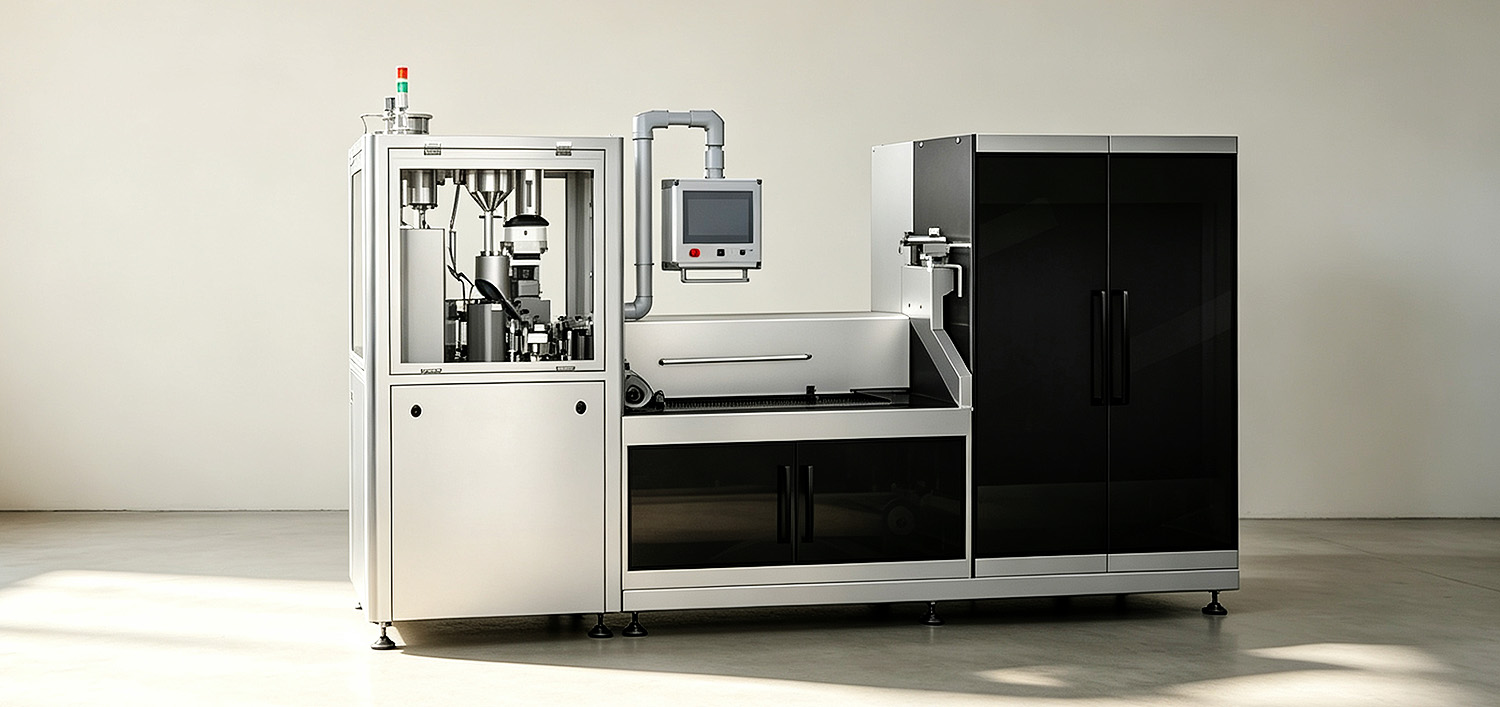
Pharmaceutical and nutraceutical manufacturers are always searching for automated equipment that balances stable output, precise dosing, and leak-proof sealing for liquid hard capsule products. Many mid-sized factories still rely on outdated filling lines that waste raw materials, cause capsule leakage, and limit daily throughput. Our 18,000 capsules/hour integrated liquid filling and sealing unit directly tackles these core problems. This article explains its main strengths, technical specs, application scenarios, and purchasing advice, so you can decide if this high-efficiency capsule filling machine fits your production upgrade plans.
Common Bottlenecks of Traditional Liquid Capsule Production Lines
Most older filling equipment cannot support large-scale liquid capsule manufacturing, and it drags down overall workshop efficiency in three clear ways.
1. Low and unstable hourly output. Conventional semi-automatic machines only produce 6,000–10,000 capsules per hour, so they cannot keep up with growing bulk orders from global buyers. Operators have to add extra shifts to meet delivery deadlines, and this greatly pushes up labor expenses.
2. Poor filling accuracy without real-time error detection. Cheap dosing pumps create larger volume deviations, and this leads to unqualified batches that get discarded. Fiber inspection modules are missing, so split or misaligned capsules still enter the filling stations and cause liquid spillage.
3. Separated filling and sealing stations create extra handling steps. Capsules are moved manually between two machines, and this raises oxidation and leakage risks for oil, suspension, and microemulsion formulations. As a result, finished product shelf life becomes much shorter.
Core Advantages of Our 18,000 Capsules/Hour Integrated Filling Line
This all-in-one liquid hard capsule processing unit combines capsule sorting, filling, servo band sealing, and finished product ejection into one continuous workflow, and it completely removes the need for manual transfer between stations. It delivers stable and efficient production for medium and large-scale pharmaceutical and health product factories.
The machine achieves a steady 18,000 capsules per hour under standard working conditions, and its maximum capacity can be expanded to 30,000 pieces for peak production seasons. The built-in human-machine touchscreen sends instant alarms when capsules or raw liquid materials run low, and this cuts downtime caused by unexpected empty runs. The vacuum capsule separation mechanism attains a capsule opening success rate of over 99%, and the high-precision fiber optic sensors automatically reject abnormal unsplit capsules before liquid injection. This avoids raw material waste and prevents equipment blockages.
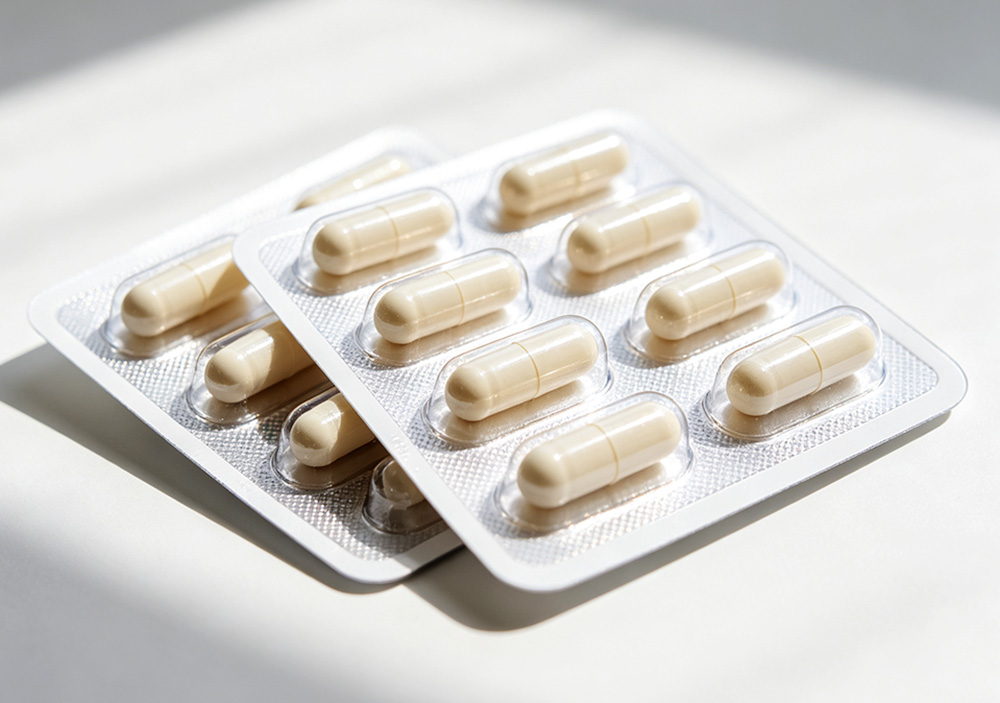
High-Precision Dosing & Hermetic Sealing Core Configurations
Every key functional module is designed to guarantee consistent product quality for liquid capsule formulas, and this makes the capsule filling machine stand out from ordinary industrial filling equipment.
1. Ceramic pump servo dosing system: It controls filling volume deviation within a very small error range, and it supports fill volumes from 0.1ml to 1.2ml for solutions, suspensions, and microemulsions. Calibration data can be saved as fixed recipes on the touch HMI, so batch switching is fast and accurate.
2. Temperature-controlled sealed glue tank: The sealing liquid storage tank has full insulation and adjustable heating, and this stabilizes glue viscosity to prevent premature solidification or excessive evaporation during long production shifts.
3. Dual rubber wheel secondary gluing setup: It uses a servo-driven lifting sealing tray that supports jog fine-tuning, and this forms uniform, airtight bands on capsule joints. The bands eliminate liquid leakage during packaging, transit, and storage.
4. Hanging rotary curing molds: After sealing, capsules rest on freely rotating hanging molds that keep them face-up during air-drying. The molds disassemble quickly for full sanitization when you swap capsule sizes.
5. 12-position limit ejection bin with air blow pipes: Finished capsules rotate 360° for smooth unloading, and six independent blowing tubes clear leftover capsules from mold holes to prevent batch mixing.
Complete Technical Specifications for Reference
All parameters are tested under standard GMP cleanroom conditions for transparent factory validation, and this ensures stable and compliant production for all liquid capsule products.
1. Nominal production speed: 18,000 capsules per hour with 6 mold holes as the standard layout, and this meets mainstream medium-scale production needs.
2. Compatible capsule sizes: 00# to 4# for both gelatin and plant-based vegetarian hard capsules, so you can switch formulas and produce diverse products flexibly.
3. Power and air requirements: 380V/220V 50Hz with total power of 9kW, and compressed air pressure must stay within the standard range for stable pneumatic operation.
4. Auxiliary dust collector: It has standard pressure and air volume configuration, and it maintains a dust-free, clean pharmaceutical production space at all times.
5. Machine footprint and noise: The overall size is moderate and suitable for standard workshops, and running noise is below industrial standards to create a comfortable working environment.
6. Net equipment weight: 2300kg, and all liquid contact surfaces are built with 316L stainless steel for full GMP compliance and easy cleaning.
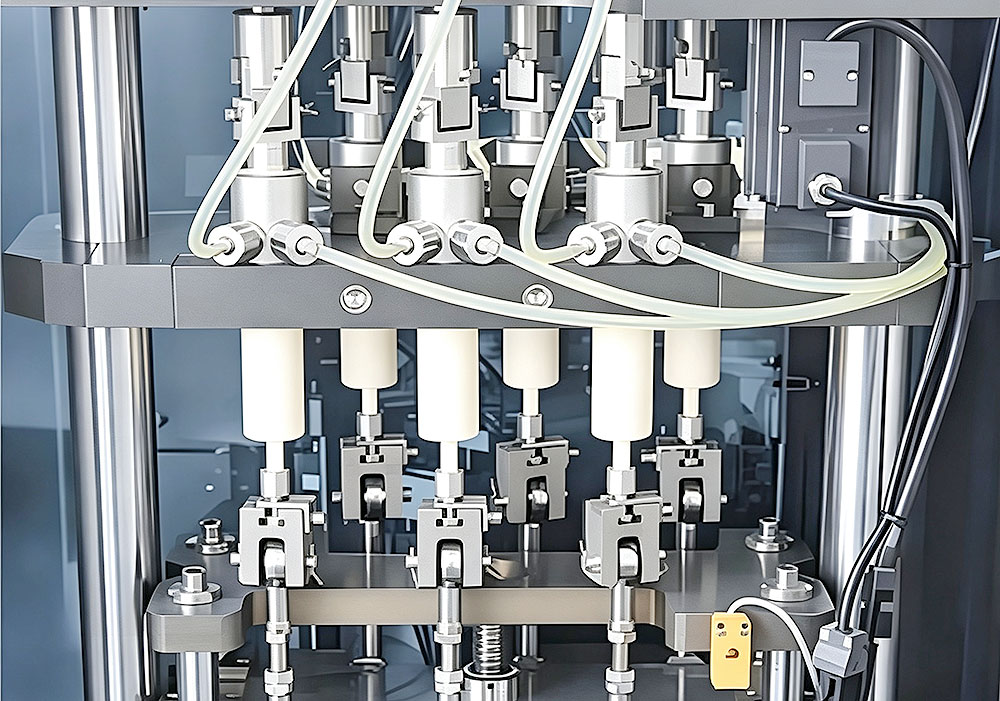
Wide Application Scenarios Across Multiple Industries
The integrated filling line is suitable for all sectors that produce liquid-filled hard capsules with strict quality control requirements, and it offers strong versatility for various liquid formula products.
1. Pharmaceutical manufacturing: It handles prescription liquid oral solutions, pediatric low-dose formulations, and poorly soluble high-activity drug capsules that demand ultra-precise dosing.
2. Nutraceutical factories: It works with fish oil, vitamin E, CoQ10, and herbal liquid extract capsules that need strict shelf stability and reliable sealing.
3. CBD and botanical extract producers: It processes oil tinctures and concentrated plant extracts that require complete hermetic sealing to avoid oxidation and loss of active ingredients.
4. Cosmetic oral supplements: It fills essential oil beauty capsules that are sensitive to air and moisture exposure during production and storage.
5. Contract manufacturing organizations: It supports flexible batch switching for small trial runs and large bulk orders at the same time, meeting diverse client needs.
How This Line Cuts Long-Term Production Operating Costs
Investing in this automated capsule processing unit creates measurable cost savings within half a year to one year of stable operation, and this brings a high return on investment for manufacturers.
1. Labor cost reduction: One single operator can manage the whole linkage line, and this replaces the multiple staff members needed for separate filling and sealing equipment.
2. Raw material waste control: The precise filling accuracy and automatic defective capsule rejection greatly reduce the formula liquid scrap rate compared to outdated machines.
3. Maintenance downtime minimization: The high-quality servo motors and ceramic pumps have long service cycles, and the quick-release parts cut cleaning and size-change downtime significantly.
4. Quality inspection labor cut: The built-in fiber optic quality detection reduces manual sampling inspection frequency, and this lowers the pressure on the QA team.
5. Warehouse loss reduction: The hermetic band sealing eliminates leakage-related finished product damage during logistics and long-term storage.
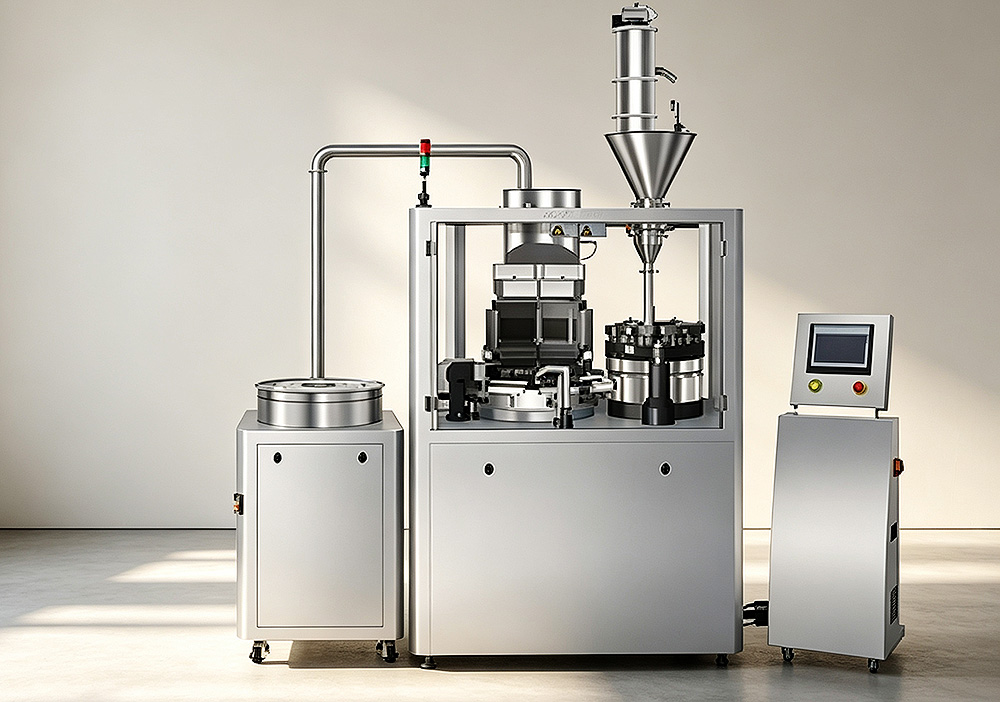
Tips to Pick a Reliable Capsule Filling Machine Manufacturer
Choosing the right equipment supplier directly affects the machine lifespan, after-sales service, and long-term production stability, so manufacturers need to focus on core qualifications and service factors when selecting partners.
1. Prioritize manufacturers that have independent liquid capsule filling intellectual property and invention patents, and avoid generic copied machines with unstable sealing performance.
2. Confirm that the supplier provides complete GMP validation documents, factory acceptance testing support, and on-site installation training for your operation team.
3. Check global customer case records covering pharma, nutraceutical, and CBD sectors to verify real-world long-run machine performance data.
4. Ask about spare parts stock and overseas after-sales support channels, so you can avoid prolonged production halts when core components need replacement.
5. Request free machine operation video demos or factory inspection arrangements to test the stable output and sealing effect in person before you place orders.
For mid and large-scale manufacturers aiming to upgrade liquid capsule production workflows, the 18,000 capsules/hour integrated filling and sealing line delivers balanced high throughput, dosing precision, and leak-proof packaging. This capsule filling machine eliminates the efficiency and quality flaws of separated traditional equipment, fits diverse liquid formulations and multiple capsule sizes, and complies fully with international pharmaceutical production standards. It is an ideal upgrade choice for enterprises expanding liquid capsule production capacity and optimizing production processes.
FAQ
1. Can this machine handle both gelatin capsules and plant-based vegetarian hard capsules?
Yes, the mold set supports 00# to 4# gelatin and HPMC vegetable capsules, and we offer interchangeable molds for quick size conversion without extra tooling modification.
2. What liquid formulations work with the ceramic pump dosing system?
It suits solutions, suspensions, microemulsions, and low-temperature hot melt liquids, and we adjust the heating tank temperature based on your material viscosity requirements.
3. Does the 18,000 capsules/hour speed remain consistent for full working shifts?
The nominal 18,000 output is stable for 8 to 12 hours of continuous operation, and the maximum theoretical capacity can reach 30,000 capsules per hour for short-term peak production.
4. Is the machine design fully compliant with global GMP manufacturing standards?
All surfaces that touch liquid materials and capsules use 316L stainless steel with a smooth polished finish and no dead corners for residue buildup, and this matches FDA and EU GMP sanitation rules.
5. What after-sales support does your team provide after machine delivery?
We offer overseas engineer on-site installation, operator training, a 12-month core component warranty, and lifetime remote technical troubleshooting for all purchased units.