
Common Ampoule Filling Sealing Issues And Practical Solutions
Common Ampoule Filling Sealing Issues And Practical Solutions
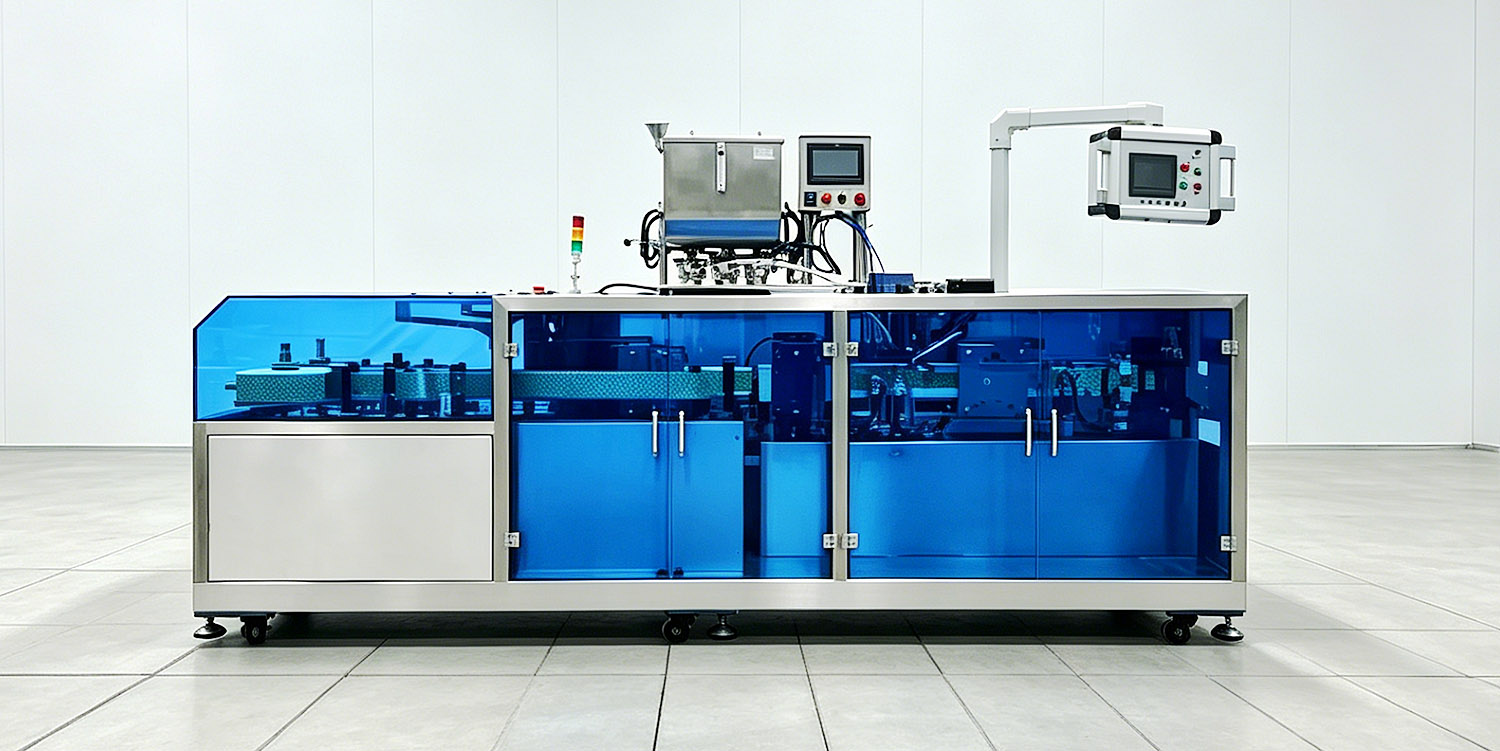
Ampoule filling and sealing is a core step in pharmaceutical and cosmetic liquid production, and this step directly determines product safety, shelf life, and the final qualification rate. Even if you operate a high-precision ampoule filling machine, you may still encounter various sealing and filling faults. These faults often start with minor operational errors, equipment aging, or environmental changes. If these small issues are not fixed in time, they will often lead to mass product defects, production downtime, and economic losses. This blog aims to sort out the eight most common on-site faults, analyze their root causes, and share practical solutions that are easy to operate for daily production maintenance.
Hidden Dangers of Ampoule Filling and Sealing Faults
If filling and sealing problems are not resolved, they will bring far more troubles than just unqualified products. For example, poor sealing tightness can allow air, moisture, or bacteria to penetrate the ampoule. This intrusion leads to liquid deterioration, precipitation, and invalidation, which makes the products fail to meet pharmaceutical and cosmetic safety standards. In addition, if the filling volume is not standard, the product net content will be inconsistent. This inconsistency can trigger customer complaints and damage the brand's reputation. Beyond product quality, long-term unresolved equipment faults will accelerate the wear of core parts of the ampoule filling machine. This acceleration increases maintenance costs and frequently interrupts continuous production. For standardized production workshops, these hidden dangers will also cause them to fail factory inspections, which seriously affects the normal production and operation schedule.
Incomplete Ampoule Sealing with Tiny Cracks
Fault Description: Finished ampoules show invisible tiny cracks or incomplete sealing edges after hot sealing. Most of these cracks are hard to find with the naked eye. The problem is that they will cause liquid leakage and air leakage during subsequent storage and transportation. This leads to a high defective rate in batch testing.
|
|
Causes: Solutions: |
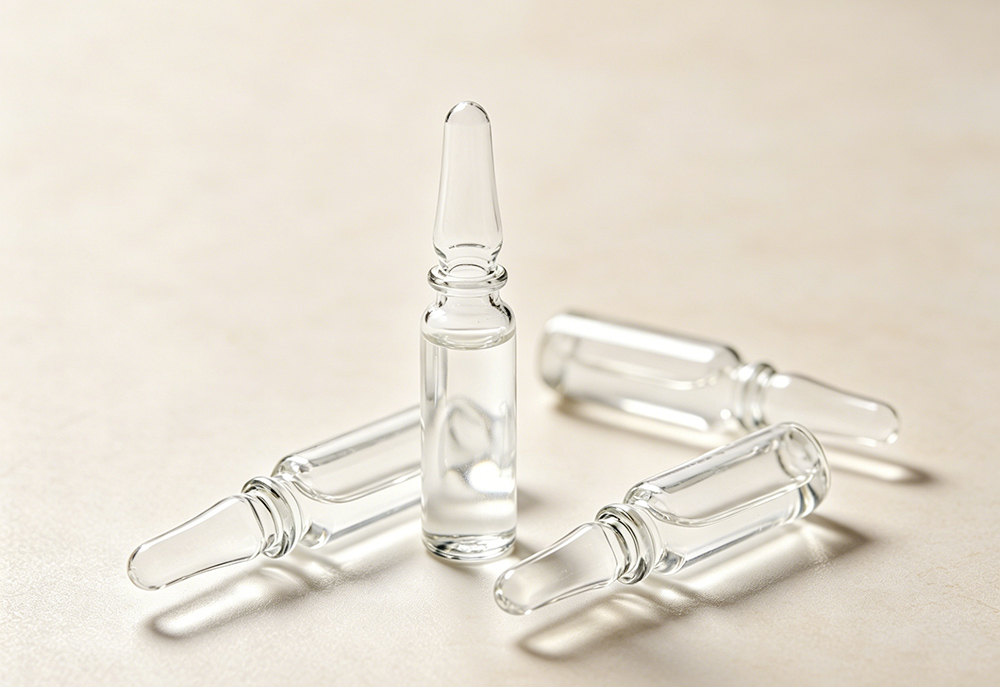
This fault is one of the most frequent problems in daily operation. Regular equipment calibration and raw material inspection can effectively reduce crack defects. This will stabilize the sealing quality of the ampoule filling machine and lower the batch scrap rate.
Inaccurate Filling Volume Deviation
Fault Description: The liquid volume of finished ampoules is inconsistent, with obvious deviation from the standard filling amount. Some ampoules are overfilled while others are underfilled. This means they fail to meet production batch uniformity standards and this affects product consistency.
Causes:
1. The metering pump of the ampoule filling machine has slight wear, which leads to inaccurate liquid metering.
2. Liquid viscosity changes with temperature, which affects the flow rate and the accuracy of the filling volume.
3. The filling nozzle is blocked by tiny impurities, resulting in unstable liquid outflow.
Solutions:
1. Disassemble and clean the metering pump regularly. Replace worn parts in time to ensure precise metering.
2. Control the workshop temperature and liquid storage temperature to keep the liquid viscosity stable.
3. Clean the filling nozzles before each production shift to remove residual impurities and blockages.
Volume deviation is a problem that is easy to be ignored in low-yield production. Timely maintenance of metering components and standardized pre-production cleaning can effectively ensure the filling accuracy of the ampoule filling machine. This will guarantee batch product uniformity.
Sealing Head Blackening and Carbon Deposition
Fault Description: The top of sealed ampoules appears black and has obvious carbon deposition. These stained ampoules cannot be sold as qualified products. This directly increases the product scrap volume and affects production efficiency.
| Causes: 1. The flame gas ratio of the ampoule filling machine is unbalanced. This causes insufficient combustion and leads to carbon precipitation. 2. Residual liquid on the ampoule mouth volatilizes and carbonizes under the high temperature during sealing. 3. The flame heating time is excessive, which leads to over-burning of the glass tube top. Solutions: 1. Adjust the gas supply ratio to ensure full flame combustion and avoid carbon generation. 2. Set up a pre-sealing blowing process to clean residual liquid on ampoule mouths. 3. Optimize the equipment operation parameters to shorten redundant high-temperature heating time. |
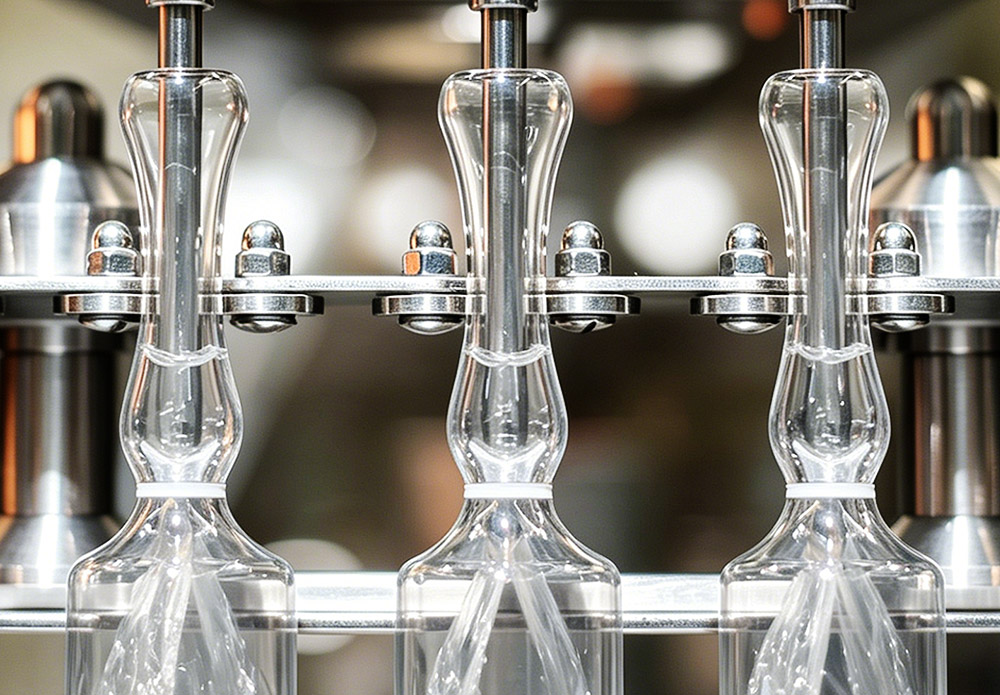 |
Carbon deposition on sealing heads is mostly caused by improper parameter setting. Fine-tuning the flame system and adding pre-cleaning steps can completely solve this problem. This will make the sealing surface smooth and clean while keeping the ampoule filling machine running stably.
Ampoule Bottle Breakage During Filling and Sealing
Fault Description: Ampoule glass bottles break frequently during the automatic filling or hot sealing process. Broken glass residues mix in the equipment, which forces production to stop. This also causes secondary contamination risks to both the equipment and the materials.
Causes:
1. The conveying track of the ampoule filling machine is not smooth. This causes extrusion and collision of ampoules during transmission.
2. The clamping force of the fixing fixture is too large. This squeezes the glass bottle and causes it to rupture.
3. The glass bottle itself may have hidden cracks and poor pressure resistance.
Solutions:
1. Polish and maintain the conveying track regularly to ensure smooth ampoule transmission.
2. Adjust the fixture clamping force to fit the glass bottle tolerance and avoid excessive extrusion.
3. Conduct batch sampling inspection of raw material ampoules to eliminate defective products.
Frequent bottle breakage seriously hinders production progress. Daily track maintenance and parameter adjustment can reduce the breakage rate. This will keep the ampoule filling machine operating continuously and avoid unnecessary production shutdown losses.
Liquid Foam Overflow During Filling
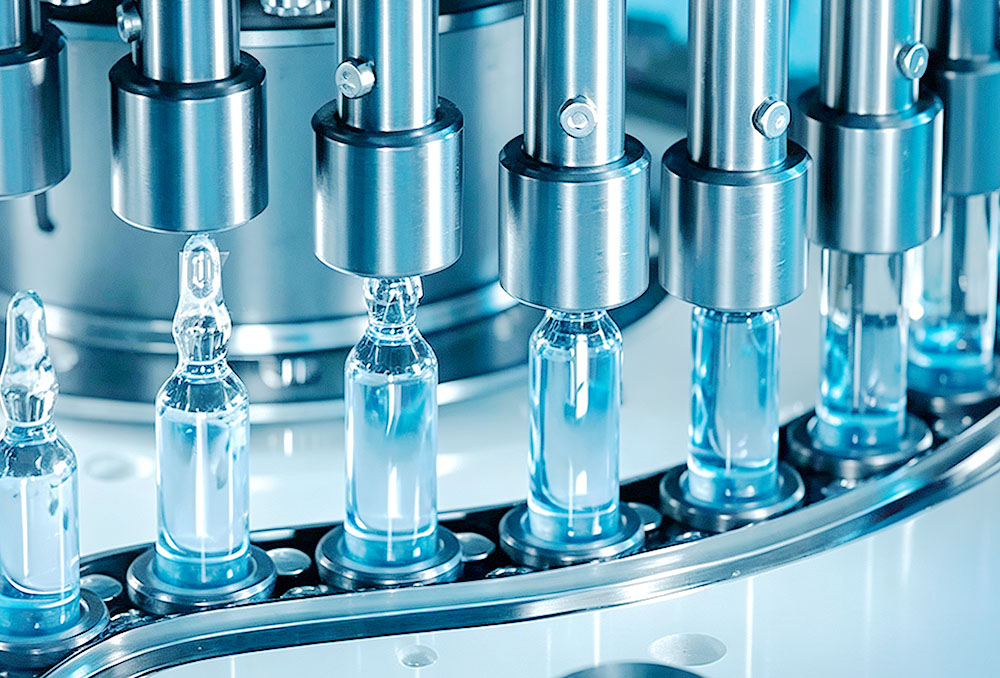
Fault Description: A lot of foams are generated during liquid filling. This causes liquid overflow from the ampoule mouth. The overflowed liquid then adheres to the bottle body and the sealing position. This results in poor sealing and unqualified appearance of the finished products.
 |
Causes: 1. The filling speed of the ampoule filling machine is too fast. This leads to violent liquid impact and foaming. 2. The liquid contains active ingredients that are prone to foaming when they are impacted. 3. The filling nozzle is too high from the liquid level. This increases the liquid drop impact force. Solutions: 1. Properly reduce the filling speed according to liquid characteristics to ease the liquid impact. 2. Let the liquid stand before filling to eliminate pre-generated bubbles. 3. Lower the filling nozzle to make it close to the liquid level for slow filling. |
Foam overflow is a common problem for active liquid materials. Adjusting the filling speed and the nozzle position can effectively suppress foaming. This will ensure clean ampoule mouths and lay a good foundation for subsequent high-quality sealing by the ampoule filling machine.
Unsmooth Ampoule Discharging
Fault Description: After filling and sealing, finished ampoules cannot be discharged normally. This results in bottle accumulation at the discharge port. It causes equipment jamming, affects continuous production, and can even squeeze and damage finished products.
Causes:
1. The discharge chute of the ampoule filling machine has residual dirt. This increases friction and blocks the sliding process.
2. The discharge mechanism runs at an unstable speed, which causes an inconsistent discharging rhythm.
3. The installed ampoule model does not match the discharge track size.
Solutions:
1. Clean the discharge chute daily to remove residual liquid and glass debris.
2. Debug the discharge motor parameters to stabilize the operating rhythm.
3. Replace the matching track accessories according to the actual ampoule specification.
Discharging jamming is a typical mechanical operation fault. Daily cleaning and parameter debugging can keep the discharge system unobstructed. This will ensure the ampoule filling machine runs continuously and efficiently, and it will improve the overall production capacity.
Sealing Deformation and Irregular Shape
Fault Description: The sealed top of ampoules is irregular in shape. The problems include skew, flat collapse, or bulging deformation. This unstandardized sealing shape affects product appearance and may also cause hidden leakage risks.
| Causes: 1. The sealing arm of the ampoule filling machine has a position deviation and is operating in an unstable manner. 2. The heating flame is inclined, which leads to asymmetric heating on the ampoule top. 3. The rotating speed of the ampoule fixture is unstable during the sealing process. Solutions: 1. Calibrate the sealing arm position to ensure it operates accurately and stably. 2. Adjust the flame angle to realize uniform and vertical heating of the bottle top. 3. Stabilize the fixture rotating speed to ensure consistent hot melting and forming. |
 |
Irregular sealing deformation is mainly caused by mechanical position deviation. Regular calibration of sealing components can standardize the sealing forming process. This will improve the product appearance qualification rate and maintain the stable working state of the ampoule filling machine.
Maintain Long-Term After-Sales Connection with Suppliers
Daily maintenance and simple fault solving can help you cope with most small problems of the equipment. However, when you encounter complex mechanical failures, core component aging, or system parameter abnormalities, professional technical support becomes indispensable. This is why choosing a reliable ampoule filling machine supplier and maintaining long-term after-sales cooperation is the key to long-term stable equipment operation.
A formal ampoule filling machine supplier can provide regular door-to-door inspection, equipment maintenance, part replacement, and technical training services. They can quickly locate difficult faults that cannot be solved by daily operation and provide targeted repair and optimization schemes. This can avoid long-term shutdowns caused by delayed fault handling.
Furthermore, long-term cooperative suppliers can also provide personalized parameter debugging and equipment transformation services according to production material changes and product specification upgrades. This makes the ampoule filling machine always adapt to updated production needs, and it maximizes equipment service life and production efficiency.
Most ampoule filling and sealing faults are caused by unstable equipment parameters, improper daily operation, incomplete maintenance, and unqualified raw materials. Through standardized pre-production debugging, daily cleaning, and regular equipment calibration, you can effectively avoid most common faults. Timely troubleshooting and applying targeted solutions can greatly reduce the product defective rate and production loss. At the same time, daily equipment maintenance and long-term cooperation with professional ampoule filling machine suppliers are important guarantees for stable production. Mastering these practical fault solutions can help production workshops improve operational efficiency, ensure product quality, and realize stable and continuous batch production.
FAQ
1. How often should I calibrate the ampoule filling machine?
It is recommended that you conduct a basic parameter calibration before each production shift and a comprehensive professional calibration every month. For high-frequency batch production, weekly in-depth debugging is better to ensure filling and sealing accuracy.
2. What is the main reason for recurring ampoule sealing cracks?
Recurring cracks are mostly due to unstable flame temperature or loose fixture positioning. Additionally, long-term unchecked equipment wear and unqualified glass raw materials are also key reasons for repeated faults.
3. How to effectively reduce ampoule breakage rate in production?
You can smooth the conveying track, adjust a reasonable fixture clamping force, screen qualified raw materials, and regularly maintain the operating system of the ampoule filling machine. These steps will greatly reduce the breakage rate.
4. Why does liquid foaming often happen during ampoule filling?
Excessively fast filling speed, a nozzle position that is too high, and the foaming-prone properties of the liquid are the main causes. Adjusting operation parameters and pre-treating the liquid can solve this problem effectively.
5. What after-sales services should a qualified ampoule filling machine supplier provide?
Reliable suppliers should provide regular equipment inspection, fault maintenance, spare parts replacement, technical training, and personalized equipment optimization services. These are necessary to support the long-term stable operation of the equipment.