
Follow Capsule Production from Filling to Commercial Product Sales | MIC
Follow Capsule Production from Filling to Commercial Product Sales
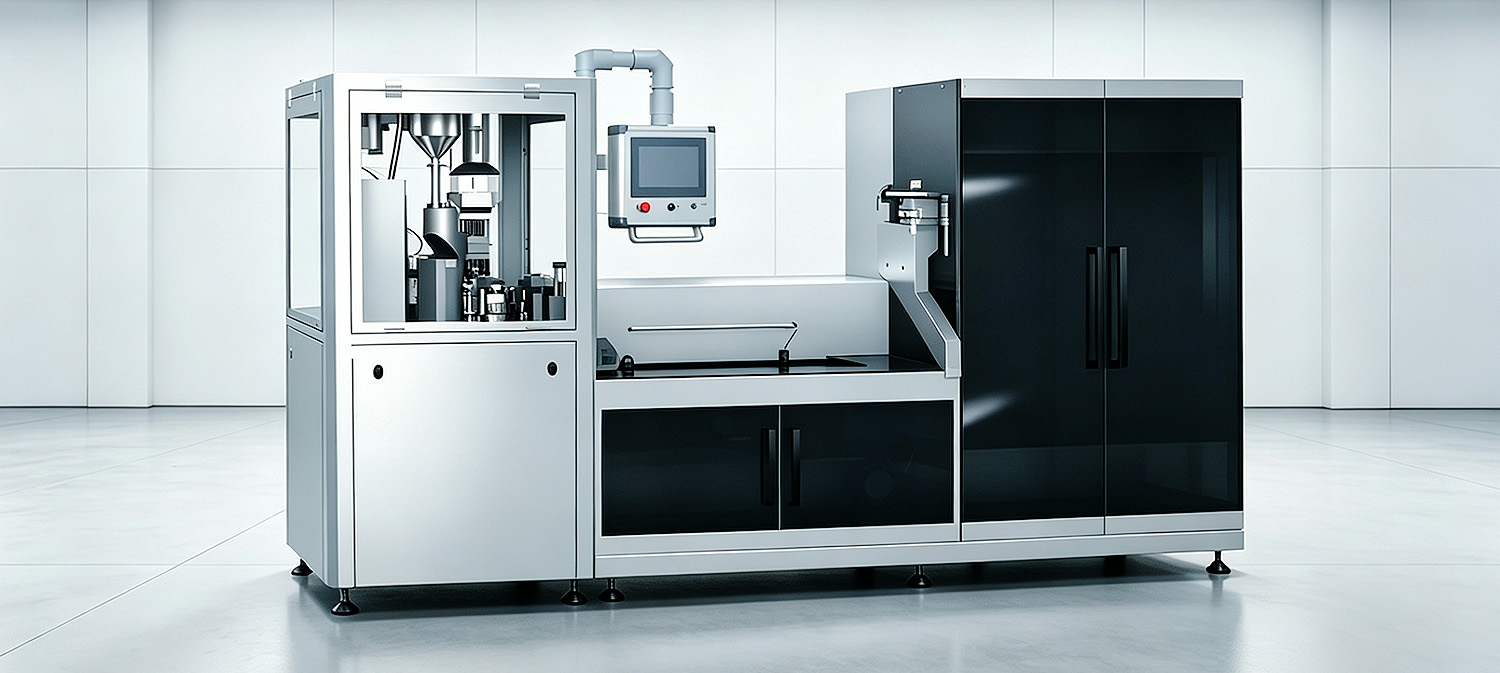
Have you ever wondered how a tiny capsule makes it from raw powder to your local pharmacy shelf? It’s quite a trip, and right in the middle of it is one essential tool: the capsule filling machine. We’ll walk through every stage—from formulation and granulation all the way to packaging and commercial sales—so you can see exactly what it takes to get a capsule product out there.
Why Capsule Production Is a Multi-Step Process
Making capsules isn’t just about one machine. Each hard capsule goes through many carefully controlled steps, and each step needs reliable equipment. If you skip a step or take shortcuts, the final product won’t meet pharmaceutical or nutraceutical standards. That’s why manufacturers invest in full production lines instead of buying standalone machines. From the granulation system that preps raw powder to the packing machine that seals finished goods, every piece plays a part. Let’s go through the whole journey step by step.
Step 1 – Formulation and Granulation: Preparing the Powder
Before you can fill any capsule, you have to blend active ingredients and excipients into a uniform, free‑flowing powder. If the powder quality is poor at this stage, your filling accuracy will suffer later, no matter how good your filler is. Here’s what the granulation equipment does:
• High-shear granulator : turns fine, dusty powders into uniform granules that flow better.
• Fluid bed dryer : removes moisture after wet granulation to protect heat‑sensitive actives.
• Bin blender or drum mixer : makes sure actives and excipients are mixed evenly.
• Milling machine : breaks down oversized lumps to the right particle size.
Well‑prepared granules feed smoothly, give consistent doses, and stop weight variation in finished capsules. This step is the foundation of reliable manufacturing.

Step 2 – Filling: Where the Capsule Filling Machine Takes Over
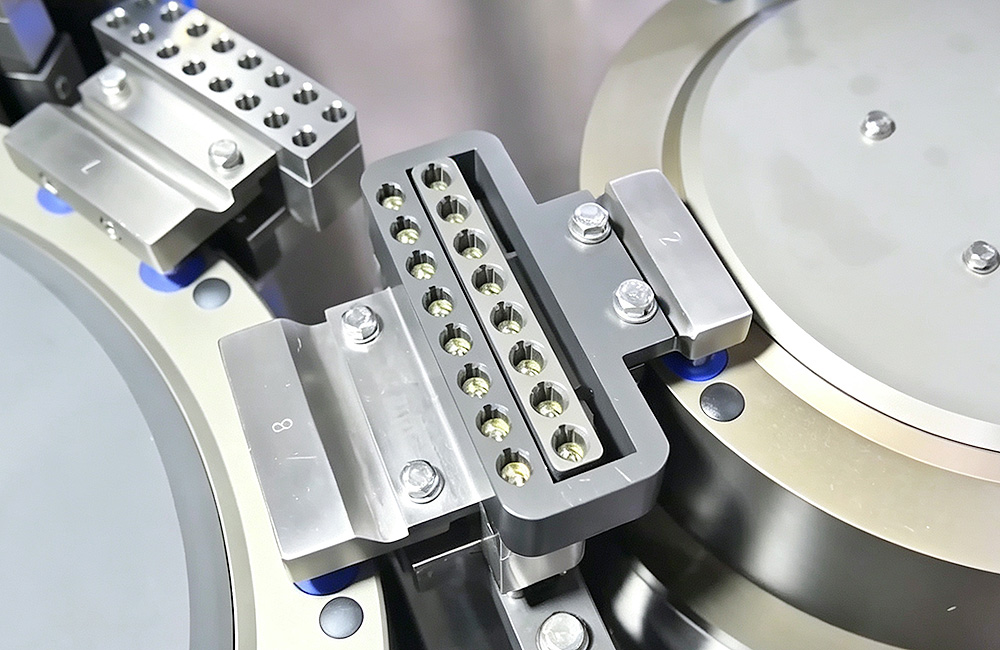
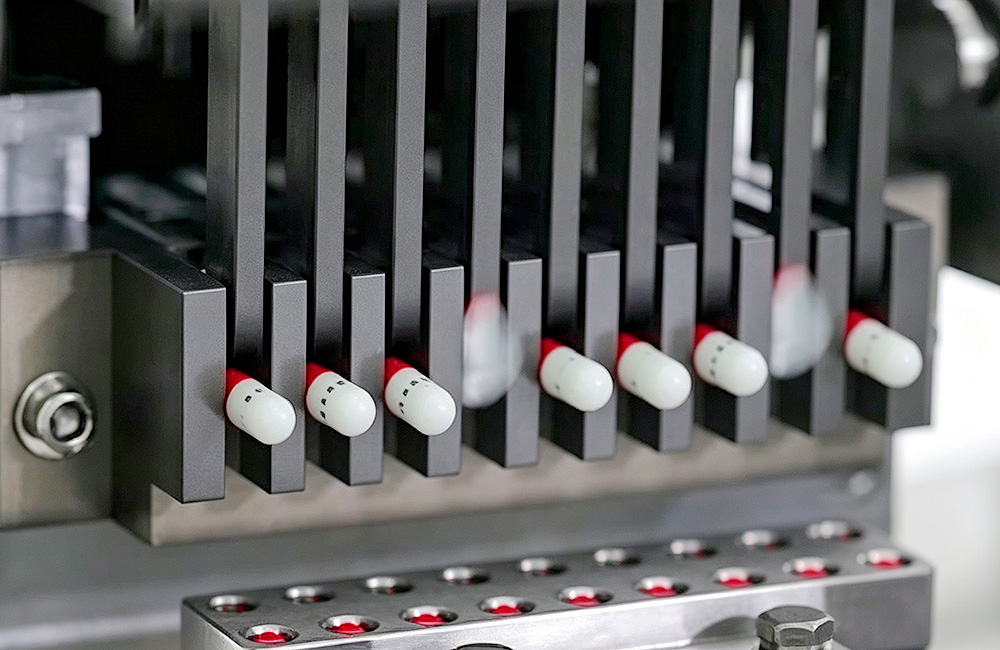
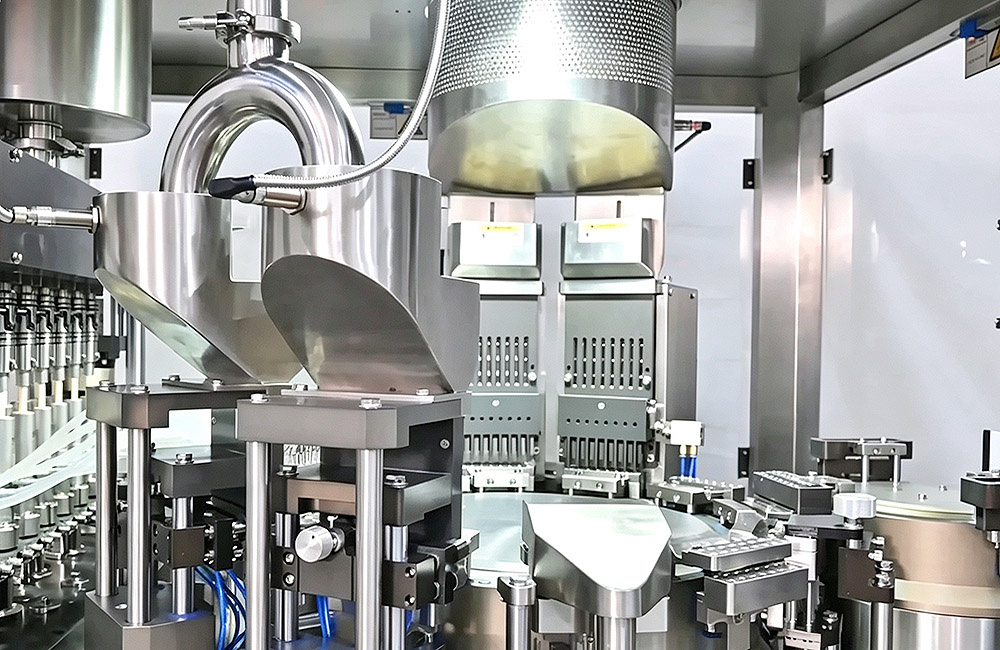
This is the heart of the whole operation. A modern capsule filling machine separates empty capsules, lines them up, doses powder or granules with tamping pins or a dosing disc, and then locks the two halves together. High‑speed models can handle tens of thousands of capsules an hour.
• Capsule orientation and separation : vacuum systems align and split caps from bodies.
• Precise dosing : tamping or dosing‑disc technology gives consistent fill weights.
• Automatic locking and ejection : the system spots and rejects defective capsules on its own.
• Real‑time monitoring : sensors check fill weight and continuously kick out out‑of‑spec products.
Your choice between a semi‑automatic and a fully automatic machine depends on your batch size. Either way, you need GMP‑compliant stainless steel construction – that’s non‑negotiable.
Step 3 – Polishing and Inspection: Cleaning Up the Product
Freshly filled capsules often have loose powder on their outside surfaces. If you send them straight to packaging, you risk contamination and customer complaints. So polishing and sorting is a must‑do intermediate step.
• Capsule polishing machine : uses gentle brushing with vacuum suction to remove surface powder.
• Empty capsule sorter : automatically pulls out unfilled or under‑filled capsules.
• Vision inspection machine or metal detector : finds metal bits and visible cosmetic flaws.
• Weight checking system : verifies fill weight on random samples from every batch.
Many manufacturers combine polishing and inspection into one compact station. That saves cleanroom floor space and keeps the line running without interruption.
Step 4 – Packaging: Blister Packs, Bottles, and Cartons
Once capsules are clean and verified, you start protective packaging. Packaging isn’t just for looks – it gives barrier protection, makes dosing easier for users, and meets regulatory labeling rules for commercial sale.
• Blister packing machine : seals each capsule into aluminum‑plastic or aluminum‑aluminum blister cards.
• Bottle filling and capping line : counts, fills, caps, and labels capsules for dietary supplements.
• Cartoning machine : inserts printed leaflets and loads blister cards or bottles into branded cartons.
• Case packer : groups finished cartons into shipping‑ready cases for distribution.
Packaging lines that connect directly to the filler cut down on manual handling and keep things hygienic.
Step 5 – Quality Control and GMP Compliance
No capsule product hits the market without passing strict quality control checks. Good Manufacturing Practice (GMP) sets the rules for cleanroom conditions, batch records, and equipment performance. All the machines you pick must support full compliance.
• Dissolution and disintegration testers : check that capsules release active ingredients as designed.
• Content uniformity testing : ensures every capsule matches the labeled dose strength.
• Environmental monitoring : keeps temperature, humidity, and particle counts stable in production areas.
• CIP/SIP cleaning systems : allow validated, repeatable cleaning between product changes.
A reliable filler with built‑in reject functions and data logging makes GMP audits much simpler.
Step 6 – From Warehouse Shelf to Commercial Sales
Production is only half the story. Getting capsules from your factory to pharmacies, hospitals, and retail shelves takes careful logistics, complete regulatory paperwork, and a solid market plan.
• Stability testing : proves product quality holds up over the entire shelf life.
• Regulatory registration : submits the needed documents to authorities like the FDA or EMA before launch.
• Cold chain or ambient storage : protects sensitive formulations during shipping.
• Distribution partnerships : work with wholesalers and pharmacy networks to reach end customers.
With an efficient production line and steady quality, scaling from local sales to global distribution becomes a lot more doable.
What Equipment Do You Need? Building the Complete Line
So what machines do you actually need for end‑to‑end capsule manufacturing? Here’s a full checklist:
• Granulation line (granulator, dryer, blender) for raw powder prep
• Capsule filling machine for precise dosing and locking
• Capsule polishing machine and vision inspection machine for cleaning and defect sorting
• Blister packing machine and cartoning machine for final packaging
• CIP/SIP systems for validated cleaning
• Laboratory testing equipment for in‑house quality control
If you work with an experienced capsule filling machine manufacturer that also supplies the rest of the equipment, integration goes much smoother. One supplier can design your layout, handle installation and commissioning, train your operators, and guarantee spare parts. That keeps downtime low and production steady.
From the first granulated powder particle to the moment a shopper picks your product off a shelf, capsule production is a carefully coordinated process. The capsule filling machine is the main workhorse, but granulators, polishers, inspection systems, and packaging machines are just as critical. If you’re planning to build or upgrade your capsule line, pick a manufacturer who knows the whole workflow—not just one machine.
FAQ
1. What is the most important machine in capsule production?
The filler is the core of the line because dosing accuracy directly affects product quality. Still, granulation and packaging equipment are also essential for a fully compliant operation.
2. How many capsules can a filling machine produce per hour?
Output depends on the model. Semi‑automatic ones do several thousand an hour, while high‑speed fully automatic models can reach 120,000 capsules or more every hour.
3. Do I need a polishing machine after filling?
Yes, in most commercial setups. A polisher removes surface powder, prevents cross‑contamination, and improves the look of capsules before packaging.
4. What should I look for in a capsule filling machine manufacturer?
Look for GMP‑compliant design, stainless steel contact parts, consistent dosing accuracy, good after‑sales support, spare parts availability, and the ability to supply auxiliary equipment like inspection and packing machines.
5. Can one supplier provide the entire capsule production line?
Absolutely. Manufacturers like Mic Machinery offer complete turnkey lines covering granulation, filling, polishing, inspection, and packaging. That simplifies installation, training, and long‑term maintenance.