
How GMP Vial Filling Machine Differs from Standard Machines | MIC
How GMP Vial Filling Machine Differs from Standard Machines
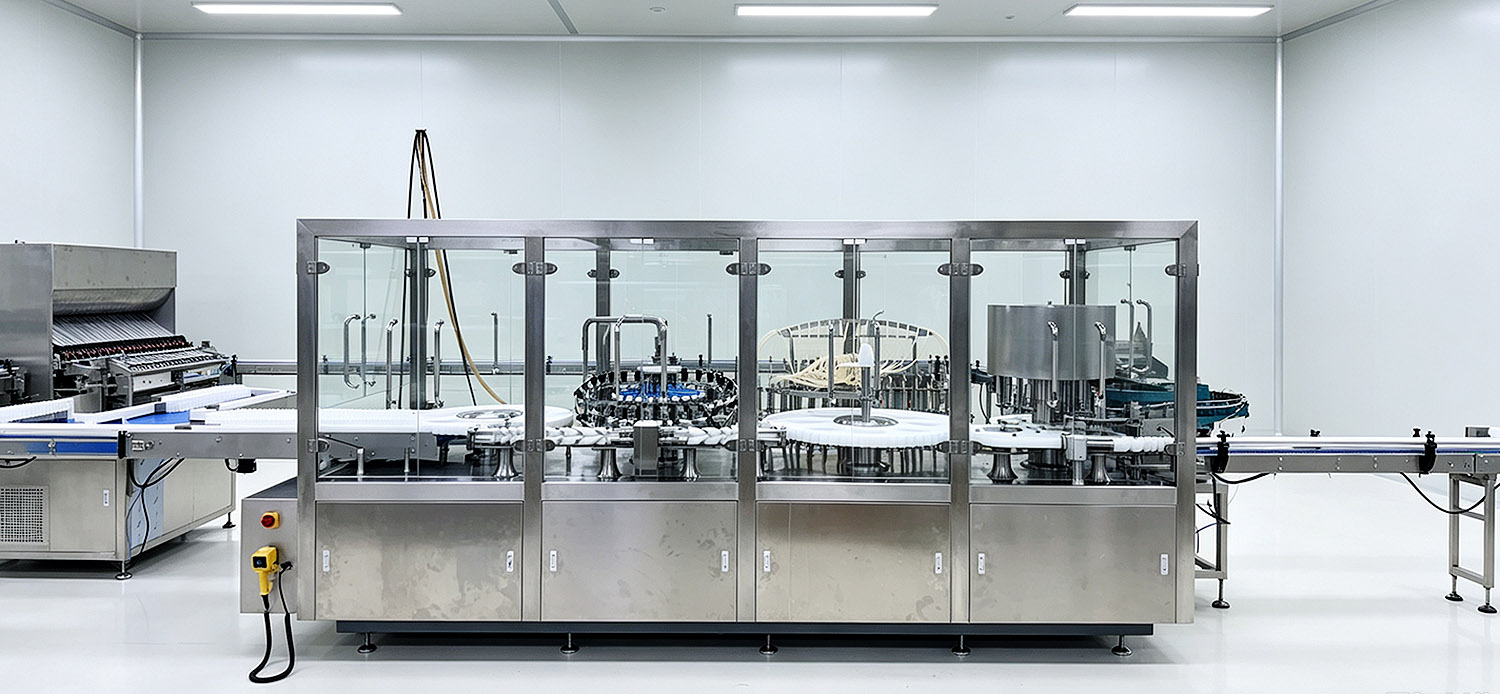
You see two quotes: one for a standard vial filling machine at 85,000. You wonder—is that extra $40,000 just a brand tax? You’re not alone. I’ve talked to dozens of procurement specialists who face this exact dilemma.
The real answer? It depends on what you are filling. If you are bottling hand sanitizer for retail stores, the standard, lower‑cost model will suffice. But if that vial holds a vaccine or biologic administered directly into a patient’s bloodstream, the gap is not merely about price. It is about whether your product—and your company—can pass the next FDA audit.
In this guide, I will cover what truly matters on your production floor, not marketing brochure fluff. And if you are setting up a complete production line, I will also explain why your labeling machine must meet equally rigorous standards.
The "GMP" Label Is Not Just a Sticker
Here is the detail most marketing materials omit: “GMP‑compliant” is not a legally protected term. Any supplier can add this label to a specification sheet. True GMP compliance means the vial filling machine was designed from inception to satisfy FDA 21 CFR Part 211, EU GMP Annex 1, and WHO TRS 961 requirements. It is not an aftermarket add-on—compliance is built into the machine’s core design.
What does this look like in practice? The design team asked, “Can an auditor trace every batch back to pump speed and operator login records?” before any metal was cut for manufacturing. Standard machines are engineered for fast, consistent filling performance. GMP‑grade machines fill product and provide documented proof—usable years later, whether responding to regulatory warning letters or formal audits—that every vial was filled under controlled, traceable, repeatable operating conditions. This compliance‑first mindset impacts everything from embedded software to frame welding practices.
Material Reality: Why 316L Actually Matters
Let’s examine material specifications—this is an area where buyers frequently incur costly setbacks. Standard machines often deploy 304 stainless steel for non‑product‑contact components, and some budget‑priced units even use 304 on product‑contact surfaces.
304 stainless works well for household kitchen sinks. It is not suitable for harsh pharmaceutical drug formulations, repeated CIP cycles using caustic cleaning agents, or acidic biologics. I have observed 304 stainless steel develop pitting corrosion within 18 months on an acidic buffer production line. Once pits form, they create micro‑niches for microbial growth—creating substantial risk of product recall.
•All product‑contact surfaces are constructed from 316L stainless steel, not only select “critical” components
•Surface roughness ≤ Ra 0.4 μm, with formal profilometer test reports (not visual inspection only)
•Seals and gaskets are FDA‑grade EPDM or PTFE, with full material traceability documentation
•Equipment frames are engineered to eliminate threaded joints and dead‑leg zones that cleaning media cannot fully reach
Upgrading from 304 to 316L may add 8,000—12,000 to equipment costs. Yet losing a single batch of monoclonal antibodies can result in six‑figure financial losses. Therefore, the material upgrade is not pure expense—it is risk‑mitigation insurance for your manufacturing operation.
Sterility: The Invisible Battle
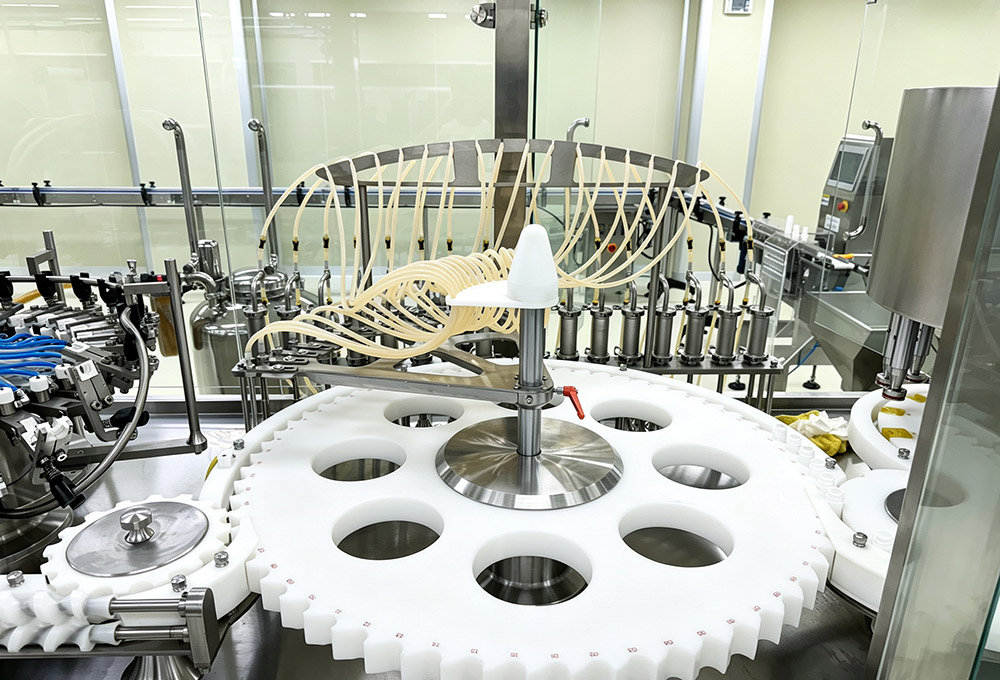
Most equipment failures are visible: jammed conveyor belts, spilled vials, misaligned caps. Contamination, however, cannot be seen with the naked eye. By the time final laboratory testing identifies a sterility failure, the damage is already done. This is why a GMP‑compliant vial filling machine treats the air surrounding open vials with the same priority as the liquid product itself.
•Integrated LAF or RABS systems that maintain ISO 5 / Grade A environmental conditions at the fill point
•Fully automated CIP and SIP cycles; no equipment disassembly required for cleaning or sterilization
•HEPA filters with 99.997% efficiency for 0.3‑μm particles, complete with built‑in filter test ports
•Physical barriers and glove ports that prevent direct human contact with open vials
Standard machines rely entirely on the surrounding cleanroom environment to maintain sterility. This places full accountability on building HVAC performance and operator gowning discipline. A single torn glove or accidentally opened cleanroom door can ruin an entire batch. GMP‑compliant machines create the required clean micro‑environment directly at the filling station. This localized environment is far easier to validate and less vulnerable to human error.
Precision That Saves Money, Not Just Vials
An important practical benefit: a GMP‑grade vial filling machine often delivers enough product‑loss savings to offset its price premium.
Standard peristaltic fillers may advertise ±1 % filling accuracy. That performance may hold true during product demos using room‑temperature water. However, after 8 hours of continuous production with cold, viscous protein‑based formulations, accuracy can drift to ±2.5 % or worse. For a biologic costing $5,000 per liter, this specification drift translates directly to measurable financial loss.
•Servo‑driven ceramic piston pumps or high‑precision peristaltic pumping with real‑time flow feedback
•In‑line checkweighers that weigh every individual vial and automatically reject units with out‑of‑spec fill volumes
•Closed‑loop process control that compensates for changes in temperature, fluid viscosity and system back‑pressure
•Anti‑drip nozzles that eliminate micro‑drop formation to mitigate cross‑contamination risk
One client in India replaced a standard filler unit with a GMP‑compliant machine equipped with in‑line checkweighing. Their overfill volume—the excess drug added to guarantee minimum labeled dose—dropped from 4.2% down to 0.8%. Based on their annual production output, they saved more than $120,000 in raw‑material costs within the first year. The machine paid for itself in roughly ten months.
Integration: Thinking Beyond the Filler
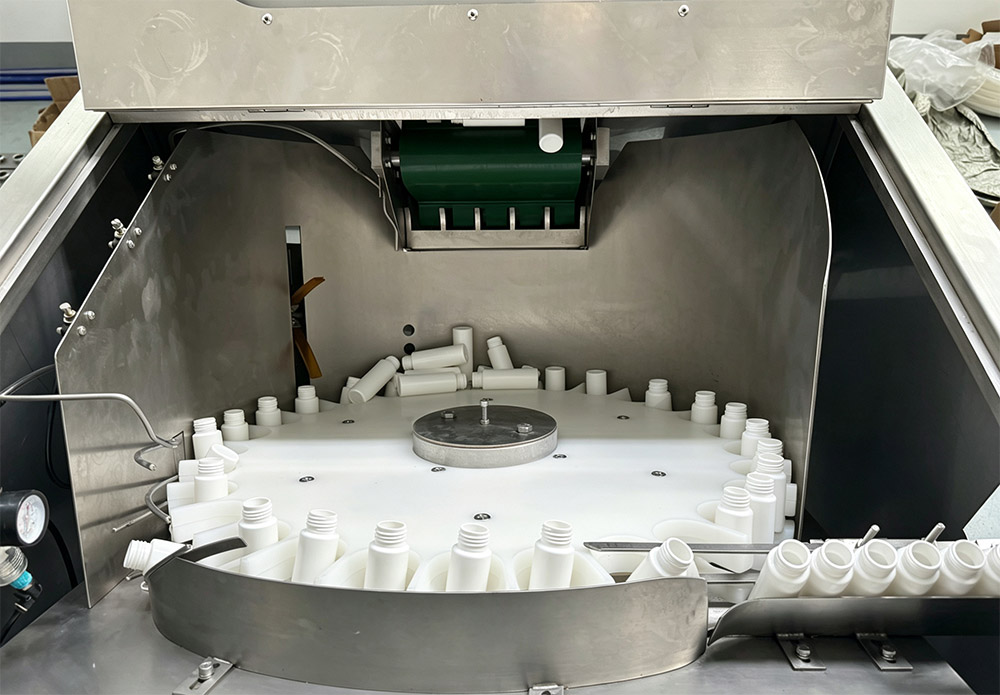
A frequent mistake I observe is treating the vial filling machine as an isolated piece of hardware. It is only one station within a complete production line: vial washer, sterilizer, filler, capper, inspection station, labeler. If your filler runs at 120 vials per minute but your capper can only process 80 vials per minute, you create a costly production bottleneck.
Even more critical: if your labeling machine prints batch codes that cannot be reconciled against filling‑machine batch records, regulatory auditors will flag this as a major compliance deficiency.
•PLC‑based controls with recipe‑driven changeovers; switch production between 2 mL and 10 mL formats in less than 15 min, with no tooling required
•No‑vial‑no‑fill sensors that eliminate spillage and reduce manual cleanup work
•Conveyor buffer zones to absorb speed mismatches between successive line stations
•Centralized data‑logging that captures all process data, from fill volume through label print parameters, into a unified batch report
Standard machines operate using standalone local controllers with no cross‑system communication. Operators manually record fill volumes on paper logbooks, while other staff visually verify label print quality. Every manual step introduces opportunities for human error. GMP‑oriented system integration automates not only mechanical production motion but also the critical compliance‑related record‑keeping.
The Paperwork Nobody Talks About
Let me be direct: the validation paperwork is where cheap machines fail. You can buy a standard filler for $40,000, but when your quality team spends four months writing Installation Qualification (IQ), Operational Qualification (OQ), and Performance Qualification (PQ) protocols from scratch, you have added $30,000 in labor costs. And if the auditor finds gaps, add another two months.
• Complete, ready‑to‑submit IQ/OQ/PQ documentation packages delivered alongside the machine
• 21 CFR Part 11‑compliant software functionality: electronic signatures, immutable audit trails, and role‑based system access controls
• Full material certificates (3.1 certification for 316L stainless steel), surface‑finish inspection reports, and welding records
• FMEA risk‑assessment documentation aligned with current EU GMP Annex 1 requirements
A quality‑focused equipment supplier delivers a complete validation binder (or modern validated electronic documentation system). This allows your internal quality team to review, adapt, and execute validation activities within weeks, rather than multiple calendar quarters. The time saved frequently covers a significant portion of the machine’s price premium. When your labeling‑machine vendor supplies matching GMP‑grade documentation, full‑line validation becomes one coordinated project instead of a fragmented patchwork of disconnected documents from multiple suppliers.
The Human Factor: Operators Are Not Robots
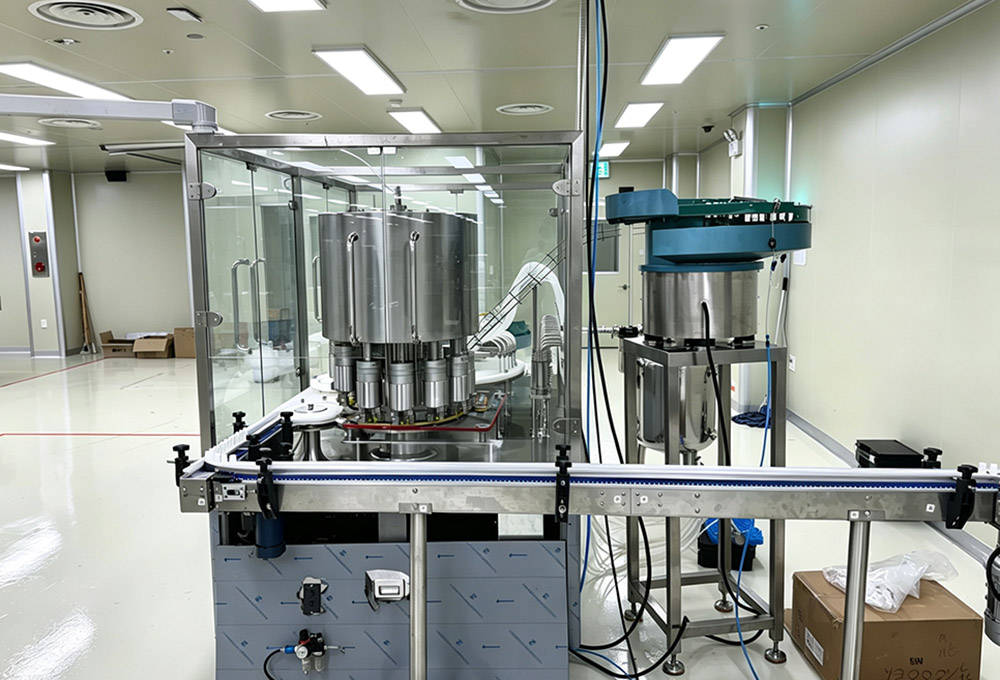
Many pharmaceutical manufacturing lines run 24/7. Your operators are human: they experience fatigue and distraction and must troubleshoot equipment issues in the middle of night shifts. GMP‑compliant equipment is engineered around this real‑world operating reality, not theoretical perfectly‑functioning automated workflows.
•Interlocked transparent safety guards; equipment stops safely upon guard opening without requiring a full production restart
•Ergonomic working heights (850–950 mm) to reduce operator back strain across eight‑hour production shifts
•Tool‑free format changeover: a single operator can swap product‑contact parts in minutes, instead of hours
•Intuitive color‑coded alarm indicators on the HMI: red for equipment stop conditions, yellow for warning alerts, green for normal operating state
Standard‑grade machines often force operators to reach into moving equipment assemblies or use hand tools to adjust vial‑tracking mechanisms. This is not merely uncomfortable for staff—it creates elevated risk for GMP deviation events. Every instance where an operator opens safety guards or uses hand tools near open, filled vials generates potential deviation reports. Good GMP equipment design makes compliant operating procedures the simplest, most natural way for operators to complete their tasks.
Picking a Partner, Not Just a Product
I have visited manufacturing facilities where the vial filling machine hardware performed well, yet the supplier relationship created major operational headaches. One customer waited six weeks for replacement seal components because their vendor operated in a different time zone with no local spare‑parts inventory. Another client struggled for three months to resolve critical software bugs, because the vendor outsourced all engineering work to third‑party contractors.
The machine itself represents only half of your investment; the supplier behind the equipment is equally important.
When you are evaluating vial filling machine manufacturers, look past glossy marketing brochures. Ask pointed, practical questions. Can they provide verifiable customer references within your industry segment? Do they maintain spare‑parts inventory within your continent? Can they deliver not only the filler, but complementary integrated equipment such as labeling machines, so you avoid coordinating support across multiple disjointed vendors?
•Proven track record delivering equipment for global pharma and biotech manufacturers (not only cosmetic or consumer‑goods producers)
•In‑house engineering and manufacturing teams; avoid reseller brokers who disappear once sales are finalized
•Comprehensive after‑sales support: remote diagnostic capabilities, hands‑on on‑site operator training, and formal preventive‑maintenance contract options
•Ability to deliver a fully integrated production line: filling, capping, inspection and labeling equipment from one unified supplier team
•Transparent spare‑parts pricing with guaranteed component availability for a minimum of 10+ years
Whenever feasible, schedule an in‑person factory visit. Observe factory acceptance testing (FAT) runs performed using your actual product formulation. If a manufacturer refuses facility tours or pre‑shipping testing with your real‑world product, treat this as a major red flag. You are not purchasing a disposable commodity machine; you are entering into a long‑term supplier partnership expected to last ten years or longer.
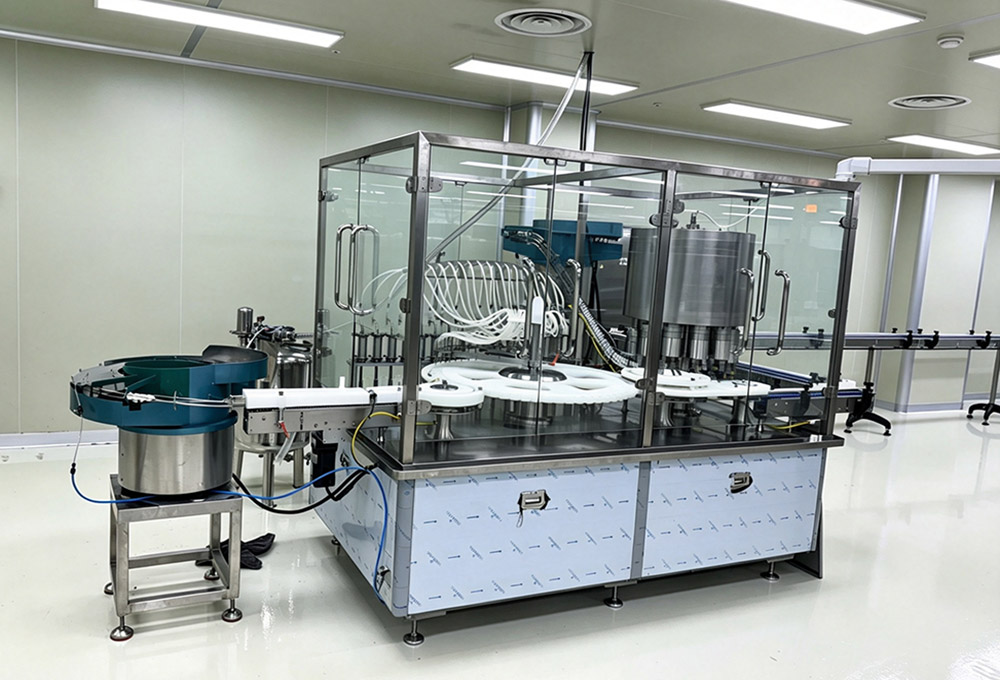
So, is a GMP‑compliant vial filling machine worth its higher price tag? For regulated pharmaceutical and biotech manufacturing operations, the answer is almost always yes—and the value extends far beyond stainless‑steel construction and embedded software.
The premium is justified because this equipment reduces regulatory compliance risk, cuts costly product‑material losses, compresses validation timelines, and protects your brand reputation during unannounced regulatory audits. A standard machine fills vials. A GMP‑compliant machine fills vials and supplies definitive proof that production was performed correctly.
FAQ
1. Is a GMP vial filling machine always slower than a standard one?
Not necessarily. Early GMP designs did sacrifice speed for sterility, but modern machines using servo drives and optimized RABS can reach 200+ vials per minute while keeping Grade A conditions. The real limit is often your cleanroom HVAC or your capper, not the filler itself.
2. Can I use a standard vial filling machine for pharmaceutical products if I operate it in a cleanroom?
Technically, the cleanroom helps, but it does not fix the machine. Standard machines lack validated CIP/SIP, proper material certificates, traceable software, and documentation packages. Regulators will see the equipment itself as a compliance problem, regardless of the room around it.
3. How much does validation usually cost if the manufacturer does not provide IQ/OQ/PQ documentation?
Internal validation from scratch typically costs $25,000 to $50,000 in quality assurance labor, plus three to six months of delay. Buying a machine with pre-written documentation usually pays for itself right away.
4. Should my labeling machine also be GMP-compliant, or just the filler?
Both. If your labeling machine applies batch codes, expiry dates, or serialization data, it is part of your batch record. A mislabeled vial is a recalled vial. Your whole vial filling line should meet the same documentation and accuracy standards.
5. What is the most common mistake buyers make when choosing a vial filling machine manufacturer?
Focusing on the upfront purchase price while ignoring the total cost of ownership. The cheapest machine often becomes the most expensive after you add product loss, validation delays, spare parts problems, and regulatory fixes. Ask for references from clients who have owned the machine for at least three years.