
How Pharma Filling Factories Choose Suitable Oral Liquid Filling Machine
How Pharma Filling Factories Choose Suitable Oral Liquid Filling Machine
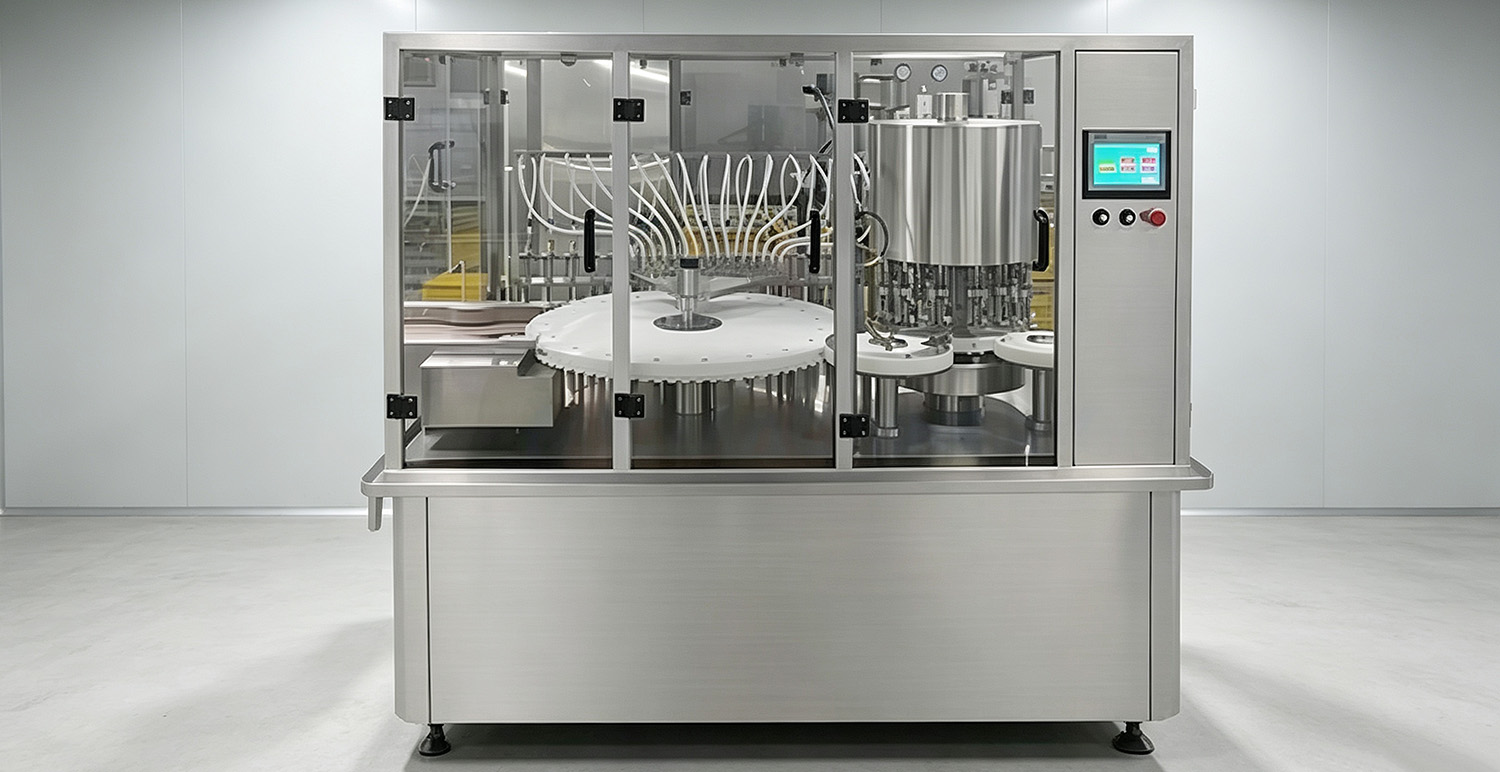
It is 2 a.m. in your workshop. Your largest-ever annual order is due for delivery in only three days. Suddenly, the oral liquid filling machine starts dripping syrup down the side of every bottle. Operators wipe surfaces repeatedly. They adjust parameters and restart the unit. Yet the dripping keeps coming back. By sunrise, 400 bottles have been scrapped. The root cause is simple. The machine was never tested with your actual production liquid.
Scenarios like this happen far more often than suppliers would admit. Nearly all of them come from hasty purchasing decisions. Selecting the right filling equipment is not about chasing the lowest quotation. It means matching equipment to your liquid formulation, bottle formats, production capacity and regulatory requirements. Below is a complete, practical selection procedure adopted by experienced pharmaceutical factories.
Why Equipment Selection Is Trickier Than It Appears
Here is a hard truth. Equipment brochures from different suppliers look largely identical. Every vendor promises “±0.5% filling accuracy”, “GMP-compliant design” and “user-friendly operation”. Real-world gaps between machines do not show up in PDF datasheets. They emerge eight months after commissioning. They appear in change-over duration, cleaning records and downtime logs.
We have seen factories purchase well-finished machines. Those machines fail completely when they process high-sugar, high-viscosity syrup. We have also seen simply-configured lines run stably for a decade. Those lines were properly selected, so they only needed routine replacement parts such as seals. This difference in performance is not down to luck. It comes from verifying all critical questions before paying the deposit. This guide walks you through these key points.
Prioritize Your Liquid Formulation, Not the Machine
Your first consideration should never be “which machine to buy”. Your first consideration should be “what liquid will you fill”. A watery expectorant is about 1-10 cP. A 60% sugar-content syrup is typically 50-100 cP. A kaolin suspension has abundant particles. These liquids behave completely differently. If your filling equipment is mismatched to liquid viscosity, every production shift will suffer from foaming, dripping and entrapped air bubbles.
• You should measure liquid viscosity under actual production temperature. You should not rely on room-temperature data from specification sheets.
• You should note whether your product foams, carries suspended particles, or requires nitrogen blanketing.
• You should list all bottle specifications: 30 ml, 60 ml, 100 ml, 120 ml, amber glass or PET bottles.
Practical Tip: You should send your real-product liquid and sample bottles to the supplier. You should request an on-machine trial. You should ask for recorded video covering three consecutive production batches. You should not accept a two-minute water-only demonstration. If dripping occurs while filling thick syrup during trials, you should imagine how severe malfunctions will become six months after commissioning.
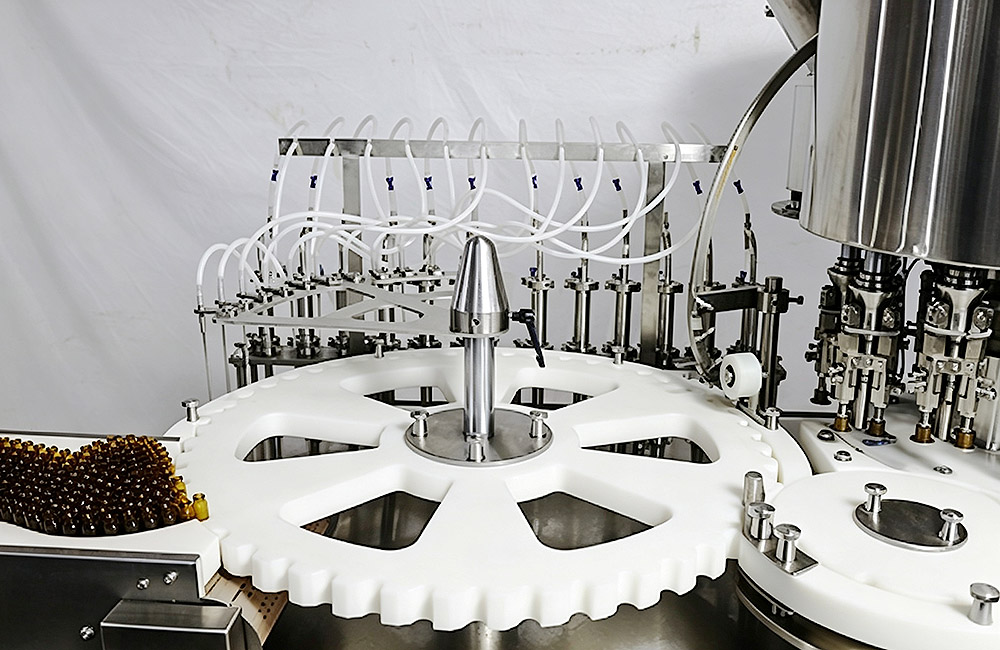
Calculate Production Capacity Before Purchasing
Suppliers tend to quote eye-catching hourly output figures. Yet you must build capacity planning around your real-world conditions. For example, two 8-hour shifts produce 20,000 bottles of 100 ml syrup daily. This equals roughly 21 bottles per minute. You should reserve 25% extra capacity for peak-season demand. You should target a 25-30 BPM machine instead of a bulky 120 BPM unit.
• You should plan capacity based on peak-season output rather than annual average volume.
• You should balance upstream-downstream line capacity. A filler running faster than your capper will only cause upstream bottle jams.
• You should confirm whether filling heads can be added later. Component upgrade is far better than full-machine replacement.
Practical Tip: You should work out your real bottles-per-minute figure. You should use it as the benchmark in every supplier conversation. If sales representatives push oversized machines far exceeding your calculated demand, they are chasing sales targets instead of your production requirements.
GMP Compliance: Directly Determines Audit Outcomes
Ask any production manager what keeps them awake at night. More often than not, it is not machine breakdowns but regulatory auditors. If your filling equipment contains dead corners where syrup crystallizes, or lacks cleaning validation documents, losses from a single inspection will vastly outweigh savings from lower equipment purchase costs.
• You should use 316L stainless steel for liquid-contact components. You should electropolish them with crevice-free welds.
• You should use CIP (Clean-in-Place) function covering all liquid-contact surfaces.
• You should keep documentation complying with US 21 CFR Part 211 and EU GMP, including DQ, IQ, OQ and complete material certificates.
Practical Tip: You should request the full technical documentation package before paying any deposit. FAT (Factory Acceptance Test) shall consist of three consecutive successful runs, matching standards applied by regulatory authorities. Any supplier hesitating over these two requests sends an important risk warning signal.
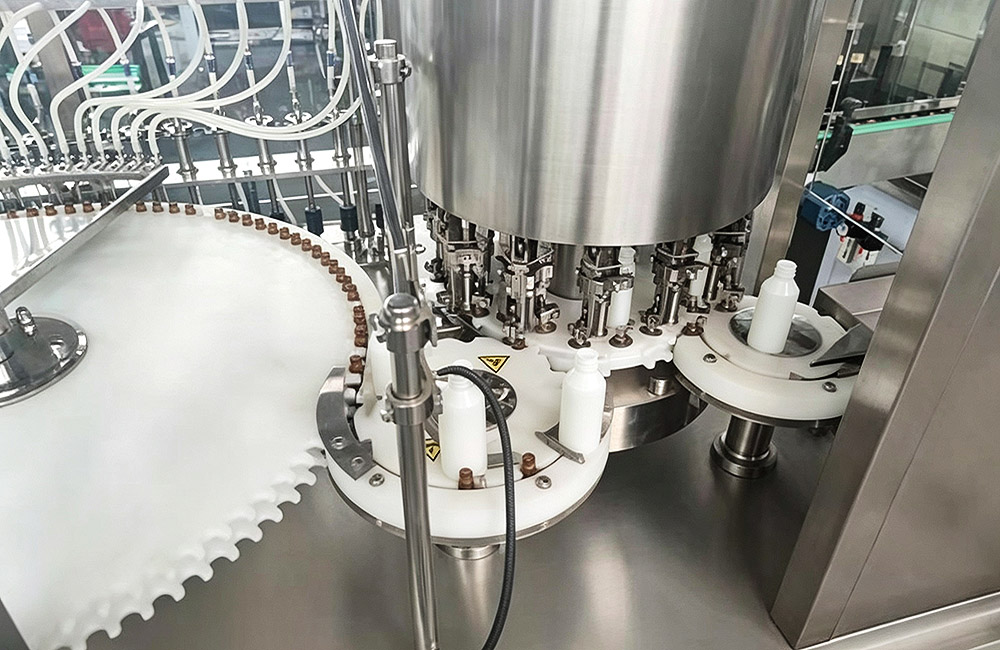
Select Suitable Dosing & Filling Technology
There is no universally “best-in-class” pump type. There is only an optimal solution for a specific product. Comparison of three mainstream options:
|
Dosing System |
Best-Fit Application |
Points to Watch |
|
Piston Pump |
Viscous syrups, suspensions; high filling accuracy |
Many components require cleaning; seals are subject to wear |
|
Peristaltic Pump |
Low-to-medium viscosity liquids; gentle shearing for particles |
Tubing acts as consumable generating recurring costs |
|
Mass Flow Meter |
Thin, foam-prone liquids; fastest format change-over |
Poor performance with high-viscosity materials |
Practical Tip: You should submit viscosity data to your supplier. You should demand written justification for their pump selection. Phrases like “we always use piston pumps” reflect habitual practice instead of engineering judgement. Your product will bear the consequences.
Advanced Automation Means Nothing Without Operator-Friendly Operation
No matter how sophisticated the machine’s engineering design is, poor practical operability will lead to production failure. Switching bottle formats from 60 ml to 100 ml takes 90 minutes plus debugging by two supervisors. This erodes profit margins during every product change-over. Modern machines solve such issues via servo-driven dosing, touch-screen HMI recipe storage and quick-change-format parts.
• You should store individual product recipes for one-tap recall without repeated manual calibration.
• You should use no-bottle-no-fill and anti-drip logic. These secure filling accuracy at high-speed operation.
• You should use integrated capping with stable torque right after filling for fully closed-loop production workflows.
• You should use alarm logs and data output. These enable traceable deviation records instead of verbal descriptions.
Practical Tip: You should request a live remote machine demonstration simulating your actual change-over workflow. You should record change-over time. You should share footage with on-site operators. If they flag difficult handling, you should keep evaluating alternative equipment. Engineers specify machines, but front-line staff operate them. Feedback from both groups matters.
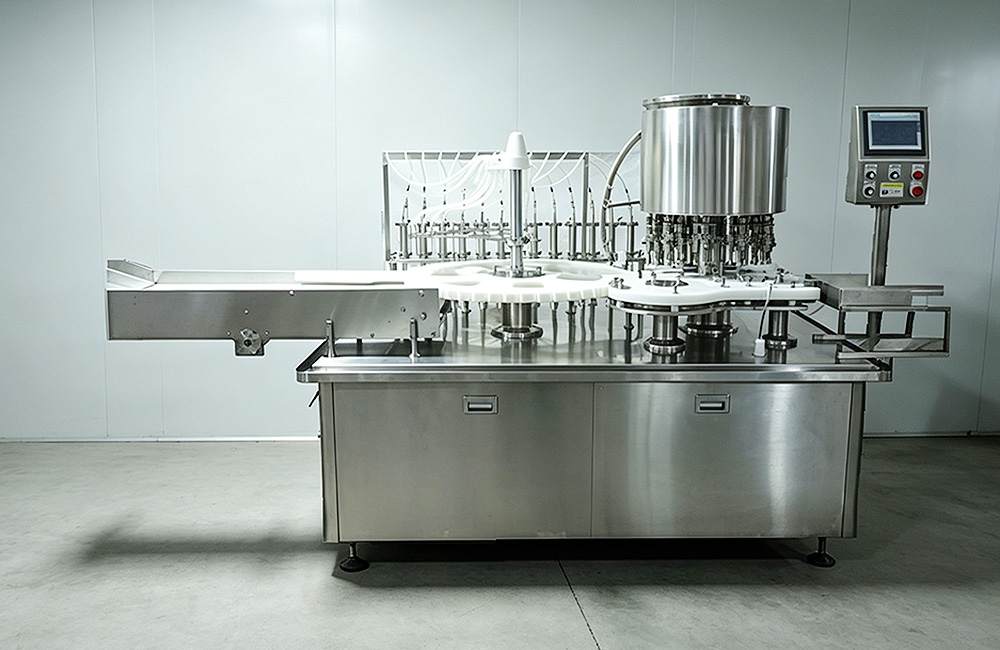
After-Sales Support and True Total Cost of Ownership
Purchase price represents only a small fraction of overall expenditure. Low-cost equipment paired with slow after-sales support may double total costs following one week of unplanned downtime. Within pharmaceutical workshops, downtime losses manifest as scrapped batches and delayed deliveries, not merely repair invoices.
• You should contractually define after-sales response time. “As soon as possible” is not a binding commitment.
• You should receive supplier-recommended spare-part kits together with the machine: seals, gaskets and sensors.
• You should request operator training, formal maintenance schedules and remote troubleshooting support.
• You should request customer references from local sites. These sites must have operated identical machines for 2+ years.
Practical Tip: You should create a simple five-year cost comparison for shortlisted models. You should cover procurement expense, spare-part costs, estimated downtime losses and energy consumption. Well-built equipment from established manufacturers frequently delivers superior five-year comprehensive economics, even with higher initial quotations.
Honest Answers to Common Buyer Concerns
Below are four top worries raised by pharmaceutical procurement teams. Reputable oral liquid filling machine manufacturers offer corresponding solutions.
• “Will the machine be incompatible with my bottles?” You should complete pre-shipment trials using your actual containers. You should approve trial video footage before shipment.
• “One broken part will shut down my whole production line.” You should keep supplier-recommended spare-part kits on-site. You should embed a 24-48-hour response clause within contracts.
• “What if we fail the GMP audit?” You should obtain full DQ/IQ/OQ validation documentation. You should add third-party inspection clauses to purchase agreements if market regulations require it.
• “Will the supplier disappear after full payment?” You should verify their track record serving pharmaceutical customers. You should request factory footage showing your unique machine serial number. You should make direct phone calls to two existing end-users for feedback.
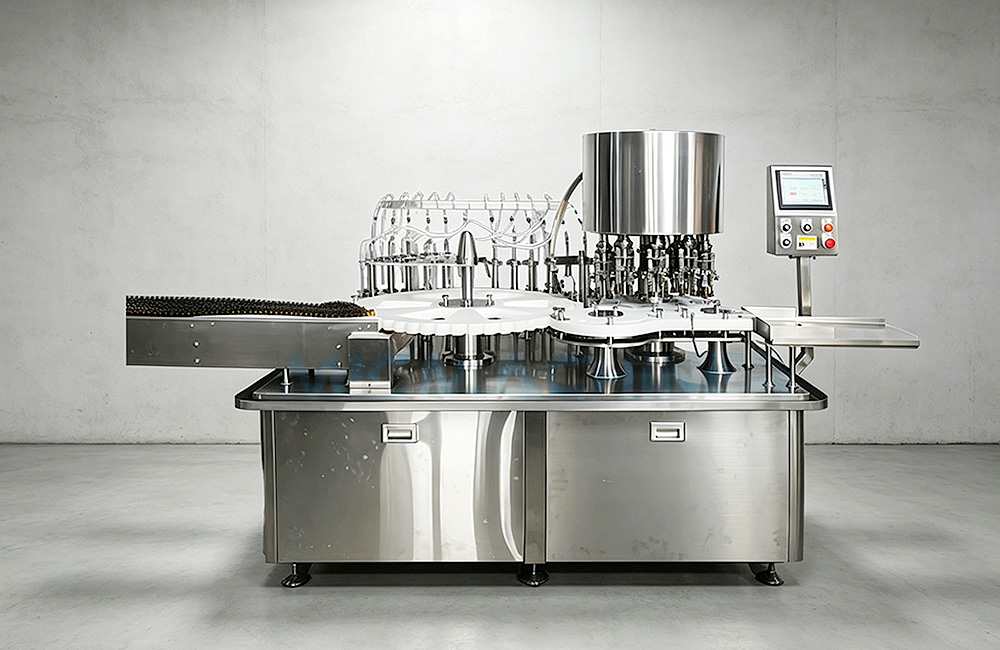
Choosing the right oral liquid filling machine relies on solid groundwork. You should measure real-world liquid viscosity. You should calculate bottles-per-minute capacity. You should obtain full GMP documentation. You should witness trials running your own formulation. You should evaluate five-year total-cost-of-ownership instead of only single-invoice value. Factories completing this due diligence achieve stable production for a full decade with one-time procurement. Factories skipping these steps become cautionary tales unfolding at 2 a.m. on the workshop floor. If you require selection assistance, Mic Machinery engineers are ready to evaluate your liquid parameters and bottle formats. There is no sales obligation, only objective technical consultation.
FAQ
1. What is an oral liquid filling machine?
It is an automated system that accurately meters and fills liquid pharmaceuticals such as syrups, suspensions and solutions into bottles with validated dosing volume. Modern units integrate capping, sealing and frequently labelling into one continuous production line.
2. How much does this filling equipment cost?
Cost ranges vary widely. Compact table-top semi-automatic models start from several thousand US dollars. Fully-automatic multi-head production lines with capping and labelling typically cost tens of thousands of US dollars. Final pricing depends on production speed, filling-head quantity, dosing technology and the completeness of documentation required for your GMP-regulated market.
3. What real-world filling accuracy can I expect?
Properly calibrated servo-driven piston pumps or mass flow meters routinely achieve guaranteed ±0.5% accuracy. You should always validate accuracy across three consecutive FAT test runs using your actual liquid formulation. You should not rely on showroom water-based demonstration figures.
4. Can one machine handle multiple bottle sizes?
Yes. Interchangeable format parts such as star wheels, guide rails and filling nozzles, paired with PLC-saved product recipes, enable multi-bottle compatibility. Quick-change designs cut format-switching time down to approximately 20-40 minutes.
5. How do I verify supplier reliability before placing orders?
You should request a live virtual factory tour. You should obtain written FAT protocols. You should speak directly with two long-term local customers. You should confirm DQ/IQ/OQ documents are included within deliverables. Trustworthy suppliers happily accommodate all these verification requests.