
Oral Liquid Filling Machine Definition and Working Principles
Oral Liquid Filling Machine Definition and Working Principles
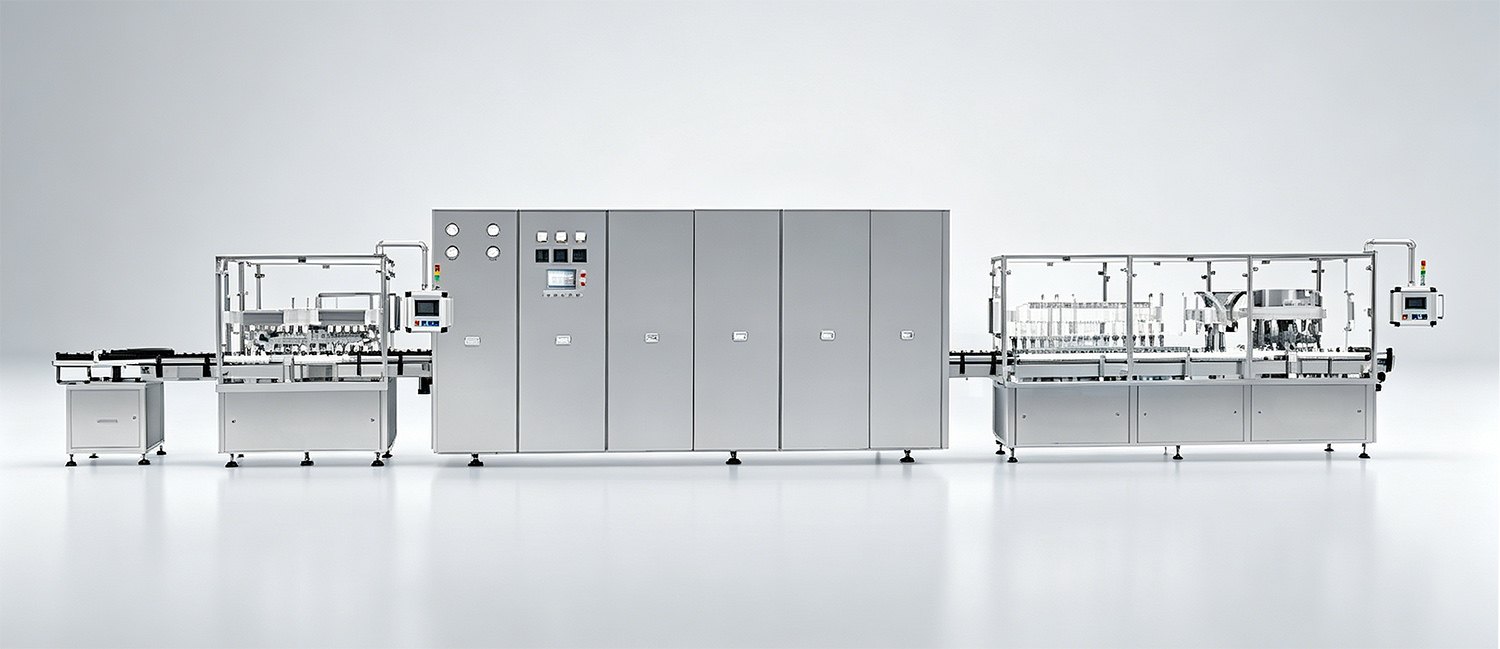
Have you ever thought about the actual process that ensures every small bottle of cough syrup, vitamin drops, or herbal extract contains exactly the same dose? This precision is achieved by a critical piece of equipment known as an oral liquid filling machine. This machine operates as a fundamental workhorse in both the pharmaceutical and nutraceutical sectors, ensuring that every dose is accurately measured, clean, and safe for consumption. Whether the operation involves a small start-up enterprise or a large-scale manufacturing plant, understanding how this equipment functions is essential for saving time, reducing operational costs, and preventing common production issues. Continue reading, the following content comprehensively and clearly explains the oral liquid filling machine, the basic definition of the equipment, and the operating principle.
What Is an Oral Liquid Filling Machine?
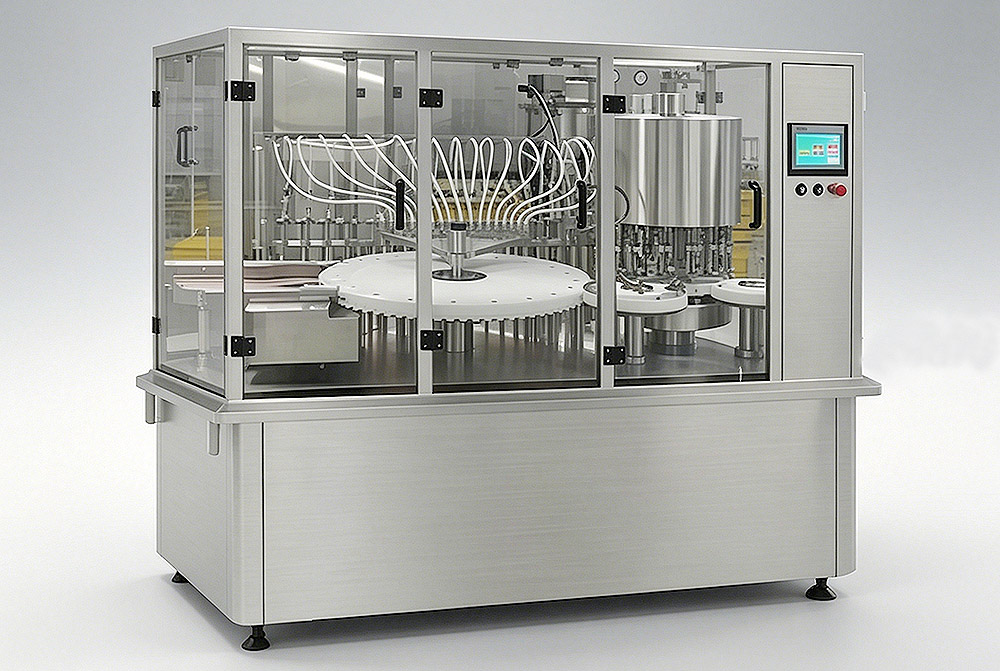
Fundamentally, an oral liquid filling machine is a specialized piece of automated equipment. Its primary function is to fill liquid products intended for oral consumption into various containers, such as medicine bottles, vials, and ampoules. The materials processed are diverse and include common items like syrups, tinctures, suspensions, and flavored drops.
However, the capabilities of this machine go beyond just filling; it is often integrated with other processes. Many models are designed to work in conjunction with sealing and capping stations, and some can even be linked to labeling systems. This creates a complete and integrated packaging solution where the volume of liquid dispensed into each container is controlled with milliliter-level accuracy.
Therefore, for any operation requiring high-speed, hygienic, and high-precision filling, this equipment is an ideal choice, as it effectively eliminates issues like overflow, messy work areas, and inaccuracies associated with manual measuring.
Working Principles of Oral Liquid Filling Machine
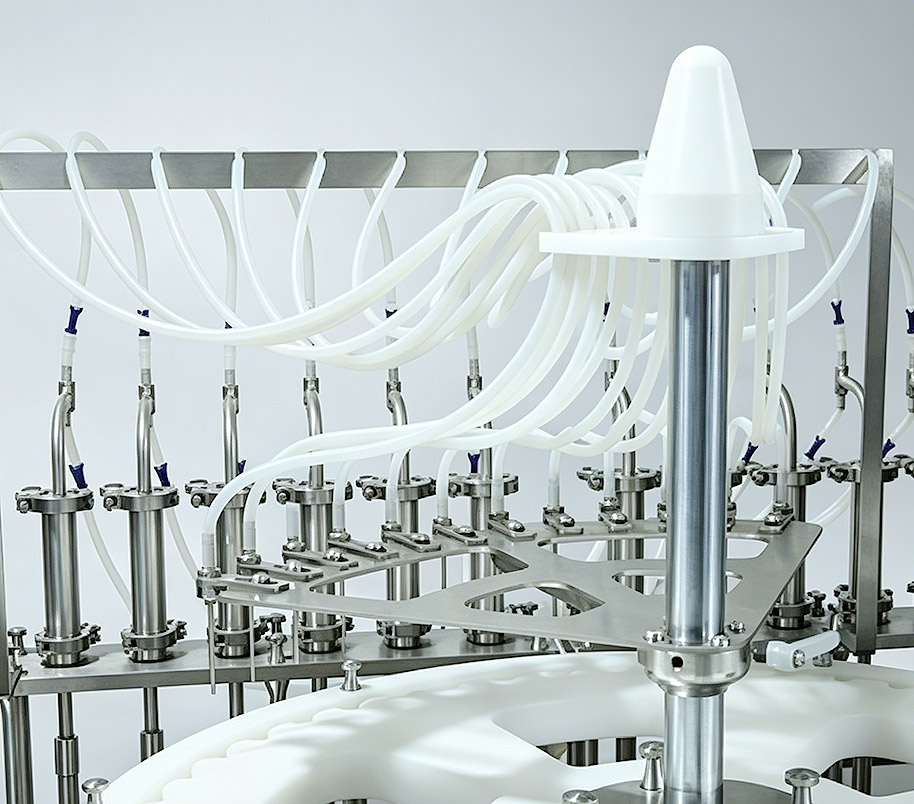
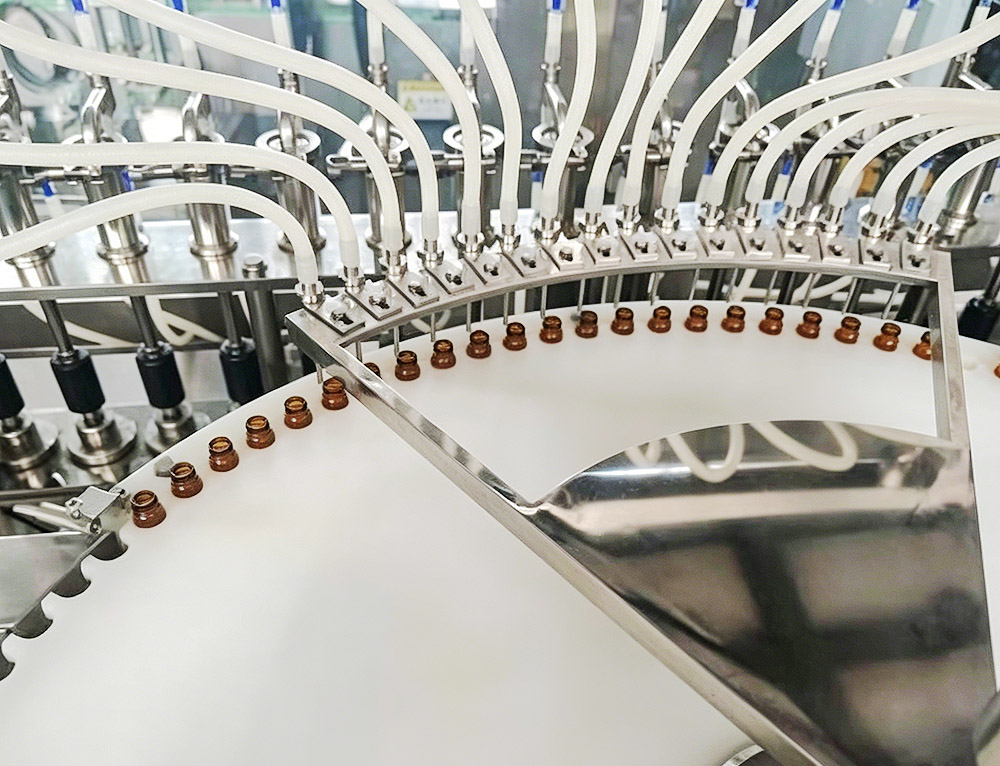
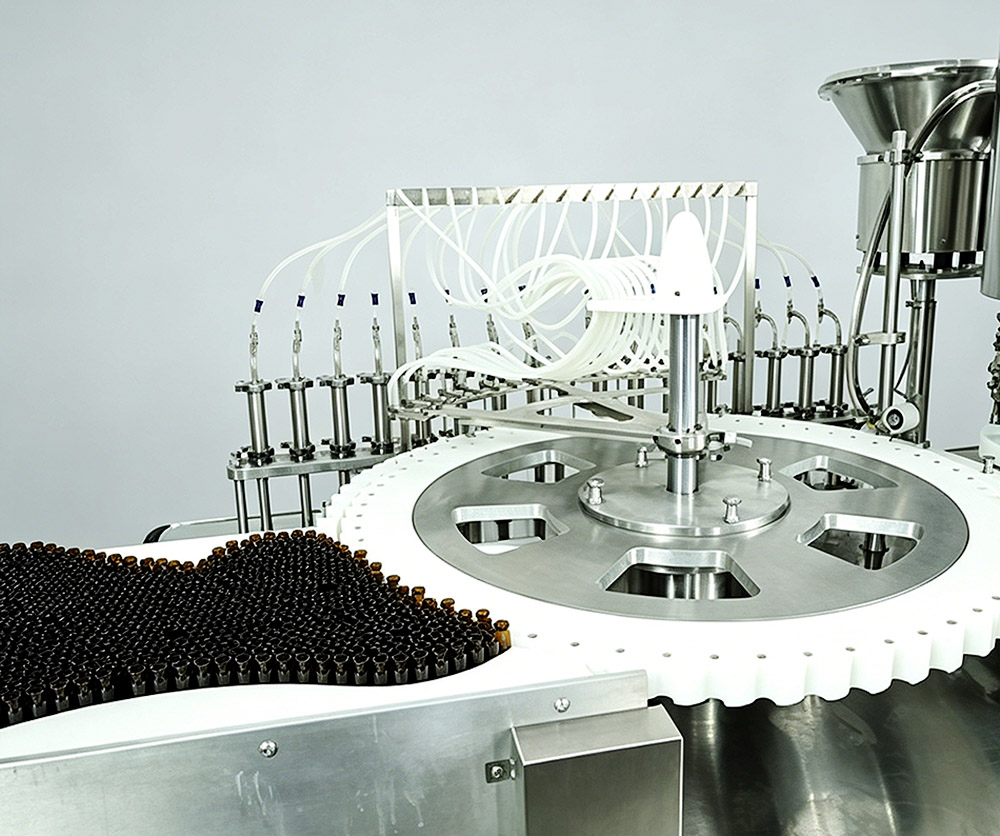
The smooth and accurate operation of an oral liquid filling machine is the result of a coordinated effort between its mechanical structures, electronic sensors, and an understanding of fluid dynamics. The process begins with empty bottles being conveyed to a specific position directly under the filling nozzles. The machine then precisely dispenses a pre-determined, fixed volume of liquid into each bottle before they are moved to the capping station. Modern equipment typically relies on one of three main filling drive modes: gravity feeding, pressure feeding, or positive displacement volumetric feeding. The entire operational sequence can be systematically divided into five distinct steps:
 |
|
- Capping and Discharging: The bottles, now filled with liquid, are transported to a capping station where they are securely sealed. After this final step, they are conveyed out of the main filling line to proceed to labeling or external packaging.
Core Key Components
An oral liquid filling machine is a complex piece of equipment that depends on the seamless interaction of several core components, much like the instruments in a well-conducted orchestra. Understanding the specific function of each part is crucial for effective troubleshooting and for selecting the right machine based on the characteristics of the product. The five most essential components are:
- Conveyor Belt: This is the system that moves medicine bottles between different stations at a consistent speed. Its conveying speed can be adjusted to match different production capacity requirements.
- Filling Nozzles: These are the pipes through which the liquid is discharged. They are available in different specifications, which are chosen based on whether the liquid is a low-viscosity thin solution or a high-viscosity thick product.
- Metering Pump: This is the core component that determines the overall filling accuracy. Different pump types are used for different materials: piston pumps for high-viscosity syrups, peristaltic pumps for sterile products, and gravity tank metering for thin, water-like liquids.
- PLC Control System: This programmable logic controller, often equipped with a touchscreen interface, serves as the machine's brain. It allows operators to set and monitor filling volume, operating speed, and process times. It also allows for the storage and recall of parameter settings for different products.
- Capping Head: Once the bottles are filled, this component is responsible for tightening the bottle caps. It uses either friction or torque control to ensure a consistent and leak-proof seal on every single container.
Main Classifications of Oral Liquid Filling Machines
When selecting an oral liquid filling machine, choices are primarily based on factors like the required production capacity, the physical properties of the material, and the available budget. Machines are generally categorized into fully automatic, semi-automatic, and manual models. Fully automatic machines are best suited for high-speed, mass-production environments, whereas semi-automatic models offer greater flexibility for small-batch and multi-batch runs. Based on the filling principle, they are also classified into types like piston fillers, peristaltic fillers, and overflow fillers, each having specific application areas. The mainstream classifications are detailed below:
|
 |
Overflow Filler: This mechanism fills bottles to a precise level, with any excess liquid being returned to the storage tank. This ensures a consistent liquid level in each bottle and is widely used for low-viscosity beverages like fruit juices.
Standard Operating Procedures
Operating an oral liquid filling machine may appear intimidating for first-time users. However, a stable and error-free production run is easily achievable once the operator becomes familiar with the standardized workflow. Following these procedures helps prevent production errors and ensures compliance with hygienic manufacturing standards. Prior to startup, it is essential to confirm the equipment's cleanliness, the tightness of component installations, and the uniformity of the material mixture. This is followed by parameter setting and a trial calibration. The standard five-step process is as follows:
- Pre-start Inspection: Check the filling nozzles, pump bodies, and seals for any signs of wear. Clean any residual material from previous production batches and confirm that the power and air supply are functioning normally.
- Parameter Setting: On the PLC touchscreen, set the desired filling volume, operating speed, and the total number of bottles to be filled. Once set, these recipes can be saved for repeated use in future production runs.
- Trial Run and Calibration: Conduct a trial filling using empty bottles or clean water to verify the accuracy of the metering system. During this phase, fine-tune the nozzle height and filling delay parameters to ensure optimal performance.
- Formal Production: Pour the raw materials into the storage tank and switch the machine to automatic mode. During production, patrol the entire process and promptly address any abnormalities, such as bottle jamming or liquid dripping.
- Shutdown, Cleaning and Maintenance: After production concludes, circulate clean water or suitable solvents through the pipelines to remove all residual material. Lubricate the transmission components to ensure smooth operation and prolong equipment life.
Maintenance Tips to Extend Equipment Service Life
Regular and careful maintenance is an absolute necessity for any oral liquid filling machine. Neglecting routine upkeep can directly lead to deviations in filling accuracy, pipeline leaks, unexpected downtime, and significant production losses. While daily maintenance operations are relatively simple, their consistent application is critical. Five practical key points are listed below:
 |
|
Advantages of Adopting Modern Filling Equipment
High-quality oral liquid filling machines offer significant advantages that extend far beyond simply increasing production speed. High-precision filling leads to reduced material waste and ensures a consistent dosage for every product. A closed filling system minimizes manual contact and significantly reduces the risk of contamination. Furthermore, intelligent control systems support the traceability of production data and enable quick product changeovers. These machines can also be seamlessly integrated with downstream packaging lines. The five core advantages are summarized as follows:
- High Filling Precision: The filling error can be precisely controlled within a margin of ±0.5%. This high level of accuracy ensures that the actual volume in each bottle matches the volume stated on the label.
- High Production Efficiency: These machines can fill hundreds or even thousands of bottles per hour, which dramatically reduces labor costs and shortens overall production cycles.
- Wide Application Range: By adjusting a few parameters, the equipment can handle a wide spectrum of liquid materials, from thin aqueous solutions to high-viscosity syrups.
- Low Contamination Risk: The closed filling system is designed to isolate the product from dust and airborne bacteria, which is essential for guaranteeing product hygiene and safety.
- User-Friendly Operation: The touchscreen interface and recipe storage function make it easy for operators to switch between production parameters quickly, minimizing the need for extensive, specialized training.
Main Application Scenarios Across Industries
The utility of oral liquid filling machines extends far beyond the pharmaceutical industry. Their high versatility has led to their widespread adoption in the food and beverage, cosmetics, veterinary medicine, and industrial additive sectors. In essence, they are used in any field that requires precise liquid packaging. These machines can accommodate a wide variety of packaging containers, ranging from small 5ml vials for CBD essential oil to larger 500ml bottles for organic agave syrup. Common application scenarios are as follows:
|
 |
This article provides a comprehensive overview of the oral liquid filling machine, covering its basic definitions, working principles, core components, selection criteria, standardized operation, maintenance methods, application advantages, and industrial scenarios. For any professional, whether purchasing equipment for the first time or seeking to optimize an existing production line, selecting a suitable machine model is a critical decision. This selection must be based on careful consideration of material viscosity, required production capacity, and hygiene requirements. Daily maintenance and trial calibration should never be overlooked, as even minute metering deviations can accumulate over time and lead to substantial material losses. With the right equipment, combined with proficient operation and maintenance skills, a business can achieve efficient and stable liquid filling and packaging. For further inquiries, please consult the frequently asked questions below.
FAQ
-
What materials can an oral liquid filling machine process?
It can fill most edible liquid products, including thin fruit juices, thick syrups, suspensions, and oils. With appropriately matched nozzles and pumps, it is also compatible with liquids that contain tiny solid particles, such as some suspensions.
-
How to choose between fully automatic and semi-automatic models?
If the daily output exceeds 2,000 bottles, a fully automatic model is generally recommended to maximize efficiency. For operations with small-batch production and frequent formula changes, semi-automatic machines offer higher cost-effectiveness, lower initial investment, and greater operational flexibility.
-
Is it difficult to clean the equipment during product changeover?
Modern machines are frequently equipped with quick-disconnect filling nozzles and Clean-in-Place (CIP) programs. For conventional materials, a thorough clean can be achieved within 10 to 15 minutes by circulating warm water or cleaning agents. However, highly viscous residues may require an extended cleaning time.
-
What is the standard filling accuracy of oral liquid filling machines?
Premium equipment typically features a filling error of ±0.5% to ±1%. High-end models using servo pumps can achieve an even finer accuracy of ±0.2%, a level which is particularly critical when filling high-value and high-potency pharmaceutical liquids.
-
How frequently should filling equipment be calibrated?
It is recommended to perform spot accuracy inspections and calibrations on a monthly basis, with a full-scale calibration every three months. Recalibration is also strongly advised when switching to materials with a vastly different viscosity to maintain stable filling volume and prevent cost losses from overfilling.