
How Pharma Plants Produce and Fill Medicinal Capsules
How Pharma Plants Produce and Fill Medicinal Capsules

A capsule line looks simple from the outside. Inside, it is a chain of checks. This article follows that chain from raw material weighing to bottle packing. It also shows where the capsule filling machine sits and why the machines around it matter. Each stage depends on the one before it.
Weighing and Sieving the Raw Materials
A batch starts on a scale, not at the filler. Operators weigh active ingredients and excipients such as fillers, binders, and glidants to the milligram. If the number is off by a few milligrams, that error repeats thousands of times. Many plants use a dispensing scale, and a second operator checks the reading. That second check catches simple mistakes. Scale benches sit in a controlled room, so drafts do not push the reading around.
Powders then go through a vibrating sieve. The sieve breaks up clumps before the mixer. Clumps are a common cause of uneven fills later. Transfer hoppers keep powder moving between stations. Dust collectors protect operators from fine dust. Sieve screens are checked for tears before the batch runs.
Blending and Granulation
A V-type or double-cone mixer tumbles the powder until the active ingredient is spread through the batch. Operators take samples from several points in the blender. They check that the mix is uniform. A blend can look even on top and still hide pockets of drug.
Many formulas go through a wet or dry granulator. Wet granulation adds a liquid binder. The binder forms small granules that flow better and fill more evenly. Dry granulation presses powder into sheets and then breaks them down. This route suits drugs that react to moisture. A milling and sieving step sets particle size before the next stage. After granulation and drying, a final blender mixes in the glidant and lubricant. This small addition helps powder flow into capsule bodies. It also keeps the filler from stalling or filling unevenly.

Drying and Moisture Control
Moisture causes trouble in both directions. Too much water makes powder clump and can break down the active ingredient. Too little water leaves granules brittle and dusty. A fluid bed dryer holds granules in warm air. It dries them evenly without scorching the edges. Dryer air temperature is logged for each batch.
Inline moisture analyzers give operators real-time readings. Lab samples confirm those numbers. Air handling units keep room humidity steady. The powder then behaves the same on day shift and night shift.
Producing the Capsule Shells
Capsule shells are usually made from gelatin or plant-based HPMC. Some plants buy empty shells. Larger plants make shells in-house for tighter control over cost and quality. In a shell line, steel pins dip into a warm gelatin or HPMC solution. A thin film forms around each pin, much like wax on a candle wick.
The films pass through drying tunnels to set. A trimming unit cuts each shell into a longer body and a shorter cap. The shells wait in a humidity-controlled room until the filling line calls for them. Their moisture level affects how cleanly they open and close. Pins are cleaned between dips, so film build stays even.
Separating and Orienting the Capsules
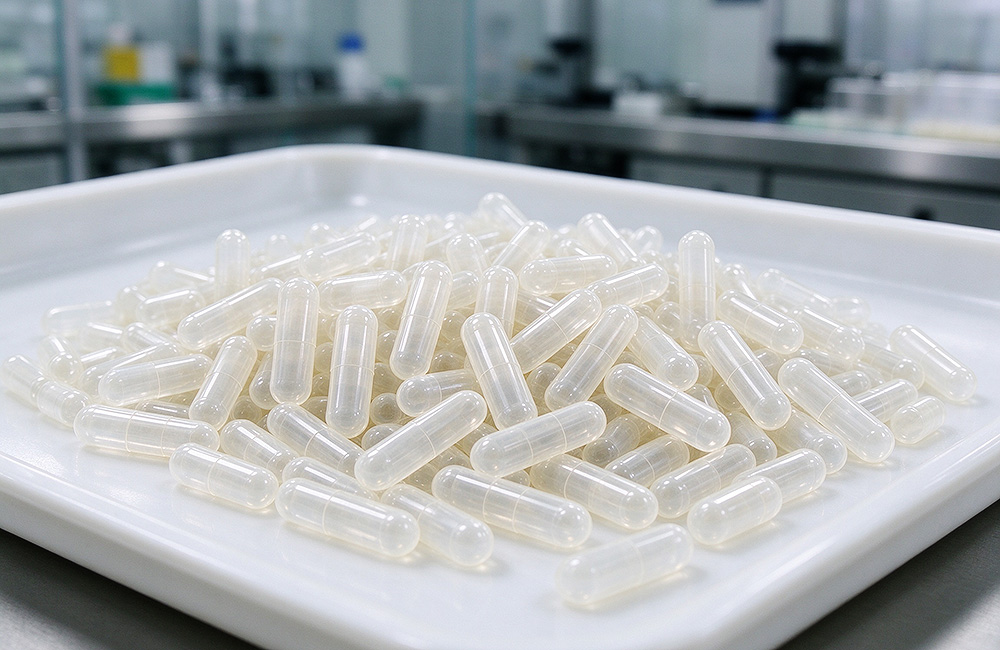
Empty capsules arrive as two loose halves. The halves must be separated before filling. A capsule separator pulls the body and cap apart. The filler can then handle each half on its own. If this step fails, the line jams and shells are wasted within minutes.
A capsule orienter lines each shell up in the same direction. Consistent orientation lets the filling machine treat every capsule alike. Output stays steady, and rejects from misaligned shells drop. Guide rails and brushes move shells along without cracking them.
Filling the Capsules
Dose accuracy is settled at the filler. A capsule filling machine takes separated shells. It fills each body with a measured dose of powder or pellets. Then it rejoins the two halves into a finished capsule.
Dosator filling works like a small syringe. A tube draws a plug of powder. Then it pushes the plug into the capsule body. This method suits many common powders. Dosing disc filling uses a disc with fixed cavities to meter powder. It works well for free-flowing blends. Pellet filling systems handle beads and granules. Tamping or pressure filling compacts powder for denser fills. Many plants add an in-line checkweigher. It flags an off-weight capsule right away, before that capsule reaches a finished batch. Checkweigher data is saved by batch.

Polishing, Inspection, and Quality Control
Filled capsules carry a fine layer of powder dust. A polisher removes that dust. After polishing, every capsule passes several checks before release:
Capsule polisher: It removes powder residue so capsules look clean and feel smooth.
Capsule checkweigher: It confirms each unit sits within the target weight range.
Metal detector: It catches stray metal particles before packaging.
Vision inspection machine: It spots cracked, deformed, or poorly closed capsules at line speed. You can see how this works on the vision inspection machine page.
Capsule sorter: It removes rejected units automatically, so they never reach the bottle.
Packaging the Finished Capsules
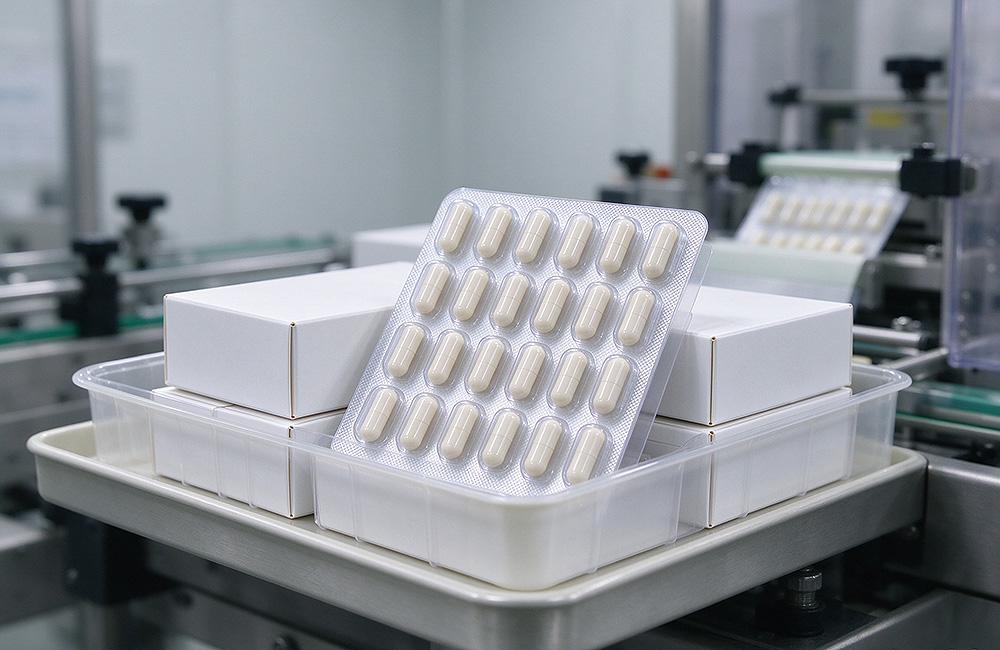
Packaging is the last stage before the product leaves the plant. Counting machines drop the exact number of capsules into each bottle. Capping and sealing machines close bottles with tamper-evident seals. Blister packing machines form unit-dose packs. These packs are common in pharmacy distribution and easy for patients to use.
Labeling machines and printers add batch codes and expiry dates. Regulators and pharmacists use those marks to trace each product. Cartoning machines pack bottles or blisters into final boxes for shipping. Good packaging also blocks moisture and light. The dose a patient takes then matches the dose the plant tested. Printers are checked against the batch record before the run starts.
Making medicinal capsules takes more than a filling machine. Weighing, blending, granulating, drying, shell making, separating, filling, inspecting, and packaging all have to work together. A weak link in any one of them shows up in the final product. The right setup depends on your formula, batch size, and compliance rules. Once you know where your line is most sensitive, you can plan the rest of the investment with a clearer head.
FAQ
1. What is the most important machine in capsule production?
The capsule filling machine gets most of the attention. Accurate weighing and blending upstream matter just as much. A precise filler cannot fix a poorly mixed blend.
2. Can a plant make its own capsule shells?
Yes. Some plants buy shells from suppliers. Larger operations run their own shell lines for more control over cost and quality.
3. What is the difference between dosator and dosing disc filling?
Dosator filling pushes a measured plug of powder into each capsule. Dosing disc filling uses fixed cavities to meter powder. Dosators suit many powders. Dosing discs work well for free-flowing blends.
4. Why do capsules need polishing?
Polishing removes powder dust from the surface. Clean capsules look better and feel smoother. They also move more reliably through packaging.
5. How do plants make sure every capsule has the right weight?
Plants pair precise filling equipment with in-line checkweighers. The checkweighers reject any capsule outside the target range. Off-weight units are caught early.
6. Do capsule lines need a cleanroom?
Many lines do, especially for sensitive or sterile products. Temperature, humidity, and dust levels affect powder flow and product quality.