
Pharmaceutical Formulation System Working Principle Explained
Pharmaceutical Formulation System Working Principle Explained

Walk onto a pharmaceutical workshop floor, and production managers tend to tell you the same story. One batch of syrup dissolves cleanly and flows evenly. The next batch leaves sediment at the tank bottom, holds air bubbles, or comes out with a viscosity that does not match the approved record. Most of the time the raw material is not the main suspect. The real issue is usually metering accuracy, mixing stability, and whether the process stayed inside its validated window.
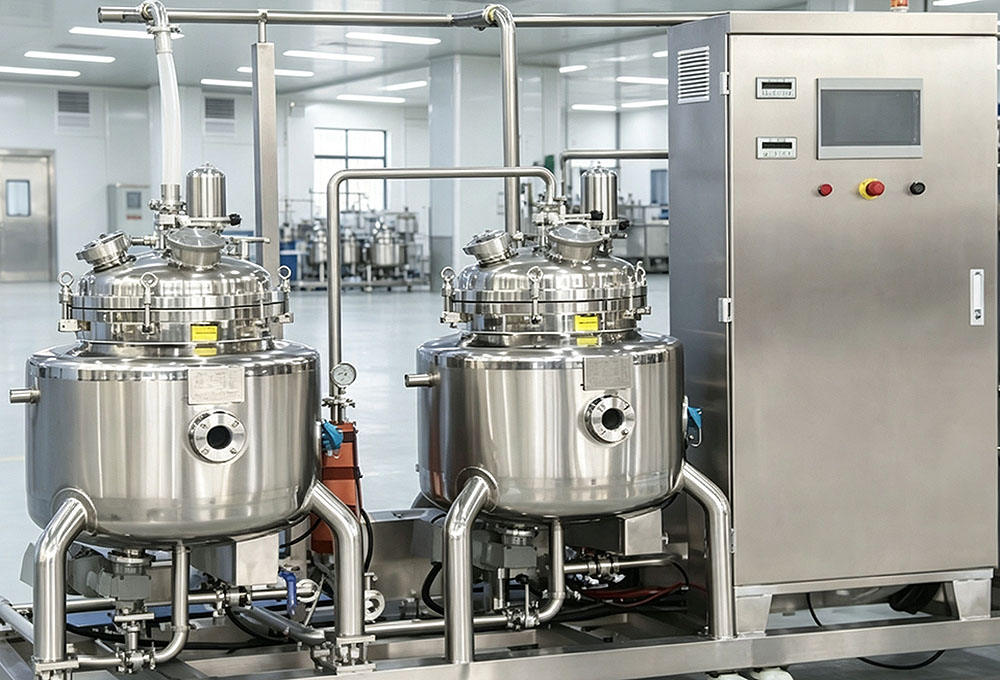
A pharmaceutical formulation system pulls dispensing, dissolving, mixing, optional homogenization, vacuum concentration, filtration and transfer into one coordinated setup. A PLC or HMI recipe runs the sequence, so the line does not depend on repeated manual measurement. Depending on sanitary design and configuration, the same basic setup can handle oral solutions, syrups, suspensions, emulsions, some parenteral intermediates, and semi solid products such as creams or ointments.
This guide walks through the working principle, main components, process stages, quality risk points, automation benefits, downstream filling connection and practical selection criteria. It is written for production engineers, plant managers and procurement teams who need to compare real equipment configurations, not just marketing brochures. Every vacuum level, temperature and dosing range still has to be confirmed through product-specific process development and validation.
What Is the Basic Working Principle of a Pharmaceutical Formulation System
Look at the batch record and the core principle is not complicated. You combine APIs, excipients, solvents such as water for injection or purified water, and functional additives in a fixed ratio. Mixing, temperature and pressure stay under control until the batch reaches the same physical and chemical specifications every time. The system does not invent the formulation. It repeats the approved recipe and keeps manual variation as low as possible.
One practical way to see the principle is to follow each control loop on the line.
The control recipe stores every API, excipient and solvent quantity. The operator works to an approved target weight or volume, not a hand measurement.
• Controlled dissolution and dispersion: Agitation, heating or cooling, and holding time are adjusted together. Solids go into solution evenly, and slow dissolving components do not settle at the bottom.
• Uniform physical state: Suspensions and emulsions need extra shear or homogenization. That keeps particles and droplets spread through the continuous phase.
• Stable environment: Jacket temperature, vacuum level, mixing speed and holding pressure are watched as a group. This protects heat sensitive ingredients and cuts batch to batch fluctuation.
• Repeatable transfer: After in-process checks pass, the product moves to a holding vessel or downstream filling line through sanitary piping. Manual handling stays minimal.
The aim is not to run the fastest batch. The aim is to make every batch follow the same approved sequence, the same parameters and the same quality exit point. That is why selection should start with product profile, viscosity, sterile requirement and cleaning strategy. Tank volume alone is a poor starting point.
How Does the Pharmaceutical Formulation Process Work Step by Step
Each drug product has its own approved procedure, but most liquid and semi solid preparation lines follow a similar sequence. The steps below fit a typical oral solution or syrup setup. Injectable products need a separate sterile manufacturing and filling environment.
Step 1: Raw Material Preparation and Identity Check Before charging the tank, operators check each API and excipient against the batch record. They verify certificates, calculate the required quantity and move materials into the preparation area. If lot number, purity or pre weighed amount does not match, stop here. An error made during charging is hard to correct later.
Step 2: Accurate Dispensing Liquid and viscous components go into the processing system through metering pumps, valves and flow meters. Many modern lines use coriolis mass flow or another precision meter, so the control system records what was added. This stage replaces repeated manual pouring and measuring. The ingredient ratio stays repeatable from batch to batch. The MIC automated liquid dispensing module uses PLC based recipe control for dosing parameters, pump valve coordination and operating records.
Step 3: Dissolving and Mixing After materials enter the mixing tank, the agitator moves the liquid through the vessel. Low viscosity solutions usually need gentle to moderate agitation. Viscous products may need slower wall scraping movement to avoid dead corners. Heat can help dissolution, but overheating can damage sensitive APIs or change stability. Heating therefore follows the approved process range.
Step 4: Homogenization When Required Plain mixing only distributes materials. Homogenization adds mechanical shear and breaks particles or droplets into a finer, more uniform size. It is common for suspensions, emulsions, creams and ointments. A simple solution does not need a high shear unit. Extra shear can bring in heat, air or unwanted particle damage.
Step 5: Degassing and Vacuum Treatment Vacuum does more than concentration. During mixing, especially with viscous or foam prone products, air can get trapped in the batch. A controlled vacuum pulls off entrapped bubbles and volatile components. That reduces foam, oxidation and visible defects in the filled product.
Step 6: Concentration, Filtration and Product Transfer If the product needs a target solid content, a vacuum decompression concentrator removes part of the solvent under reduced pressure. After the required process stage, the batch usually passes a filter or screen to remove undissolved particles. It then moves to a holding tank before filling. In process checks such as appearance, pH, viscosity, density or concentration are completed before downstream transfer.
A typical flow looks like this:
Raw Material Check → Accurate Dispensing → Dissolving and Mixing → Homogenization (Optional) → Vacuum Degassing or Concentration (Optional) → Filtration → In Process Check → Transfer to Holding Tank or Filling Line
The actual order can change with the formulation. A sterile injectable intermediate, for example, adds stricter sanitary, filtration and environmental controls at every stage.

What Are the Main Components of a Formulation System
A complete setup is a group of functional units, not one single machine. Each component handles one part of the preparation process. How those units connect often matters more than the nameplate capacity of the tank.
|
Main Component |
Primary Function |
|
Mixing and Preparation Tank |
Provides a sealed, sanitary space for charging, dissolution, blending and holding |
|
Automated Dispensing Unit |
Meters and delivers liquid or viscous materials according to recipe quantities |
|
Agitator and Drive Motor |
Circulates the batch, prevents settling and supports uniform blending |
|
Homogenization or High Shear Unit |
Reduces particle or droplet size for suspensions, emulsions and semi solids |
|
Jacket Temperature Control |
Supplies heating or cooling through water, oil or steam circulation |
|
Vacuum System |
Supports degassing, defoaming and low temperature concentration |
|
PLC and HMI Control |
Stores recipes, monitors parameters, coordinates pumps and valves, and keeps records |
|
Sight Glass and Instrumentation |
Let operators observe the batch and read level, temperature and pressure |
|
Sanitary Piping and Valves |
Transfers product between tanks with cleanable, low dead leg connections |
Mixing and Processing Tanks Tanks are usually sanitary stainless steel. Product contact areas are commonly 316L, with polished internal surfaces for cleaning and inspection. Internal structure, bottom slope, agitator type and working volume should match batch size and viscosity. An oversized tank can look generous on paper, but for small batches it may mean long mixing times, poor circulation and cleaning trouble.
Automated Liquid Dispensing Equipment The dispensing unit protects the most sensitive part of the recipe: the ingredient ratio. It combines metering technology, controlled transfer and recipe records. It works best when pumps, valves and meters are calibrated as a set. Manual dosing still has a place in small pilot batches. Regular commercial production, however, usually benefits from recorded dispensing data.
PLC Control and Monitoring The PLC is the control center. It coordinates dispensing, agitation, heating, vacuum and transfer, and it can store multiple recipes for different products. In more regulated setups, the HMI supports user levels, alarm records and batch data for quality or deviation review. Exact compliance features, such as audit trail and electronic records, should be discussed against the intended market and product class.
How Does a Vacuum Decompression Concentrator Work
Concentration is needed when a batch must reach a specified solid content or lose part of the solvent. It matters most with materials that cannot take prolonged high heat. A vacuum decompression concentrator lowers pressure inside a sealed vessel. Lower pressure reduces the liquid boiling point, so evaporation happens at a gentler temperature than under normal atmospheric pressure.
The working sequence generally follows these stages:
1. Material Feeding: The prepared liquid goes into the concentration vessel to a safe working level. Leave space for boiling and foam.
2. Vacuum Pull Down: The vacuum system pulls internal pressure down to the target operating range. This lowers the liquid boiling temperature.
3. Controlled Heating: The jacket supplies heat gradually. With pressure reduced, the product evaporates under milder thermal conditions.
4. Continuous Agitation: The mixing motor keeps material moving. Heat distributes evenly, and sediment does not collect on the vessel wall or bottom.
5. Vapor Condensation: Evaporated solvent moves to a condenser. It cools back into liquid and is collected. Solvent recovery is possible when the solvent and process design allow it.
6. Concentrated Discharge: Once target concentration is reached, release vacuum in a controlled way. Discharge the concentrated product for filtration, holding or further processing.
The MIC vacuum decompression concentrator combines negative pressure control, jacket temperature adjustment and mixing for stable liquid concentration. It is most useful for heat sensitive intermediates. The actual vacuum degree, temperature and holding time must be defined during process development and validated for the specific product.

Which Factors Affect Pharmaceutical Formulation Quality
Even with full automation, batch quality can drift when a few critical parameters are not controlled. These are the points most often checked in technical review before an equipment order is placed.
Dosing Accuracy A wrong ingredient quantity changes batch composition at the source. Calibrate dispensing devices regularly. Programmed quantities should match the approved recipe. Pumps, valves and meters should be inspected for drift or leakage.
Mixing Speed and Holding Time Too little agitation leaves undissolved material or uneven distribution. Too much agitation can trap air, raise product temperature, shear sensitive components or break an emulsion. The correct speed and time come from product properties, not from a generic machine default.
Temperature Management Temperature affects dissolution rate, viscosity, reaction speed and ingredient stability. Hold a consistent range during charging, mixing and concentration. For heat sensitive APIs, uncontrolled heating is one of the most common quality risks in the preparation area.
Pressure and Vacuum Stability In concentration and degassing, pressure fluctuation changes boiling behavior and evaporation time. Stable vacuum control and pressure recording help make each concentration run repeatable.
Cleaning, Hygiene and Cross Contamination Control Residue from a previous batch can contaminate the next product. Tank walls, pipelines, valves, seals and pump interiors must be reachable for inspection and cleaning. Where the process requires it, CIP clean in place and SIP sterilization in place modules can be integrated. The cleaning and sterilization procedure still has to match the product, equipment design and validated manufacturing process.
Sanitary Design Details Product contact material, weld quality, internal polish, valve type, pipe slope and dead leg length all affect cleaning ease and sanitary reliability. These details are easy to miss in a price comparison. They show up later as cleaning validation failures.
How Does Automation Improve Formulation Production
Automation here is not mainly about cutting headcount. Its real value is making critical operations controlled, recorded and repeatable.
• More consistent ingredient addition:Programmed dosing targets cut reliance on repeated manual measurement. Ratios stay aligned with the recipe.
• Better process coordination:PLC controls link dispensing, agitation, heating, vacuum and transfer into one sequence. Operators do not start each device separately by guesswork.
• Clearer process monitoring:Sight glass observation plus instrument feedback lets operators follow appearance, level, temperature and pressure during the batch.
• Better traceability:Where the system supports data recording, critical parameters can be saved for batch review, deviation analysis and quality follow up.
• Less manual handling:Closed transfer and automated feeding reduce direct product contact and some handling related errors.
Automation does not replace process validation, equipment qualification, operator training or approved quality control procedures. Those remain the foundation of pharmaceutical manufacturing. The machine simply makes the approved process easier to repeat correctly.
How Does Formulation Equipment Connect to the Filling Process
After the prepared batch passes its in process checks, it can go to a holding vessel or straight to downstream filling equipment. The choice depends on line layout and product stability.
For oral solutions and syrups, an oral liquid filling machine fills bottles at a controlled dosing volume. Vial or ampoule filling equipment may suit other small container products. Injectable products need a separately designed sterile filling environment. The complete configuration depends on formulation type, container format, fill volume, speed target and sanitary requirement.
When planning the connection, teams should agree on transfer piping, holding tank capacity, filter position, transfer pump type and any buffer time between preparation and filling. A formulation system can work well on its own and still create a bottleneck if it does not match downstream line capacity.
What Should You Consider When Choosing a Pharmaceutical Formulation System
Buyers often start with tank volume and the automation screen. The decisions that cause trouble later are usually about product fit, cleaning and line integration.
• Product Characteristics:Simple solutions, suspensions, emulsions, syrups and semi solid creams need different agitator, shear, temperature and vacuum arrangements. Describe the product first. Then choose the equipment.
• Batch Capacity and Future Scale:Set normal batch size, minimum batch and planned future expansion. The tank should give enough working volume without making small batches hard to mix and clean.
• Viscosity and Flow Behavior:High viscosity materials demand stronger agitation, wall scraping and possibly slower discharge. Low viscosity products may overmix or trap air if shear is too high.
• Temperature and Vacuum Requirement:Check whether the product needs heating, cooling, vacuum degassing or low temperature concentration. Also check whether any API is heat sensitive.
• Automation Level:Decide whether automatic dispensing, recipe management, alarm recording and batch data are required for your workflow. More automation adds value when it matches the actual quality system.
• Cleaning and Maintenance:Review internal tank structure, product contact material, valve and pump types, cleaning access, spray ball coverage and CIP or SIP compatibility.
• Line Integration:Confirm how the system connects to transfer pipelines, holding tanks, filters and filling machines. Check how capacities balance across the whole line.
Share product viscosity, ingredient behavior, batch size, target concentration, sterile level and cleaning procedure with the equipment manufacturer before finalizing the layout. Engineers can then propose a suitable tank size, agitator type, metering method and automation package. That is better than selling a standard unit that does not fit the product.
A pharmaceutical formulation system turns an approved recipe into a repeatable sequence: accurate dispensing, controlled dissolution and mixing, optional homogenization, vacuum degassing or concentration, filtration, and transfer to downstream filling. Each stage protects batch consistency, product stability and cleanable sanitary design.
The best system is rarely the most complicated one. It is the setup whose tank, agitator, metering, vacuum, control and cleaning design match the actual formulation, production capacity and validation requirements. Clear product information, realistic process parameters and proper equipment integration help manufacturers run a steadier preparation workflow and reduce avoidable batch deviations.
FAQ
1.What is the main purpose of a pharmaceutical formulation system?
The main purpose is to prepare pharmaceutical products by accurately combining APIs, excipients and solvents. The system then dissolves, mixes, disperses or concentrates them according to an approved formulation. Each batch should meet the defined quality specifications.
2.What is the difference between mixing and homogenization?
Mixing circulates ingredients and distributes them through the vessel. Homogenization adds shear to reduce particle or droplet size and improve dispersion. It is useful for suspensions, emulsions and creams. A simple solution usually does not need it.
3.Why is vacuum technology used in pharmaceutical concentration?
Vacuum lowers internal pressure and reduces the liquid boiling point. Solvent can then evaporate at a lower temperature, which helps protect heat sensitive materials during concentration. Vacuum can also remove trapped air and reduce foam during mixing.
4.Can one formulation system handle multiple pharmaceutical products?
t depends on equipment configuration, product compatibility and cleaning validation. Some systems store several recipes and adjust mixing parameters. Different formulations may still need different agitators, shear levels, temperature ranges and cleaning procedures. Shared lines need a clear change control and cleaning validation plan.
5.Does formulation equipment include a filling function?
Usually no. Formulation equipment prepares and processes the product. Filling machines transfer the finished formulation into bottles, vials, ampoules or other containers. The two can be integrated into one complete production line, but they serve different process stages.
6.How do manufacturers keep formulation quality consistent?
They follow approved recipes, keep dispensing accurate, control mixing speed, time and temperature, monitor critical process parameters, keep records for review, and follow calibrated cleaning and maintenance procedures. Regular calibration, equipment qualification and process validation remain essential.