
Uruguayan Pharma Plant Boosts Production Capacity with a $16,440 Vial Filling and Capping Line
Uruguayan Pharma Plant Boosts Production Capacity with a $16,440 Vial Filling and Capping Line
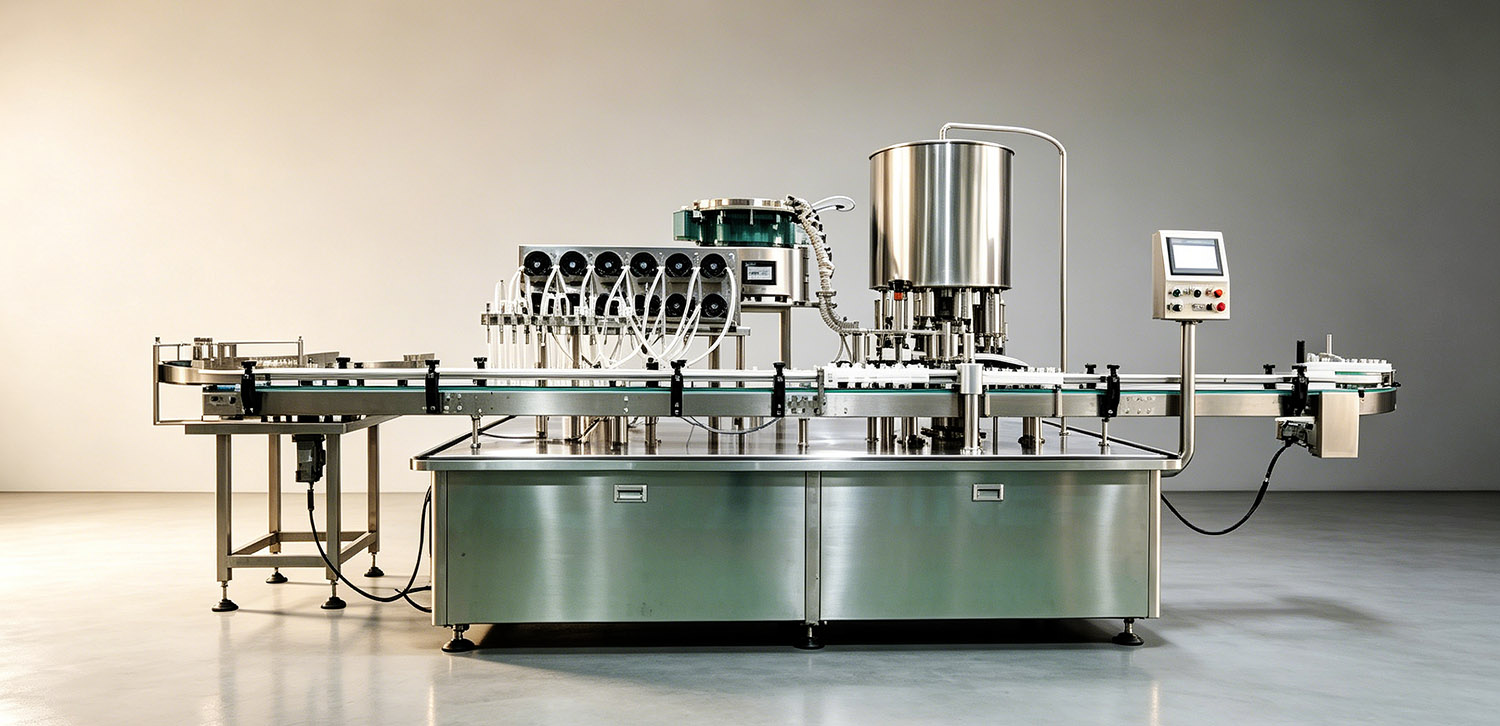
This newly built pharmaceutical plant in Uruguay received three customer complaints within two months: vial liquid leakage and loose caps. Batch records showed a steady product rejection rate of 5% — an unacceptable figure for any GMP-compliant pharmaceutical factory, especially as the enterprise was striving to secure its first major distribution contract.
The root cause was flawed production workflows rather than defective pharmaceutical formulations.
Half a year later, the same factory operated nonstop on three shifts, with the rejection rate controlled below 0.8%. The turning point came from a pivotal decision: phasing out fragmented manual production lines and adopting an integrated vial filling machine paired with a capping machine supplied by Mic Machinery.
The following article fully reviews the entire upgrade journey. Your facility can replicate the same quality improvement and capacity gains through just one equipment upgrade.
Basic Project Information
|
Item |
Details |
|
Client Location |
Uruguay, South America |
|
Plant Profile |
New pharmaceutical manufacturing plant founded in 2020 |
|
Production Target |
2,000–3,500 vials per hour |
|
Compatible Vial Specifications |
2 ml–30 ml pharmaceutical glass and plastic vials |
|
Product Range |
Sterile injectable liquids and oral solutions |
|
Deployed Equipment |
1 set of vial filling machine + 1 set of vial capping machine |
|
Shipping Route |
Sea freight from Ningbo, China to Montevideo, Uruguay |
|
Total Investment |
USD 16,440 |
This project was not a renovation of an old factory but construction of a filling-sealing production line from scratch inside a brand-new cleanroom. Every square meter of the workshop and every dollar of the budget were precious, and each day of schedule delay translated to revenue losses.
The client required compact filling and capping equipment that could pass compliance validation in one go, deliver return on investment within weeks of commissioning, instead of taking years to recoup costs.
Client Requirements & Production Pain Points
If you manage a small-to-medium pharmaceutical facility, these challenges will resonate deeply. The Uruguayan plant was trapped by three major bottlenecks:
Pain Point 1: Manual Filling Caused Persistent Financial Losses
The company completed small-batch trial production in its R&D phase using bench-top peristaltic pumps and manual capping. The workflow worked for batches of 500 vials but collapsed under mass production of 5,000 vials.
Filling discrepancies between different operators reached ±3% at maximum, with some technicians overfilling and others underfilling. Each batch required extensive in-process quality checks, and rework consumed 12% of total labor hours.
The client urgently needed an automatic vial filling machine with consistent dosing precision across morning and night shifts, eliminating uncertainties stemming from manual operation.
Pain Point 2: The Critical Contamination Window Between Filling and Capping
Most operators overlook a key detail: the interval between vial filling and sealing poses the highest contamination risk.
Without linked capping equipment, filled vials were placed on trays for manual capping with a dwell time of 15 to 20 minutes. This non-classified buffer zone was highly vulnerable to particulate contamination and microbial exceeding limits.
Previously, the torque failure rate of caps hit 5.2%, with repeated failures in seal integrity tests, triggering continuous inquiries from pharmaceutical regulatory auditors.
Pain Point 3: Exorbitant Quotations from European Equipment Suppliers Exceeded Budget
The client contacted two European machinery manufacturers, both recommending over-engineered isolator production lines with redundant configurations.
Their quotations exceeded USD 400,000.
For a pharmaceutical plant launching commercial mass production for the first time, such heavy investment created severe financial pressure. The client hoped to obtain 80% of core performance at a minimal cost, requiring filling and capping equipment tailored to actual production needs rather than over-specified display-oriented machinery.
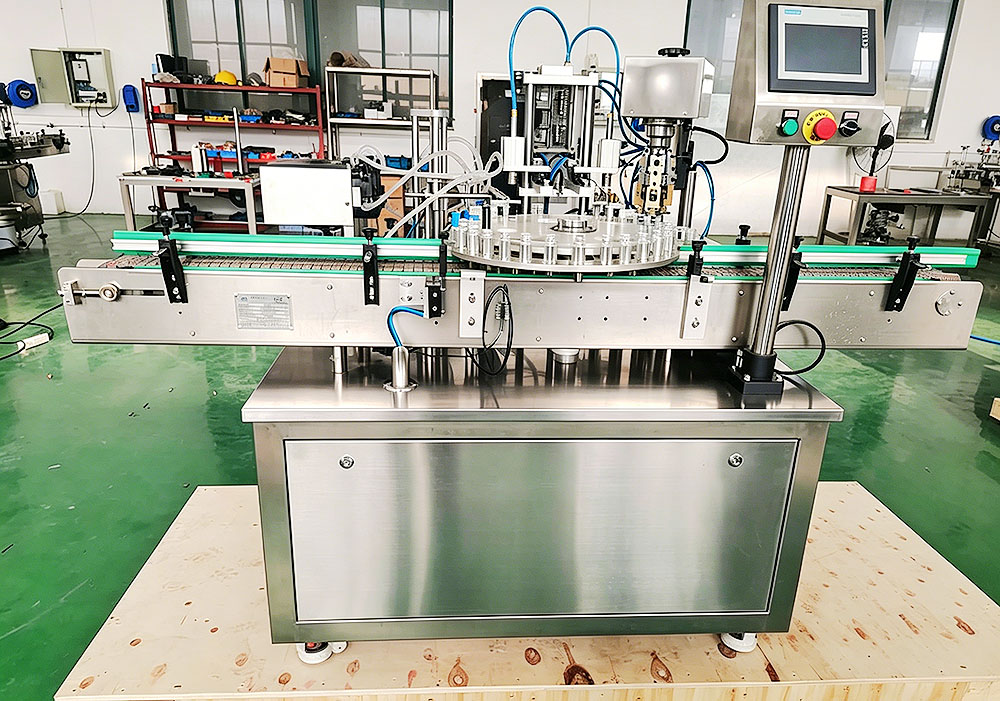
Customized Turnkey Solution
Instead of supplying off-the-shelf catalog machinery, Mic Machinery customized equipment configurations fully aligned with the client’s complete production conditions.
Vial Filling Machine
1. Servo-driven peristaltic pumps guarantee filling accuracy of ±0.3%
2. Product contact surfaces adopt 316L stainless steel with full electropolishing treatment
3. Equipped with anti-drip and anti-foam nozzles, compatible with low-surface-tension injectable drugs
4. Quick-change tooling supports full-size compatibility for 2 ml, 5 ml, 10 ml and 30 ml vials
5. Recipe-based HMI touchscreen: operators select vial models, and the machine automatically adjusts pump speed, filling duration and nozzle height
Capping Machine
1. Servo torque control fitted with a real-time closed-loop feedback system
2. Universal cap chute compatible with aluminum seals, plastic screw caps and flip-off aluminum-plastic caps
3. Seamless connecting conveyor bridge enables gap-free vial transfer from the filling station to the capping station
4. Automatic rejection station eliminates vials with missing or misaligned caps
Integrated Line Design Philosophy
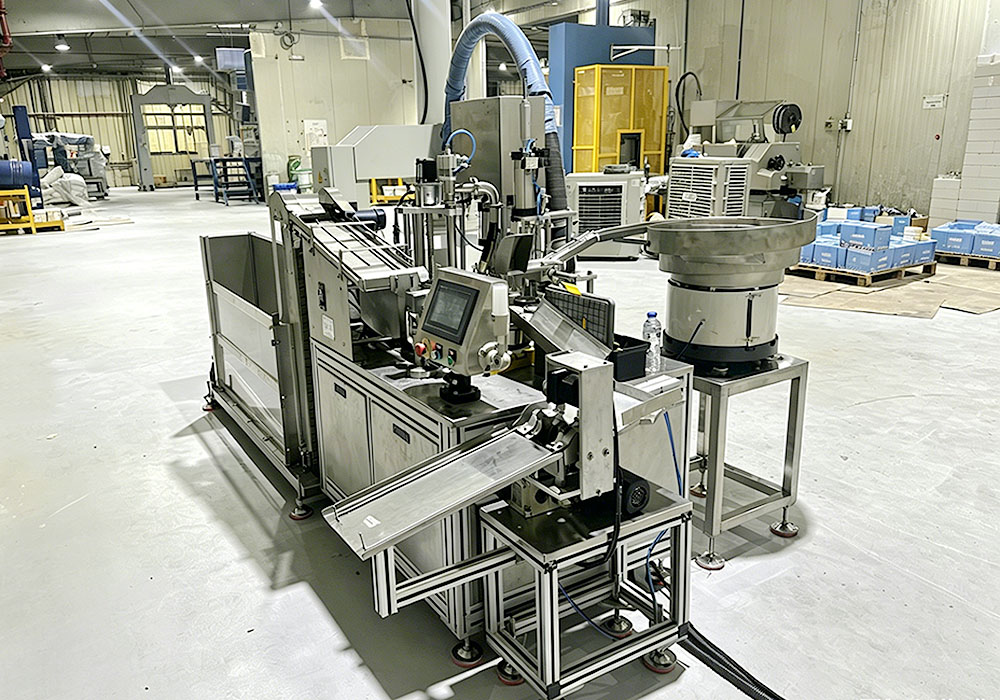
The entire system functions as a continuous closed-loop production workflow rather than two standalone machines.
After exiting the filling machine, vials travel through a 1.2-meter enclosed conveyor and enter the capping machine within 8 seconds. There are no open trays, no exposure to ambient non-sterile air, and zero manual handling between filling and sealing.
We preloaded three common production recipes prior to shipment. After our engineer arrived in Montevideo, the client completed validation trial batches only 48 hours after equipment unpacking.
On-site Commissioning & Production Outcomes
The equipment cleared customs smoothly at Montevideo Port. Mic Machinery assigned a commissioning engineer for a 7-day intensive on-site installation and training schedule.
- Days 1–2: Mechanical installation, leveling and connection of water, electricity and gas pipelines
- Day 3: Compilation of full IQ/OQ documentation, pump calibration and filling accuracy verification
- Day 4: Capping torque parameter adjustment and compliance validation of seal integrity
- Days 5–6: Hands-on operator training, format changeover drills and routine maintenance instruction
- Day 7: Final acceptance trial run and project handover
Key Performance Comparison Table
|
Metric |
Pre-Upgrade (Manual Line) |
Post-Upgrade (Mic Line) |
Improvement |
|
Filling Accuracy |
±3.0% |
±0.5% |
6-fold precision improvement |
|
Capping Pass Rate |
94.8% |
99.2% |
Up 4.4 percentage points |
|
Overall Rejection Rate |
5.2% |
0.8% |
84% reduction in defects |
|
Hourly Output |
Approximately 800 vials |
2,800 vials |
3.5 times higher throughput |
|
Format Changeover Time |
Over 90 minutes |
18 minutes |
75% faster changeover efficiency |
|
Labor Per Shift |
4 operators |
1 operator + 1 QC inspector |
50% labor cost cut |
This filling and capping set not only resolved quality hazards but also empowered the factory to secure large-scale orders previously out of reach.
Authentic Client Testimonial
"Three months ago, I lost sleep constantly worrying about batch rejection. Our largest distributor threatened to terminate cooperation unless we fixed poor sealing quality. We solicited quotations from European equipment vendors, and the staggering pricing nearly made us abandon equipment upgrades entirely.
Mic Machinery delivered a differentiated solution. Instead of arbitrarily downgrading machine performance, they tailored the filling and capping line to match our operational constraints. The engineer dispatched to Montevideo did more than install hardware; he fully trained our team to independently operate and maintain the equipment.
Today we run three production shifts with a steady rejection rate below 1%. That same major distributor has doubled its order volume. I deeply regret delaying this upgrade by six months."
— Production Manager, Uruguayan Pharmaceutical Facility
Your Next Step: Refuse to Settle for Mediocre Production
This Uruguayan plant is not an isolated case but a replicable upgrade template.
Operating manual or semi-automatic filling lines incurs hidden costs including rework waste, labor redundancy, lost orders and compliance penalties. Customized filling and capping production lines do not require exorbitant investment; alignment with your actual production demands remains the core priority.
Get customized line configurations tailored to your facility. Share your vial size range, target throughput and liquid physicochemical parameters, and our engineering team will match complete filling and capping setups with transparent pricing free of hidden fees and full on-site commissioning support.
Book a live virtual factory tour. Visit our production workshop in real time, watch filling and capping equipment in actual operation, and consult our technical team on all topics ranging from validation documentation to spare parts logistics.