
Vial Filling Line Upgrade Real Case for Morocco Pharma Plant
Vial Filling Line Upgrade Real Case for Morocco Pharma Plant
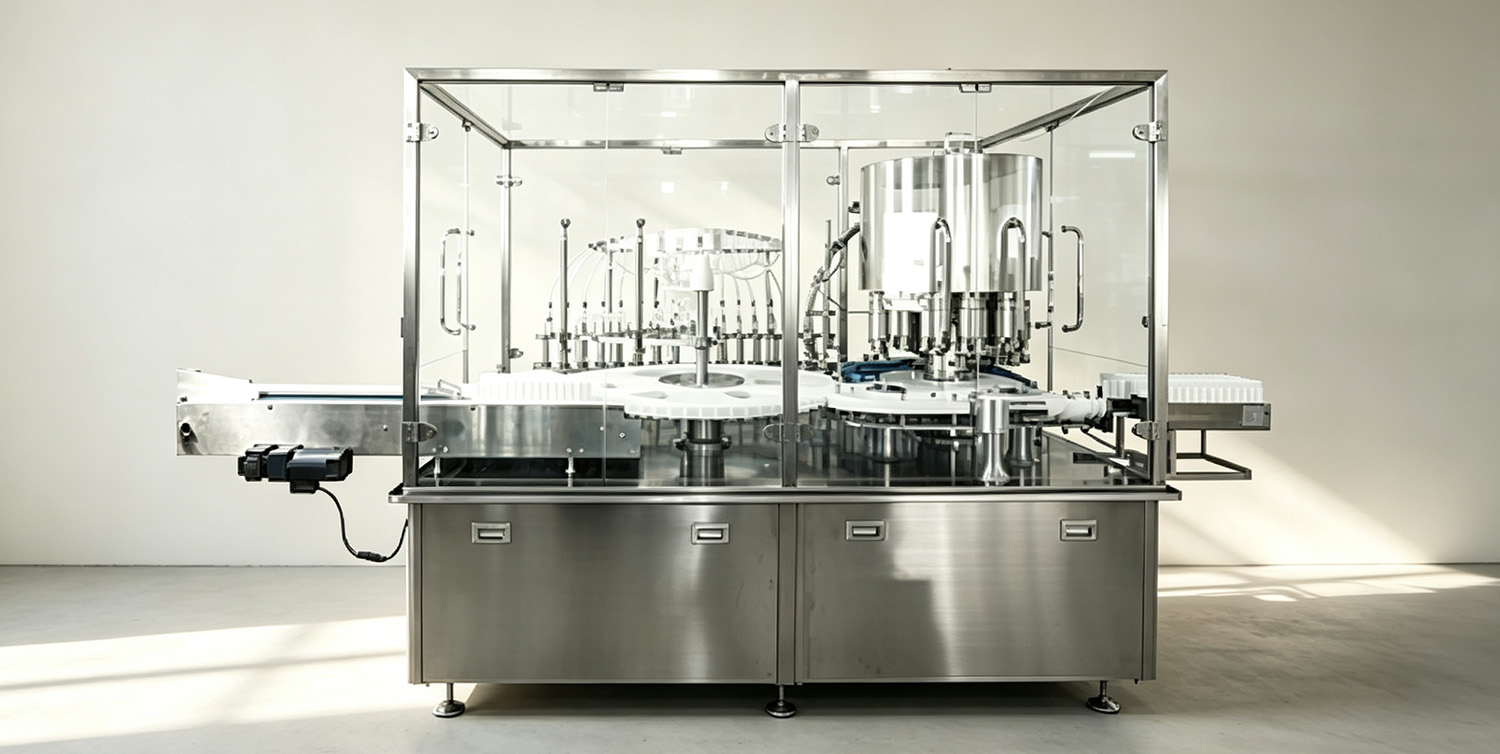
In September 2021, MIC MACHINERY CO., LTD shipped a fully automatic vial filling machine by sea from Shanghai to a growing pharmaceutical enterprise in Casablanca, Morocco. The compact, GMP compliant filling solution replaced the labour intensive manual production workflows. It delivered sufficient production throughput and filling accuracy for the client to take on larger contract manufacturing orders. Below is the complete case study covering initial pain points, on site commissioning and real world production results.
Project Overview
|
Item |
Details |
|
Client Country |
Morocco |
|
Factory Location |
Casablanca region |
|
Year Established |
2016 |
|
Industry |
Sterile liquid pharmaceuticals (small volume injectables) |
|
Primary Packaging |
2 mL to 10 mL borosilicate glass vials |
|
Target Capacity |
2,000 to 3,000 vials per hour |
|
Core Equipment |
MIC VF Series Automatic Vial Filling Machine |
|
Full Line Configuration |
Vial infeed turntable → MIC VF vial filling machine → Stainless steel conveyor bridge → Automatic vial capping machine → Wrap around labeling module with batch coder → Collection table |
Client Requirements & Pain Points
By 2021, the client’s semi automatic workshop had been in operation for five years. Its management identified several key challenges commonly faced by mid size injectable manufacturers upgrading vial filling equipment.
Poor Accuracy of Manual Filling
Operators drew and dispensed liquid drug into open vials using hand held syringes. Volume deviation frequently exceeded ±5%, causing costly active pharmaceutical ingredient losses and frequent batch rejection during quality reviews.
Sterility and Compliance Shortcomings
Filling operations were performed on open workbenches under basic laminar flow hoods. Without an enclosed filling chamber, contamination risks remained high, making it increasingly difficult to pass inspections by local health authorities.
Hard Production Capacity Bottleneck
With only two manual filling stations, peak output stood at approximately 600 to 800 vials per hour. The plant had to turn down contract manufacturing opportunities due to inability to meet delivery deadlines.
High Labour Consumption & Staff Turnover
Three shift operation with 4 to 5 operators per shift was required just to sustain production. High employee turnover triggered constant retraining, and noticeable quality fluctuations occurred across different shifts.
No Electronic Batch Records
Filling weights, reject counts and machine parameters were all manually logged in paper based record books. Lack of automated data traceability slowed deviation investigations and complicated batch release procedures.
The client required a compact vial filling machine installable within its existing cleanroom without major civil renovation. It needed to fit the footprint of original conveying equipment and deliver pharmaceutical grade filling accuracy under controlled investment costs.
Customised Solution
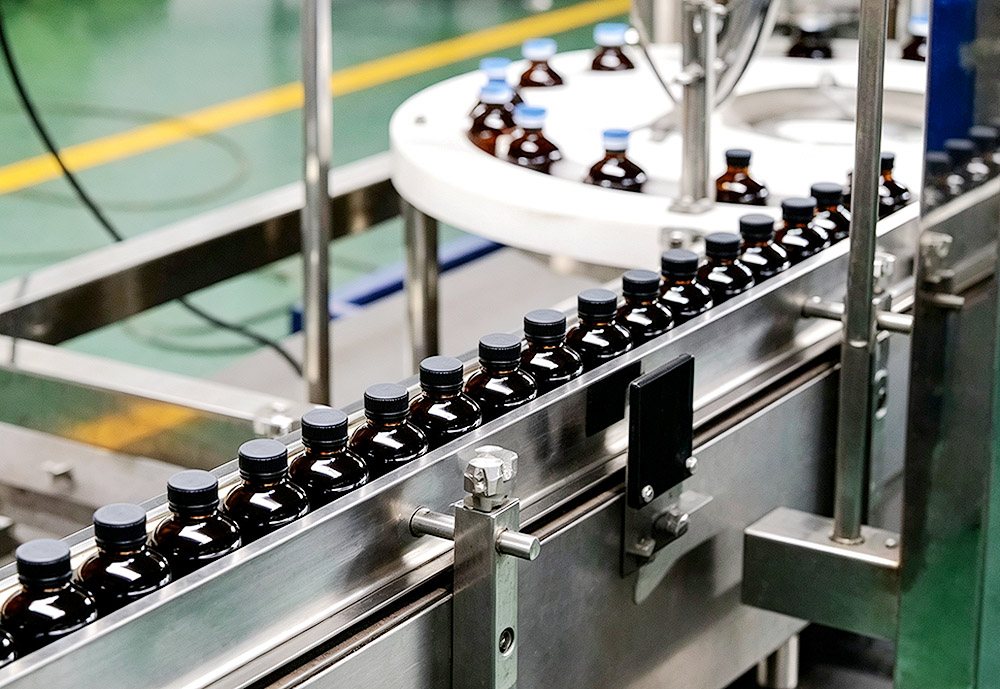
After reviewing factory drawings, vial specifications and product parameters, we delivered a modular line upgrade solution centred on the MIC VF Series.
Core Machine — MIC VF Series Vial Filling Machine
• Dosing System: Servo driven peristaltic pump with programmable filling profiles, suitable for low viscosity sterile injectables
• Filling Range: 1 to 20 mL, adjustable via a 10 inch colour HMI
• Filling Accuracy: ±1% by weight
• Throughput: Up to 3,000 vials per hour subject to filling volume
• Product Contact Components: 316L stainless steel and medical grade platinum cured silicone tubing, fully autoclavable
• Anti Drip Nozzle: Suction back function eliminates post fill dripping and prevents cross contamination between vials
Integrated Line Modules
• Infeed Turntable: Gentle centrifugal vial unscrambler for nested glass vials, minimising glass to glass impact and particle generation
• Indexing Star Wheel: Servo controlled vial transport with dedicated change parts for 2 mL, 5 mL and 10 mL vial formats
• Conveyor System: 304 stainless steel frame with variable frequency drive, linking filling, capping and labelling stations
• Automatic Vial Capping Machine: Crimp capping capability with adjustable torque feedback to guarantee sterile sealing integrity
• Labelling & Coding Station: Wrap around labeller paired with thermal transfer batch coder for expiry date and lot number printing
• Safety Enclosure: Tempered glass doors with magnetic interlocks; the filling machine automatically stops if any door opens during production
On Site Custom Modifications
Given the cleanroom ceiling height of only 2.6 m, we shortened the machine frame’s vertical profile by 150 mm while preserving full tool free access for tube replacement and equipment cleaning. A split design control cabinet allows wall mount installation to conserve valuable floor space.
On Site Installation & Commissioning
The project followed a standard five week commissioning cycle from sea shipment through to process validation.
Week 1 — Shipment & Unloading
The vial filling machine and accessory crates were shipped by sea from Shanghai to Casablanca Port. Our logistics team provided packing lists, HS codes and commercial invoices in advance to accelerate Moroccan customs clearance. Equipment arrived on schedule at the client’s factory dock.
Week 2 — Mechanical Installation
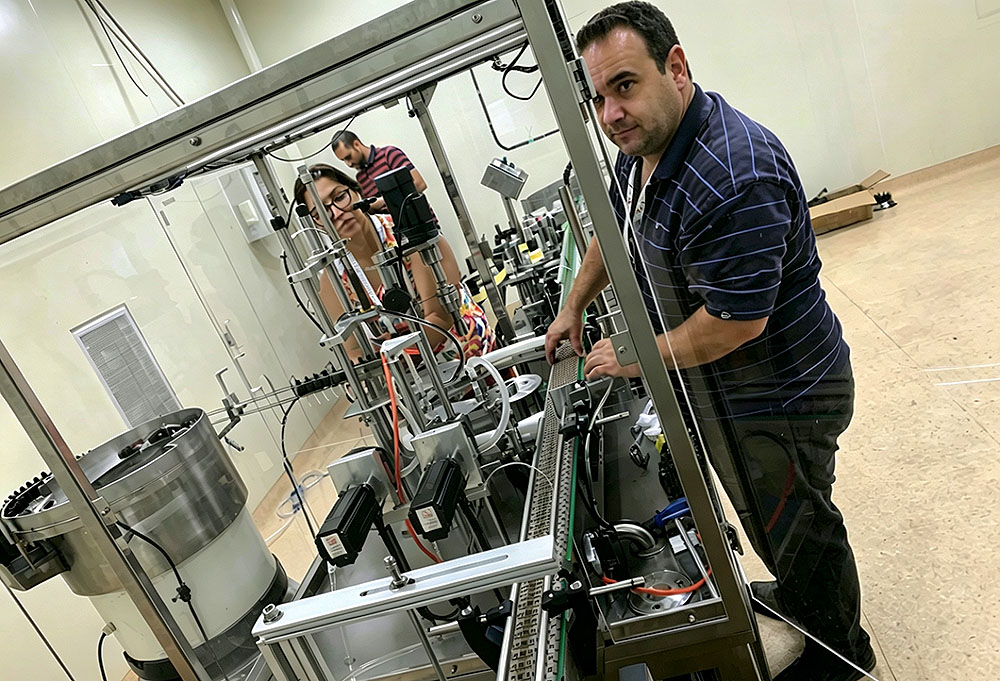
Our field engineer supervised unpacking on site. Fitted with stainless steel casters, the MIC VF filling machine was rolled into the cleanroom core, levelled and anchored. The infeed turntable and capping unit were aligned to form a smooth U shaped material flow matching the layout of the client’s existing packaging zone.
Week 3 — Electrical & Pneumatic Connection and Dry Run Test
Power supply, compressed air piping and sensor cables were connected. Liquid free dry run tests were performed to verify indexing timing, star wheel synchronisation, safety door interlocks and emergency stop responses. Servo pumps were calibrated using certified test weights traceable to the client’s quality standards.
Week 4 — Wet Commissioning & Operator Training
A 72 hour continuous trial was carried out using purified water and placebo vials. Our engineer trained six operators and two maintenance technicians covering HMI operation, recipe management, format change over, peristaltic tube replacement and daily wipe down sanitisation protocols. By week end, night shift personnel could operate the filling machine independently.
Week 5 — Process Validation & Final Acceptance
Three consecutive media fill simulation batches were completed under supervision of the client’s QA team. Test results showed zero contamination events, fill weight RSD below 0.8%, and consistently specification compliant capping torque. The vial filling production line was formally approved for commercial manufacturing.
Production Performance Comparison
|
Parameter |
Old Semi‑Automatic Line |
New Vial‑Filling Line |
|
Filling Method |
Hand held syringe, manual actuation |
Automatic servo dosed peristaltic pump filling |
|
Throughput |
Approx. 800 vials/hour |
Approx. 2,800 vials/hour |
|
Filling Accuracy |
±5% |
±1% |
|
Reject Rate |
4 to 6% |
<0.5% |
|
Operators per Shift |
4 to 5 personnel |
1 to 2 personnel |
|
Cleanroom Exposure Condition |
Open workbench with basic laminar flow hood |
Enclosed filling chamber with interlocked safety doors |
|
Batch Records |
Paper based logbooks |
USB exportable electronic batch reports |
|
Format Change over |
90 to 120 minutes |
25 to 30 minutes |
|
Power Consumption |
Negligible (labour dominated) |
Approx. 2.2 kW continuous operation |
Client Feedback
Feedback was collected from three different roles within the client organisation after six months of continuous equipment operation.
Production Manager
“For the first time in five years, we are no longer scrambling to fulfil order deadlines. The vial filling machine runs two shifts daily, requiring just one operator to monitor the HMI and load vials. Change over between our 2 mL and 10 mL products has dropped from two hours to half an hour. This alone adds one extra production day to our weekly schedule.”
Quality Assurance Manager
“From a compliance perspective, this upgrade is exactly what we needed. The enclosed filling chamber and automatic batch reporting built full confidence for inspectors during our last regulatory audit. Since commissioning, fill weight RSD has remained below 1% for every released batch. Electronic records have cut our batch review time by more than half.”
Plant Director
“We were cautious about sourcing automated equipment from China for the first time, yet return on investment has been remarkable. API waste has been reduced by over 50%, and we no longer lose contract manufacturing bids due to capacity constraints. Three former filling station operators have been retrained and reassigned to our expanded packaging workshop. The vial filling machine from CIXI MICHUANG MACHINERY has become core equipment under our three year growth roadmap.”
Ready to Upgrade Your Vial Filling Production Line?
If you plan to build a new sterile injectable plant or replace outdated manual filling equipment, our engineering team can configure a vial filling machine and integrated production line tailored to your throughput targets, cleanroom constraints and compliance requirements.
Get a custom quotation for a similarly scaled production line: Provide vial specifications, filling volume, product viscosity and target hourly output. We will deliver detailed proposals and layout drawings within 24 hours.
Book a live virtual factory tour: Watch the MIC VF Series vial filling machine running inside our clean test bay, observe real time format change over, and speak directly with our application engineers prior to purchase commitments.
FAQ
1: What vial formats does the MIC VF Series vial filling machine support?
The standard unit accommodates 1 to 50 mL glass or plastic vials. Format change parts including star wheels, guide rails and nozzles can be swapped within 25 to 30 minutes.
2: Is the equipment compliant with GMP and pharmaceutical regulations?
Yes. All product wetted components are 316L stainless steel or medical grade silicone. The machine features electronic batch reporting, password protected user access levels and IQ/OQ documentation templates to support GMP validation.
3: Can the machine handle foamy or high viscosity sterile liquids?
Yes. This Moroccan customer deployed peristaltic pumps for low viscosity injectables; piston pump and gravity filling systems are also available. For foamy materials, bottom up filling and vacuum degassing options deliver clean, bubble free precise dosing.
4: What is the typical on site installation and commissioning cycle?
For a standalone filling machine with standard conveying and capping modules, mechanical assembly, electrical hookup, wet commissioning and operator training generally take 2 to 3 weeks, subject to on site utility readiness and cleanroom access conditions.
5: Do you supply spare parts and technical support for African clients?
Yes. Our export warehouse stocks common wear parts such as peristaltic pump tubing, O rings, nozzles and sensors for air courier dispatch. Remote video diagnostics, English language technical manuals and French quick reference guides are included.
6: Can automatic labelling or cartoning units be retrofitted onto the line later?
Absolutely. Conveyor hardware and PLC architecture adopt standardised communication protocols and mechanical dimensions. Downstream equipment including wrap around labellers, inkjet printers and automatic cartoners can be added without replacing the filling machine’s core control system.