
Vial Filling Machine Offers Reliable Pharma Production Schemes
Vial Filling Machine Offers Reliable Pharma Production Schemes
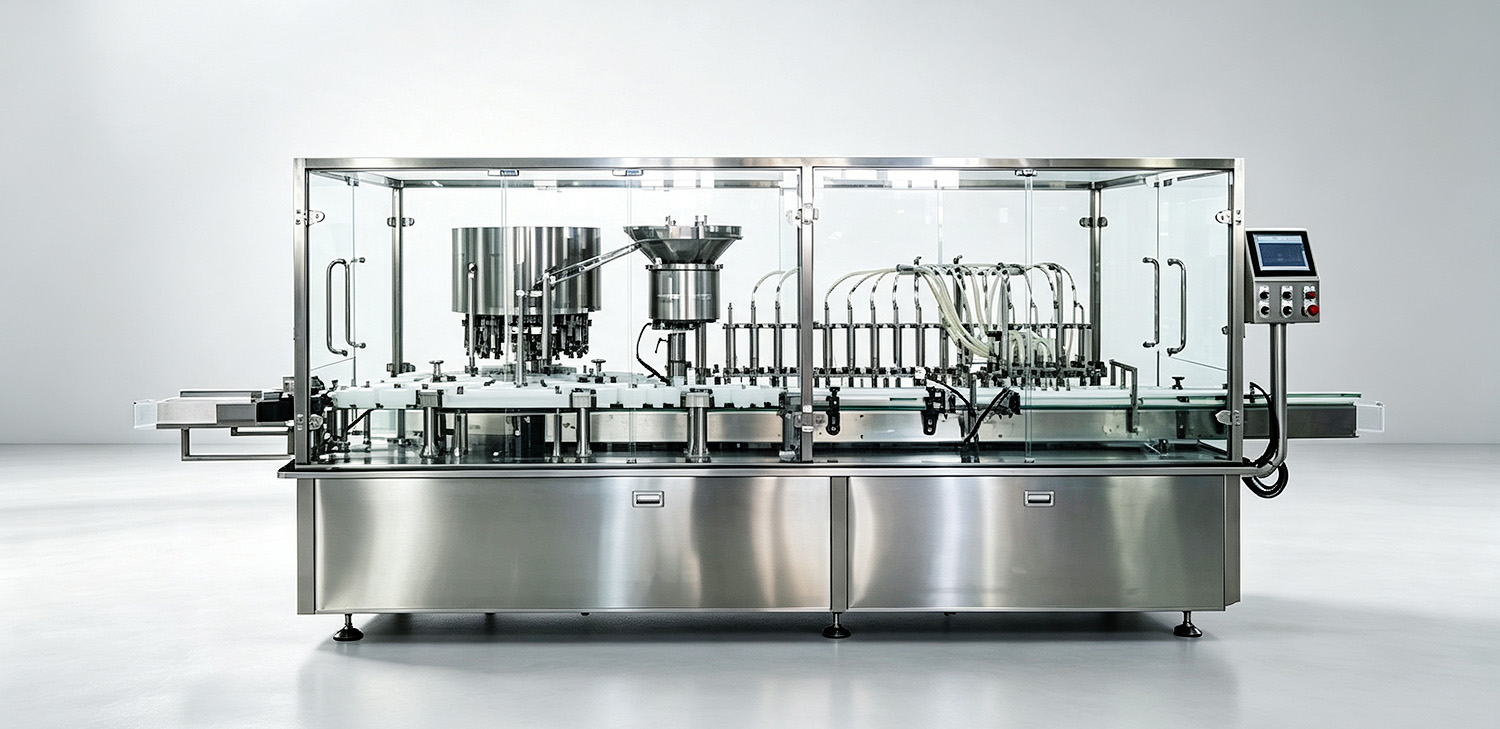
Pharmaceutical production enforces stringent and non-negotiable standards for precision, sterility, and full-process traceability. Tiny deviations in filling volume or even the slightest potential contamination risks can lead to the complete scrappage of entire batches of vaccines, injectables, and biologic drugs. For this reason, the vial filling machine is far more than ordinary production equipment; it serves as the core pillar that directly underpins stable and compliant pharmaceutical manufacturing workflows.
Jiangsu Mic Machinery develops and manufactures a comprehensive lineup of vial filling equipment designed to resolve critical pain points for pharmaceutical manufacturers. These pain points include achieving stable and controllable dosing, ensuring full aseptic operation, enabling flexible batch production compatible with multiple vial specifications, and facilitating seamless interconnection with upstream and downstream processes. Whether you are constructing a brand-new pharmaceutical plant, expanding existing production capacity, or upgrading outdated production lines for full automation, selecting a well-matched vial filling machine directly determines the finished product quality, regulatory compliance with health authorities, and the long-term operating costs of your facility.
Centered on our proprietary vial filling technologies, this article thoroughly breaks down our turnkey solutions. We will cover complete line configuration, detailed operating principles, capacity planning, optimal plant layout, and verified industrial projects. Upon reading, you will gain clear insight into how our vial filling machines can build scalable, GMP-compliant mature production lines that are readily adaptable to your business expansion.
Suitable Clients for This Filling Solution
Mic Machinery’s vial filling machines are engineered to cater to three major customer categories. While these groups hold distinct operational objectives, they all demand robust, long-lasting equipment that can pass rigorous regulatory audits worldwide.
Newly Built Pharmaceutical Plants
Start-up pharmaceutical enterprises require foundational production hardware that supports long-term iterative upgrades. New facilities need equipment with straightforward validation protocols, low operational barriers, and flexible compatibility for diversified pharmaceutical dosage forms as product portfolios expand. Our vial filling machines adopt a modular framework; new factories can start with core filling units and progressively add vision inspection, capping, and labeling modules as their capacity grows.
Capacity Expansion Projects
Established pharmaceutical manufacturers often encounter throughput bottlenecks with manual and semi-automatic lines. They require significant output improvement without compromising filling precision. Any vial filling line expansion must ensure a smooth transition; production shutdowns incur substantial losses, and repeated regulatory re-qualification must be minimized. Our automatic vial filling systems are designed to fit existing cleanroom layouts and support universal conveyor interfaces, drastically lowering the complexity and cost of retrofitting.
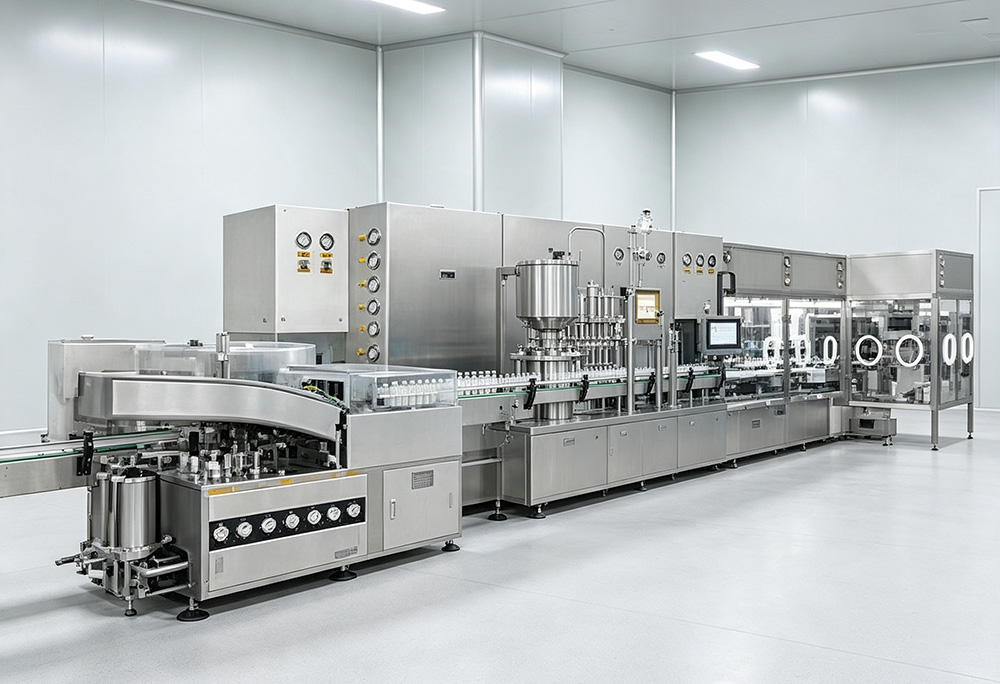
Automated Retrofit of Outdated Production Lines
Workshops that still rely on manual filling commonly suffer from rising labor expenses, frequent human errors, and stricter compliance mandates for batch documentation. Upgrading to automated vial filling equipment eliminates the quality fluctuations caused by manual operations. It also enables the creation of electronic batch records, aligning your manufacturing with standards issued by the FDA, EU GMP, and WHO. Thanks to reduced material waste, boosted throughput, and lower labor dependence, such equipment typically achieves a full return on investment within 12 to 18 months.
Full Line Configuration: Establishing an Integrated Vial Production Ecosystem
A standalone vial filling machine only executes the filling process; a complete production scheme relies on the coordinated operation of multiple specialized devices. Mic Machinery independently develops and fabricates all line components to guarantee seamless hardware compatibility, unified control logic, and centralized after-sales accountability.
Vial Washing & Depyrogenation Equipment
Vials must undergo thorough cleaning and depyrogenation prior to liquid filling. Our ultrasonic washing tunnels effectively eliminate particulate contaminants from inside the vials. This process is paired with hot-air sterilization depyrogenation tunnels to render the vials fully sterile. This upstream pretreatment is an indispensable prerequisite for compliant manufacturing of injectables and biologics.
Vial Filling Machine (Core Main Unit)
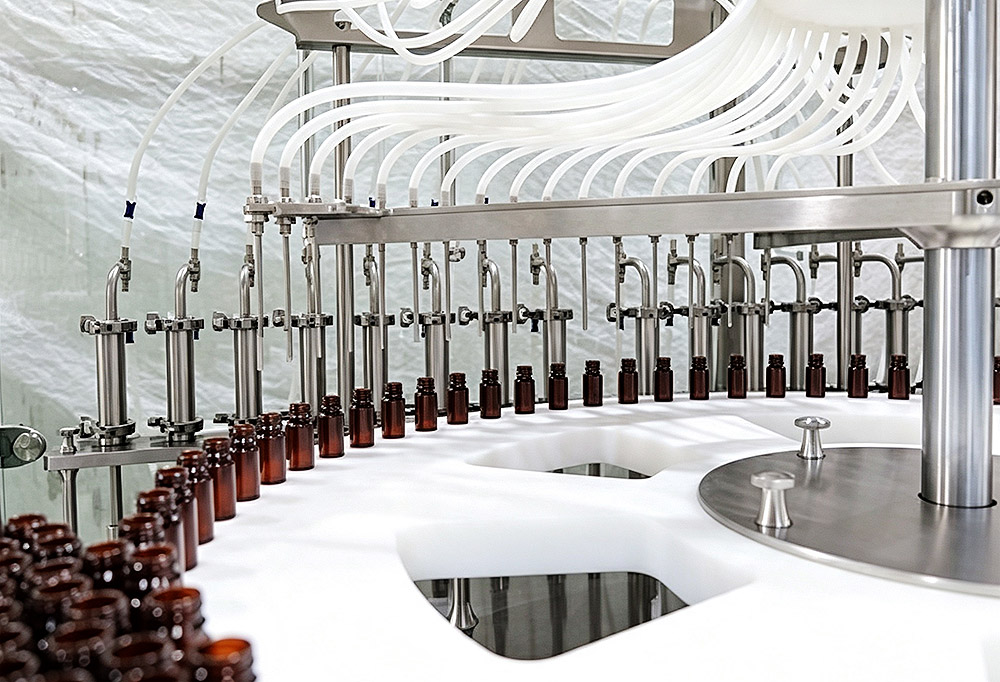
The core filling unit supports a customizable selection between peristaltic pumps and piston pumps, based on liquid viscosity and the required filling range. Servo-driven filling nozzles deliver exceptional filling accuracy, up to ±0.5% for standard volumes. The filling station operates within a laminar airflow environment or an isolator to sustain ISO Class 5 (Class 100) cleanliness. Tool-free adjustments enable size changeovers for 2 mL, 5 mL, 10 mL, and 20 mL vials within 30 minutes.
Stoppering & Capping Equipment
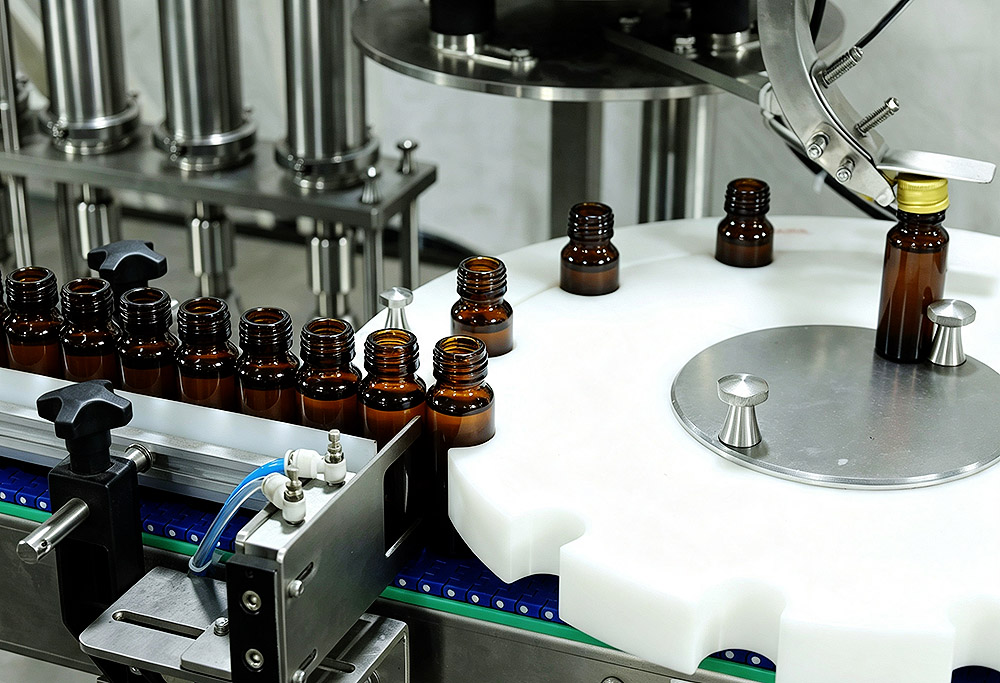
Post-filling, rubber stoppers are accurately pressed into the vial mouths via negative pressure or mechanical compression for primary sealing. For models configured with aluminum caps, we employ rotary capping machine with precisely adjustable torque to guarantee a tight seal without damaging the aluminum closures. Both stations feature rejection mechanisms to automatically divert vials with abnormal height or misaligned components.
Visual Inspection Machine
All filled and capped vials undergo a thorough automated optical inspection. High-definition cameras conduct multi-angle scanning to detect foreign particles, insufficient fill volume, missing stoppers, crooked caps, surface damage, and other critical defects. Defective products are pneumatically ejected automatically, with all inspection data archived permanently for comprehensive batch traceability.
Labeling & Secondary Packing Equipment
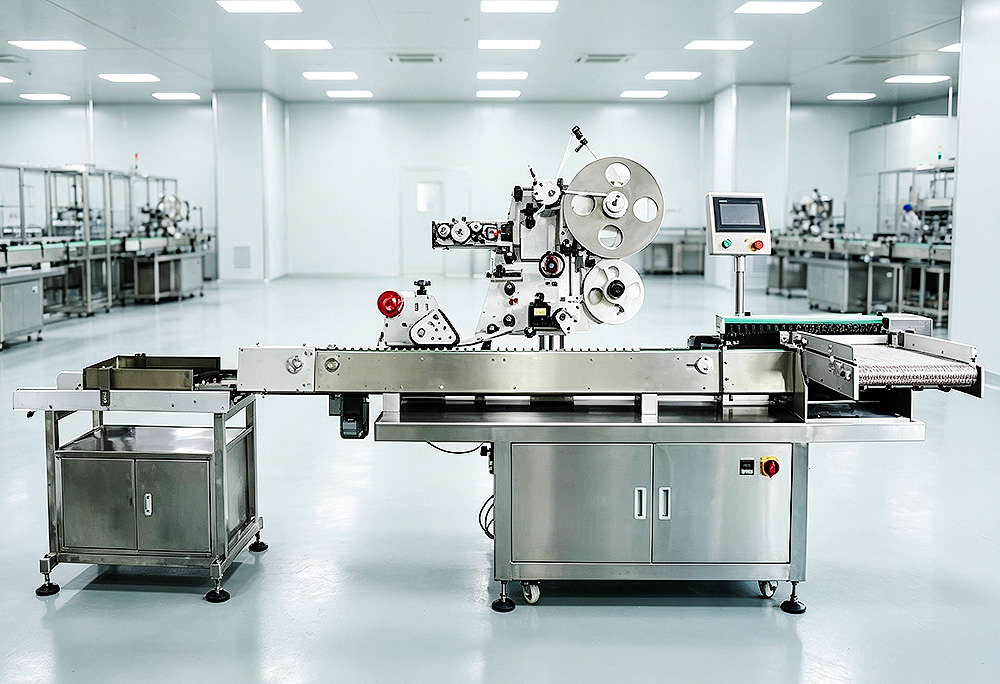
The final processes apply front/back or wrap-around self-adhesive labels with on-demand printing of variable data including batch numbers and expiry dates. Vials can then be sorted into trays or cartoned; serialization and aggregation functions are also available to support a one-vial-one-code traceability management system.
All this equipment is self-developed and manufactured by Mic Machinery with interconnected control systems. The entire line shares one HMI interface, consistent alarm logic, and a unified spare parts catalog, which eliminates the confusion of jumbled third-party hardware and simplifies maintenance significantly.
Production Flow & Operating Principles: Step-by-Step Breakdown of End-to-End Vial Filling
Mastery of the full filling workflow empowers operators to troubleshoot efficiently and allows quality teams to complete validation smoothly. The complete workflow of Mic Machinery’s vial filling line is outlined below:
1. Vial Feeding & Positioning
Mass volumes of glass or polymer vials are loaded into hoppers, sorted by vibratory unscramblers to form a single, orderly stream, and transported to the inlet starwheel. The starwheel precisely spaces the vials to ensure uniform indexing that matches the rhythm of downstream stations.
2. Precision Filling
The vials stabilize at the filling stations, and pumps dispense liquid at pre-programmed volumes. Peristaltic pumps are preferred for shear-sensitive biologics, as the liquid only contacts disposable tubing. Piston pumps excel for high-viscosity suspensions and high-value liquids by minimizing residual product. Filling nozzles extend into vial necks to prevent foaming and splashing; the nozzles retract once dosing finishes, and vials continue their conveyance.
3. Rubber Stopper Compression
Vibratory bowls organize the rubber stoppers, which are then picked up by vacuum heads and pressed accurately into the vial mouths. The machine calibrates stopper insertion force and depth to achieve consistent sealing tightness without damaging the stopper rims.
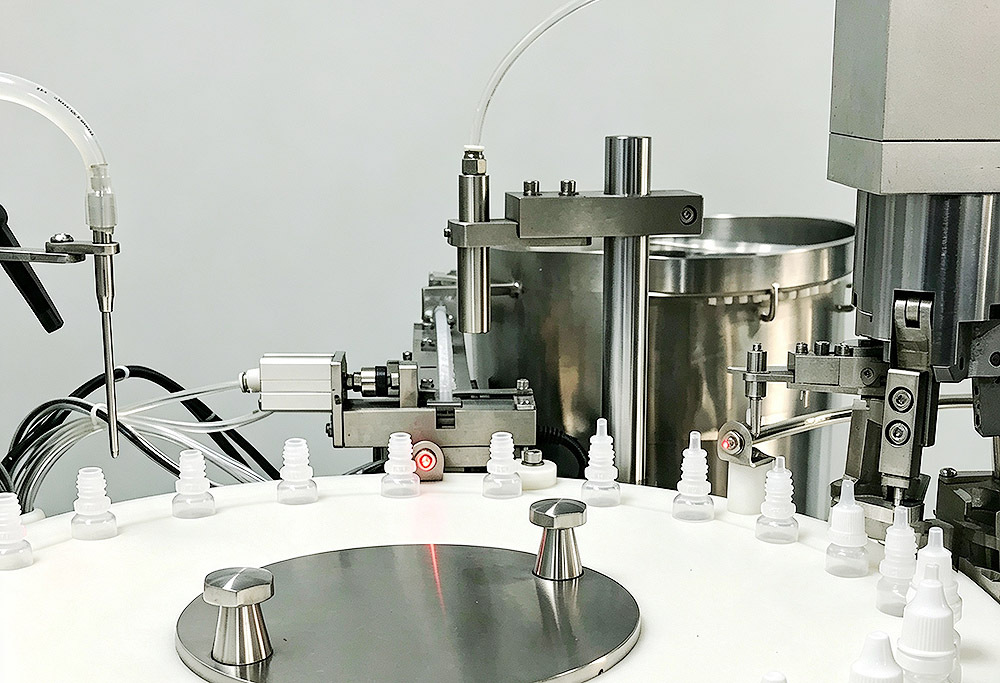
4. Aluminum Cap Crimp Sealing
Aluminum caps are fed via vibratory bowls and fitted over the stoppered vials. Multiple crimp rollers apply even pressure to fold the cap skirts against the vial neck beads. Torque sensors conduct real-time monitoring to confirm reliable sealing for every cap.
5. Visual Inspection & Defect Rejection
The vision system captures multi-angle images of the vials, with system algorithms comparing these visuals against qualified benchmarks. Non-compliant vials are instantly detected and pneumatically pushed into locked reject bins.
6. Discharge & Collection
Qualified vials exit via conveyor belts and can be fed directly to labeling stations. The entire workflow is coordinated by a central PLC with recipe storage functionality. Switching product varieties only requires calling pre-set recipes rather than performing lengthy mechanical recalibration.
The underlying logic of “indexed conveyance – filling – sealing – inspection – collection” remains identical regardless of whether the hourly output ranges from 2,000 to 20,000 vials. Output discrepancies stem solely from the filling head quantity, conveyor speed, and the degree of automation selected.
Customized Capacity Tiers: Line Scaling Aligned with Plant Production Scale
Mic Machinery rejects one-size-fits-all standardized solutions, instead offering tailored configurations based on output demands, budgets, and long-term expansion roadmaps. We provide three standardized scalable tiers, all of which support personalized adjustments.
Small-Scale Line: 1,000–3,000 Vials Per Hour
This tier is ideal for start-up pharmaceutical firms, CMOs undertaking clinical trial batches, and university research laboratories transitioning to GMP-compliant manufacturing. Most configurations feature single-head/dual-head filling machines and semi-automatic aluminum capping, occupying less than 8 meters in total floor space. Operators can complete full training within one day, and streamlined validation documents facilitate audits for first-time factory owners.
Medium-Scale Line: 4,000–10,000 Vials Per Hour
Suited for regional pharmaceutical manufacturers and expanding CMO vendors. Multi-head rotary filling systems integrate filling, stoppering, and capping; automatic format changeovers save time and labor, with full vision inspection modules included as standard. This tier effectively balances capital expenditure and production flexibility, enabling the stable manufacturing of 5 to 15 different drug SKUs on one line.
Large-Scale Line: 12,000–24,000 Vials Per Hour
Designed for multinational generic drug manufacturers, major vaccine producers, and high-volume biologic production bases. These lines are equipped with continuous-motion rotary fillers with 8 to 16 filling heads, optional isolator/RABS containment, and fully automated material feeding and discharging. All parameters are monitored in real time, and the control system generates electronic batch records that are fully compliant with 21 CFR Part 11.
All tiers are constructed with 316L stainless steel, with product contact surfaces finished to Ra ≤ 0.8 μm. Complete IQ/OQ validation documentation is provided as standard to ensure a smooth qualification process.
Plant Layout & Turnkey Implementation Services: From Design Drawings to Commercial Batch Launch
Equipment procurement constitutes merely one segment of the project; on-site adaptation, validation execution, and staff training are equally vital. Mic Machinery delivers end-to-end supporting services to eliminate uncertainties in cross-border procurement.
Plant Layout Planning
Prior to equipment manufacturing, our engineers review client cleanroom blueprints, HVAC parameters, and utility loads. They deliver detailed 2D/3D layout drawings marking precise equipment coordinates, operator walkways, maintenance clearances, and material flow paths. This proactive approach allows us to pre-emptively resolve potential implementation risks, such as depyrogenation tunnels failing to pass through doorways or conflicting airflow directions between laminar hoods and equipment exhausts.
Equipment Fabrication & Factory Acceptance Test (FAT)
All equipment undergoes assembly and full testing at our manufacturing facility. The FAT covers no-load commissioning, water simulation trials, and throughput verification. Clients may attend on-site FAT inspections or witness the testing live via streaming. Shipment is arranged only after all specifications are fully met and verified.
Overseas On-Site Installation & Commissioning (Site Acceptance Test / SAT)
Our engineers travel to client facilities for equipment leveling, utility piping connection, and SAT execution. The SAT is performed using the client’s actual vials and liquid formulations to match the performance benchmarks validated during the FAT. For regions lacking robust local maintenance support for European-style pharmaceutical equipment, these on-site services drastically mitigate implementation risks.
Operator & Maintenance Training
Our comprehensive training covers recipe recall, format changeovers, alarm troubleshooting, and routine cleaning. Maintenance personnel receive expert guidance on preventive maintenance schedules, wear-part replacement, and HMI-based fault diagnosis. All hands-on training is conducted on the client’s own equipment, with training records archived for pharmaceutical quality assurance audits.
Spare Parts Inventory & Remote Technical Support
Mic Machinery maintains a substantial stock of critical wear components for expedited delivery. In case of urgent malfunctions, our engineers conduct remote diagnosis of PLC alarms, review inspection footage, and guide adjustments via VPN and remote desktop. Our average response time is capped at four hours on business days.
Industrial Implementation Cases: Verified Field Performance
Mic Machinery’s vial filling equipment operates reliably in pharmaceutical plants across four continents. All projects are strictly confidential; however, anonymized real-world cases covering diverse application scenarios are detailed below.
1. North America: Vaccine Plant Capacity Expansion
A public vaccine manufacturer in North America required tripled filling output to fulfill national immunization program requirements. Mic Machinery supplied a complete aseptic filling line with isolator technology delivering 15,000 vials hourly. Installation, commissioning, and validation concluded within 10 weeks post-delivery, and the facility passed its WHO prequalification audit on the first attempt.
2. Middle East: New Injectable Pharmaceutical Plant
A private pharmaceutical group in the Middle East constructed a greenfield facility focused on antibiotic vial production. Mic Machinery provided a medium-capacity line featuring peristaltic filling, vision inspection, and automatic cartoning. The entire timeline from order placement to the first commercial batch totaled just eight months. The client cited the unified line control systems and single-source accountability as core reasons for selecting Mic Machinery over European competitors.
3. South America: Automated Retrofit of CMO Contract Filling Line
A South American contract pharmaceutical manufacturer retired a 20-year-old manual filling line and upgraded to Mic Machinery’s automatic vial filling equipment. Hourly throughput rose dramatically from 800 to 6,000 vials, while reject rates dropped from 3.2% to an impressive 0.4%. The client was able to recoup the total equipment investment within 14 months thanks to expanded contract volume and reduced material wastage.
4. Eastern Europe: Biotech Lab Transition to GMP Commercial Manufacturing
An Eastern European biotech start-up successfully scaled up from lab-scale trial filling to GMP-compliant commercial production. Mic Machinery customized a small-scale line bundled with full compliance validation documents, enabling the smooth submission of marketing authorization applications to the EMA. The modular design allows for the future addition of filling heads for mass production of a second pharmaceutical product.
These cases confirm that Mic Machinery’s vial filling machines adapt stably to varied regional climates, global regulatory frameworks, and diverse drug categories, all with proven long-term operational reliability.
Vial filling machines are decisive factors governing pharmaceutical production efficiency, regulatory compliance, and expandable potential. Mic Machinery delivers precision-tailored solutions for three core scenarios: new plant construction, capacity expansion, and automated line retrofitting. Whether clients purchase standalone equipment or full turnkey filling lines, we provide end-to-end support covering mechanical design, compliance documentation, on-site installation, and long-term after-sales services. Our goal is to empower pharmaceutical manufacturers to consistently produce safe, regulation-compliant medicines.
FAQ
What is the standard lead time for vial filling machines?
Standard configurations ship 10 to 12 weeks following order confirmation. Custom lines with isolators or specialty customized materials extend to a maximum lead time of 16 weeks. A detailed project schedule is issued upon contract signing, with milestone updates shared biweekly.
What compliance certifications do your machines hold?
All equipment is manufactured under the ISO 9001 quality management system. Equipment design and supporting documentation comply with FDA regulations, EU GMP Annex 1, and WHO TRS 961. Complete IQ/OQ protocols are included as standard; PQ performance qualification documentation is available on request.
What after-sales services can you provide globally?
Mic Machinery’s vial filling machines have been installed across over 30 countries. For regions without local service offices, our engineers are dispatched from headquarters or regional hubs. Approximately 70% of technical inquiries are resolved remotely, with on-site support reserved for installation, major maintenance, and complex fault resolution.
What mandatory plant requirements apply for vial filling line installation?
The filling zone must maintain an ISO Class 5 (Class 100) aseptic environment, with surrounding general workshops meeting a minimum of ISO Class 8 (Class 100,000). Required utilities include purified water, 6-bar clean compressed air, and a power supply compatible with local 380V/50Hz or 220V/60Hz standards. Ceiling height should measure at least 3.2 meters to accommodate laminar hood installation and equipment maintenance. Our layout team verifies all requirements during the design phase.
What consumables and spare parts should facilities keep in stock?
Recommended inventory includes peristaltic pump tubing, O-rings, filling needles, and vision system lamps. We deliver customized spare parts lists according to projected annual operating hours. Format molds for vial size conversion ship with the machine as standard, with replenishment lead times of roughly two weeks.
Can the machine accommodate multiple vial sizes?
Yes. All vial filling machines ship with format tooling matching agreed vial specifications. Most size changeovers use tool-free operation and take 20 to 40 minutes depending on station count. The PLC stores all size recipes for one-click parameter recall.
Is personnel training included with equipment purchase?
Training is fully included. Three to five days of comprehensive on-site hands-on training is delivered alongside installation and commissioning. Pre-shipment training sessions at our factory are also available on request.