
A Complete Guide to Vial Production Line Equipment
A Complete Guide to Vial Production Line Equipment
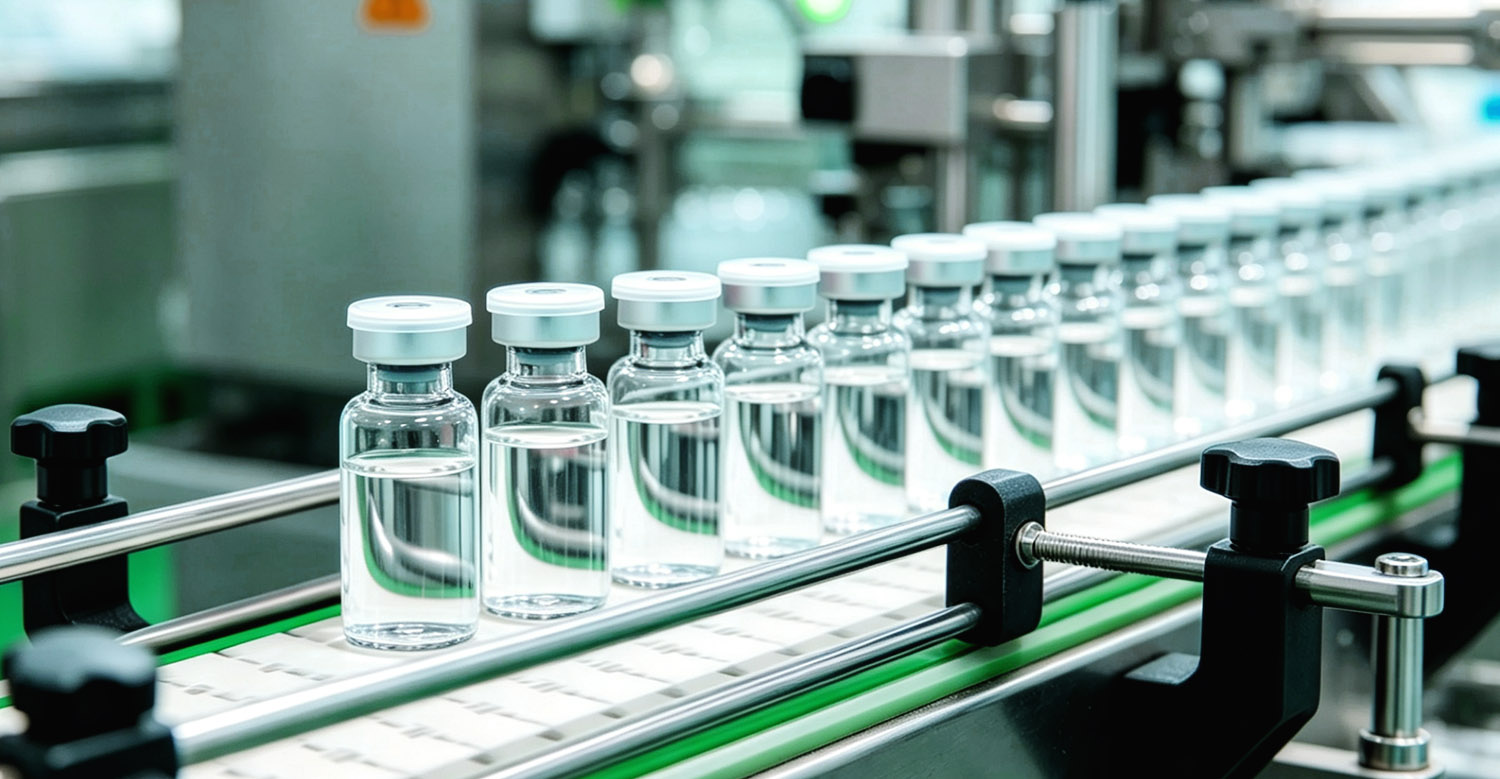
Take one vial of injectable medicine. It looks small and simple. But it has already passed through seven or eight machines before a nurse holds it. One missed step, like a half-washed vial or a loose cap, can reject a whole batch. So smart manufacturers plan the whole line, not just one machine. In this guide, we follow a vial from unpacking to boxing, in the exact order it travels. Along the way, we share practical tips and common mistakes. We also explain why a dependable vial filling machine deserves the most attention of all. Grab a coffee, and let us walk the line together.
How a Vial Production Line Works at a Glance
Think of a vial production line as a relay race. Empty vials pass from one machine to the next. Each runner must pass the vial on in better shape than it received it. If one machine drops the baton, for example by leaving particles behind, the next stage cannot fix it. That is why order matters so much. The vial filling machine sits in the middle of this race.
Here is the usual sequence: washing, sterilizing and depyrogenation, filling and stoppering, freeze drying, capping, visual inspection, and finally labeling and packing. Liquid products skip the freeze dryer and go straight to capping. So your exact lineup depends on your drug. A vial filling machine works best when every step before it prepares clean vials, and every step after it protects the filled vial.
Most modern factories connect these machines into one linked line. Vials roll along without anyone touching them. Fewer hands mean less contamination and steadier output. The vial filling machine is the center of this setup. Everything before it prepares for filling. Everything after it protects what was filled.
Vial Washing Machine: Where Every Vial Starts
Even brand new vials are not truly clean. Glass dust, tiny fragments, and packaging residue hide inside. You cannot see them with the naked eye. A vial washing machine fixes that by rinsing each vial inside and out. It usually uses ultrasonic cleaning and finishes with purified water or water for injection. Skipping this step is like pouring fresh juice into a dusty glass. A vial filling machine cannot fix a dirty vial later.
• Ultrasonic cleaning shakes loose stubborn particles
• Final rinse with water for injection (WFI)
• Filtered compressed air blows out leftover water
• Quick format changes for different vial sizes
Here is a common mistake: choosing a washer on speed alone. A fast washer that cracks vials or leaves water spots only moves your problems down the line. Look for gentle vial handling, 316L stainless steel on contact parts, and a rinse record for every batch. Clean, dry vials also make final visual inspection far easier. They also help your vial filling machine hold accurate fills.
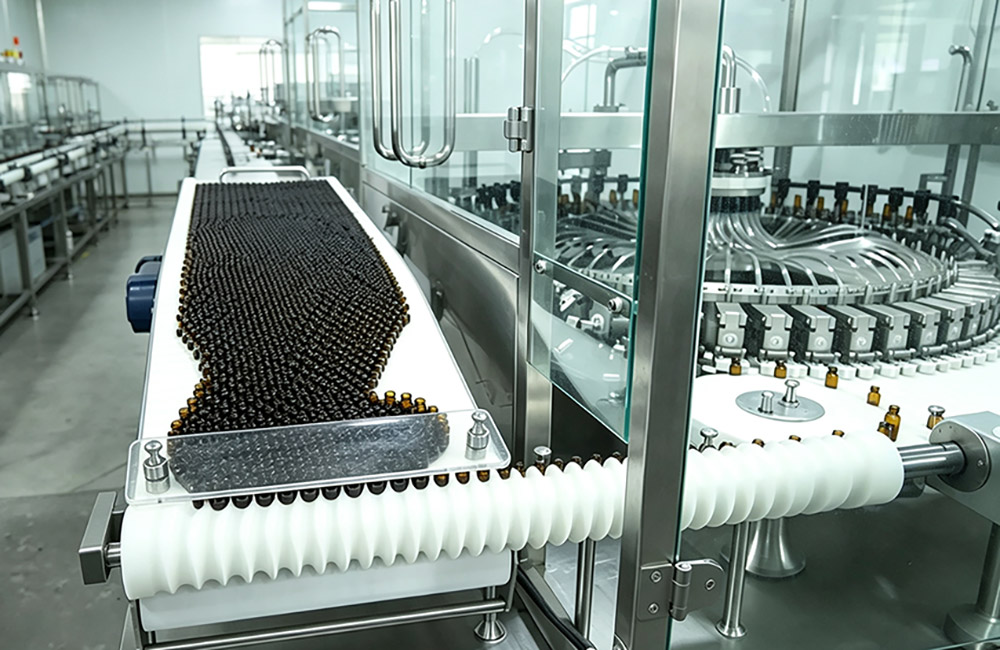
Sterilizing and Depyrogenation Tunnel: Heat That Cleans Deeper
Washing removes dirt. But it cannot deal with pyrogens. Pyrogens are heat-stable fragments of bacteria. They can make a patient feverish. Only intense heat breaks them down. In the tunnel, washed vials ride a conveyor through preheating, high-temperature, and cooling zones. All zones sit under HEPA-filtered laminar airflow. Think of it as a very clean, very precise oven for glass. This step prepares vials for the vial filling machine.
• Preheating zone dries the vials and raises the temperature gradually
• Hot zone typically runs at 250–350°C to destroy endotoxins
• Cooling zone brings vials down to a safe filling temperature
• Pressure differences keep air flowing from clean areas to less clean ones
Temperature is everything. If the hot zone is too cool or uneven, pyrogens survive. If it is too hot, the glass can suffer. Ask your supplier for temperature mapping, data logging, and a validation package. Also check how the tunnel hands vials to the filling area. A smooth, enclosed transfer keeps careful sterilization from going to waste. That transfer also protects the vial filling machine from contamination.
Vial Filling Machine and Stoppering: The Heart of the Line
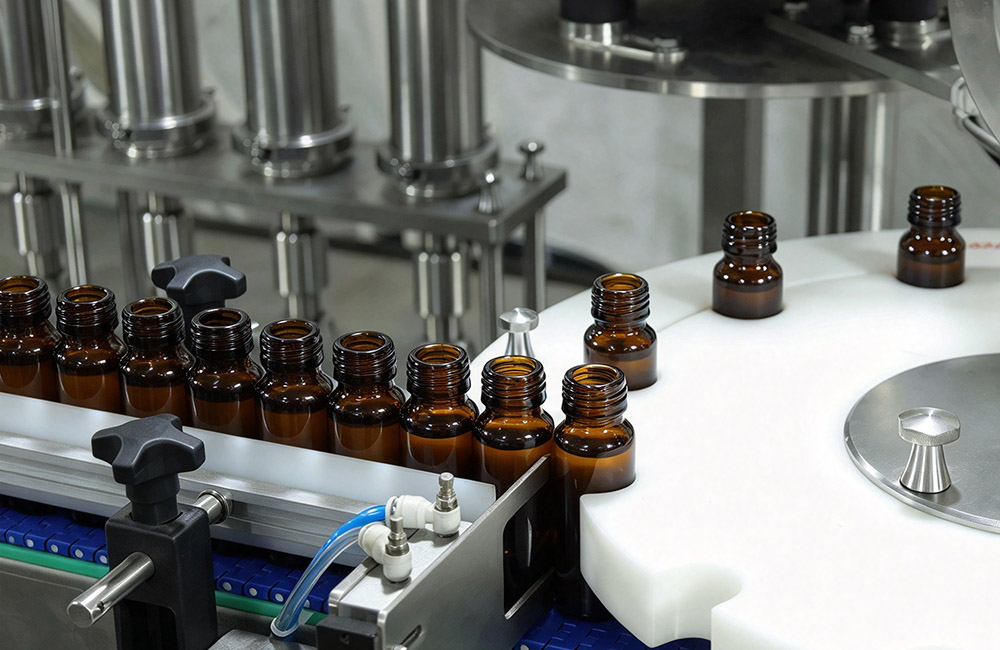
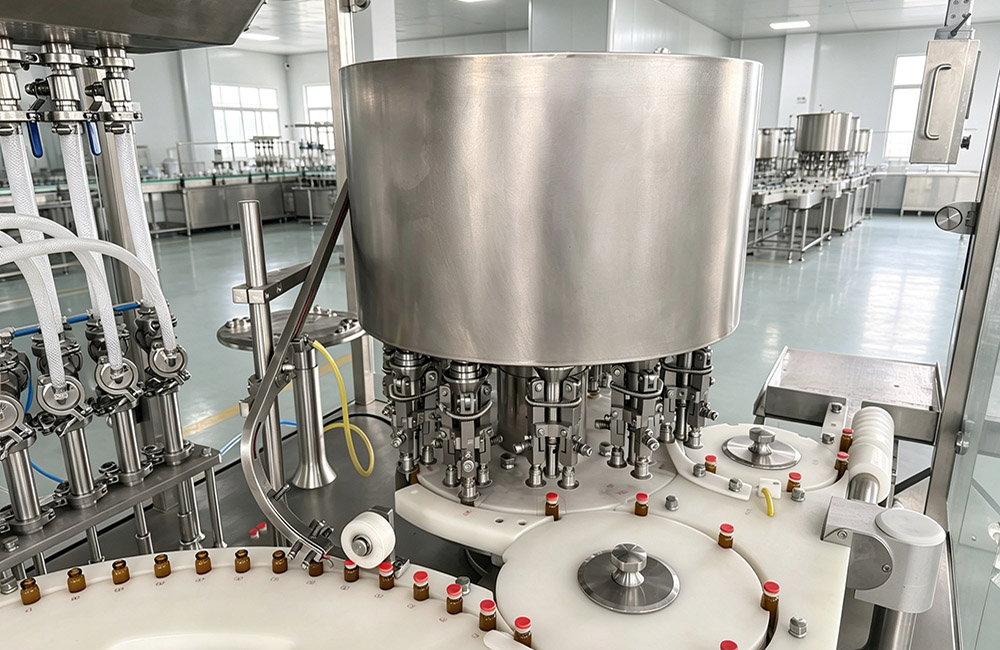
Now we reach the star of the show. A vial filling machine doses your liquid or powder into each sterile vial. Then it places a rubber stopper on top within seconds. This takes place in a Grade A (ISO 5) zone, usually inside an isolator or a restricted access barrier system (RABS). This is exactly the direction current GMP guidance such as EU Annex 1 points to. Accuracy and sterility matter most. A reliable vial filling machine must deliver both.
• Peristaltic pumps, piston pumps or time-pressure filling
• Fill accuracy often within ±1%
• Nitrogen purging for oxygen-sensitive drugs
• In-process weight checks to catch fill errors immediately
• Automatic stoppering and "no vial, no fill" protection
Choose by product, not by brochure. Thick or shear-sensitive liquids usually suit peristaltic pumps. Piston pumps are popular when you need tight accuracy. A flexible vial filling machine that handles several vial sizes will pay for itself as your product range grows. You can check out our vial filling machine to compare the configurations available. The right vial filling machine will fit your product and your line.
Freeze Dryer (Lyophilizer): For Products That Need to Stay Dry
Vaccines, antibiotics, and many biologics do not stay stable in liquid form. So they go to the freeze dryer, also called a lyophilizer. It removes water at low temperature. It leaves behind a dry, delicate cake that can sit on a shelf far longer than a liquid. After filling, vials are only partly stoppered. This lets water vapor escape. Then they are loaded into the dryer. The vial filling machine and the dryer must work as a team.
• Freezing step locks the product in solid form
• Primary drying removes ice through sublimation under vacuum
• Secondary drying removes the remaining bound moisture
• Automatic loading and unloading reduces manual handling
The drying recipe can make or break a batch. Dry too fast, and the cake can collapse. Dry too slow, and you waste time and energy. Match the dryer's capacity to your vial filling machine. Then neither one sits waiting for the other. Remember that stoppers are fully pushed in inside the chamber before the door opens. This keeps moisture out. A matched vial filling machine and dryer keep the line moving.
Capping Machine: Locking in Sterility
A stopper alone cannot hold a seal for long. An aluminum cap crimped over the top squeezes the stopper tight. So it stays put through shipping, storage, and temperature swings. For liquid products, capping happens right after filling. For freeze-dried products, it follows the dryer. When the crimp is right, the contents stay sterile until someone uses them. The vial filling machine sets the fill. The capping machine locks it in.
• Crimps aluminum, aluminum-plastic or flip-off caps
• Adjustable crimping pressure to avoid cracking the glass
• Stopper presence detection to reject unstoppered vials
• Particle-controlled design to keep the area clean
Crimping is a balancing act. Too loose, and you risk container closure integrity problems. Too tight, and you crack the vial neck. Rotary crimping heads tend to give a gentler, steadier seal at speed. Many plants also add sample-based checks, such as a seal force test, to prove the crimp works. A good vial filling machine does not help if the cap fails.
Vision Inspection Machine: Your Final Quality Check
Here is where machines beat people. A trained inspector gets tired after a while. A camera does not. A vision inspection machine checks every capped vial. It spins the vial gently so any floating particles show up clearly. This check protects the work of the vial filling machine.
It looks for glass fragments, fibers, cracks, cosmetic flaws, and wrong fill levels. Standards such as USP <790> expect injectables to be essentially free of visible particles. So this stage matters a lot for compliance. A vial filling machine can dose correctly, but inspection proves the vial is clean.
Rejected vials are diverted automatically. The images and data are saved for your batch records. This record also shows how your vial filling machine performed.
If you are planning this step, take a look at our vision inspection machine for automated checking of filled vials. It works well after any vial filling machine.
• Detects visible particles and fibers in the liquid
• Checks the glass for cracks, chips and scratches
• Verifies fill level and cap condition
• Records inspection data for batch reports
Labeling and Packing Equipment: Getting Vials Ready to Ship
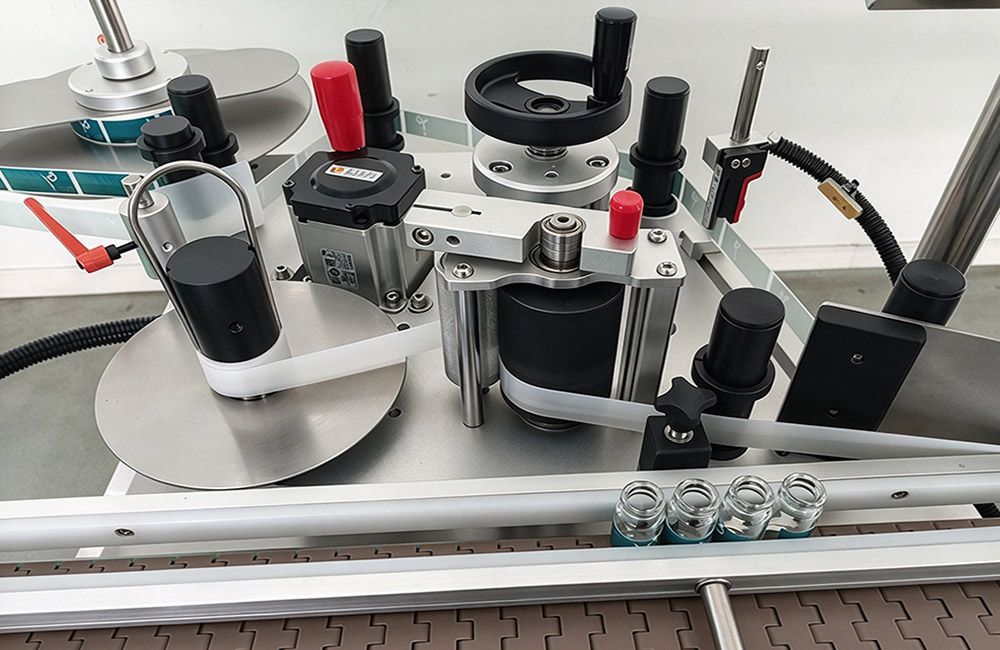
The last machine in the line is the labeling machine. It carries more weight than it looks. A label tells a nurse which drug, which batch, and what expiry date they are holding. So a mix-up can mean a recall. Good labelers print variable data on the spot. They use a camera to verify every label before the vial moves on. This step protects the filled vial from the vial filling machine.
• Self-adhesive labeling for round vials
• Online printing of batch number and expiry date
• Camera check to confirm label position and print quality
• Carton packing and serialization for traceability
After labeling, vials are packed into trays or cartons, often with leaflets. Then they are sealed for shipping. Many markets now require serialization and track-and-trace. So pick equipment that supports it from day one instead of retrofitting later. When labeling and packing connect smoothly to the machines upstream, your whole vial production line runs like one clean, efficient system.
A great vial production line is not about buying the most expensive machines. It is about choosing the right ones and keeping them in the right order: washing, sterilizing, filling and stoppering, freeze drying when needed, capping, inspection, then labeling and packing. Each stage protects the next. Start from your product, batch size, and target speed. Then choose a vial filling machine that fits and build the rest of the line around it. Ready to plan yours? Visit our vial filling machine page or talk to our team. We will help you map out the right setup. The right vial filling machine makes the whole line work better.
FAQ
1. What equipment is in a vial production line?
A typical line includes a washing machine, a sterilizing and depyrogenation tunnel, a filling and stoppering machine, a freeze dryer (for lyophilized products), a capping machine, a vision inspection machine, and labeling and packing equipment. A vial filling machine is the central unit in this line.
2. What does a vial filling machine do?
It measures the exact amount of liquid or powder product, fills it into sterile vials, and stoppers them right away. A vial filling machine does all this inside a controlled, sterile environment.
3. Do all vials need to go through a freeze dryer?
No. Only products that are unstable in liquid form, such as many vaccines and biologics, need freeze drying. Liquid products go straight from filling to capping.
4. Why is a depyrogenation tunnel necessary?
Washing cannot remove pyrogens, which can cause fever in patients. High-temperature treatment in the tunnel destroys them and sterilizes the vials at the same time.
5. How accurate is vial filling?
It depends on the pump type and the product. But accuracy within about ±1% is common. Piston pumps can often do better.
6. How do I choose the right equipment for my line?
Start with your product type, batch size, and output speed. Then make sure each machine matches the others in capacity. Each machine should support sterile operation and meet the regulations in your target market.