
What Is a Capsule Filling Machine and What Are Its Main Applications?
What Is a Capsule Filling Machine and What Are Its Main Applications?
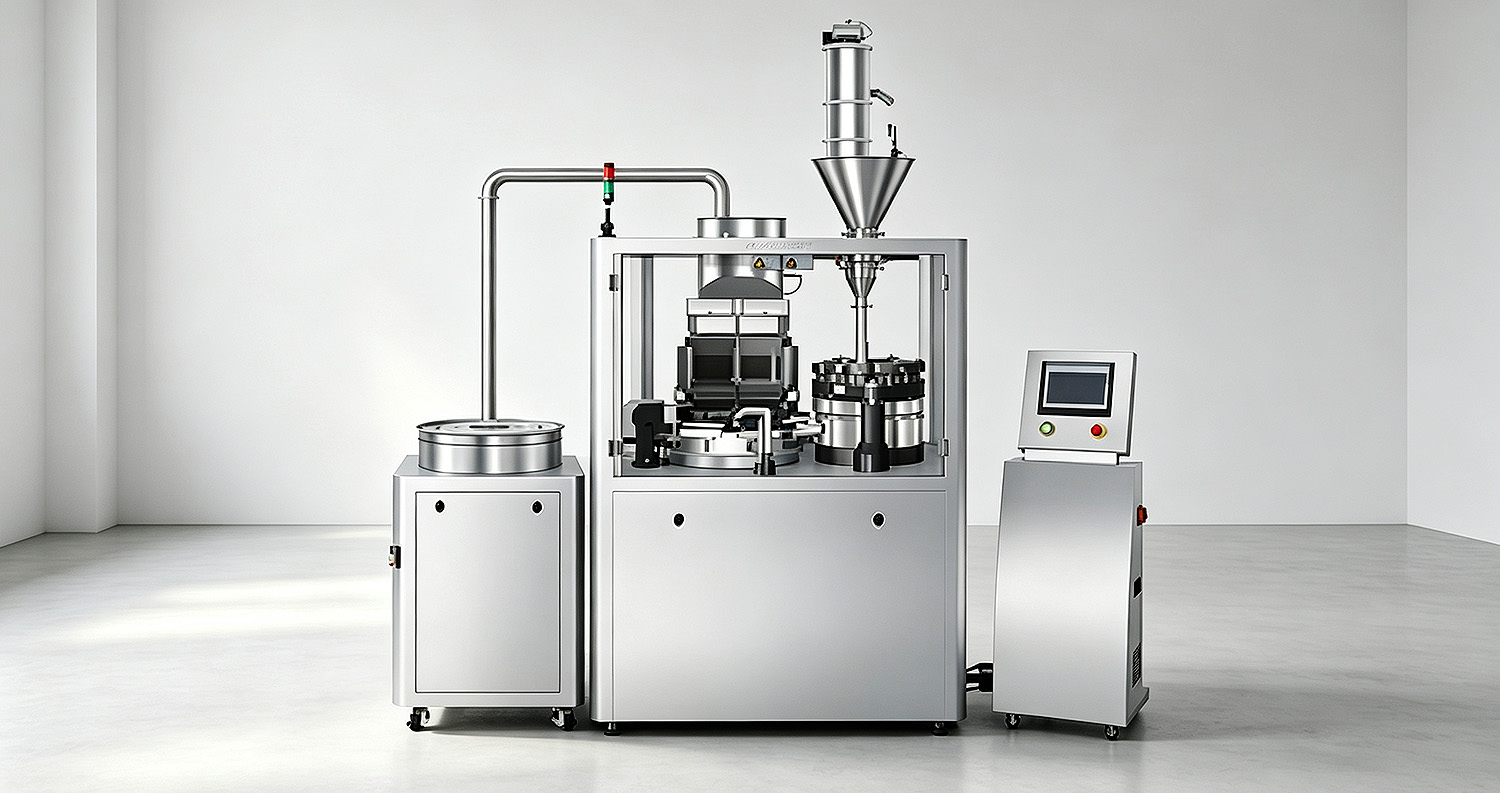
If you have ever taken pills or dietary supplements, you have directly benefited from the existence of capsule filling machines, even if you were not aware of it. Nearly all of the capsules you encounter in pharmacies and health‑product stores are produced using such equipment. This guide explains what capsule filling machines are, how they operate, and where they are used, with clear descriptions and practical examples.
What Is a Capsule Filling Machine?
A capsule filling machine is a type of specialized equipment that fills empty hard gelatin or plant‑based capsules with precise doses of powder, granules, pellets, or even liquids. Essentially, it acts like an intelligent dispensing system that loads capsule bodies, measures the filling material, and snaps the caps into place, all while ensuring cleanliness and product consistency throughout the process.
The specifications of these machines vary widely: small manual models can only process dozens of capsules per batch, whereas large automated units can achieve outputs of over 100,000 capsules per hour. Regardless of the model, the core purpose of any capsule filling machine is to guarantee that every single capsule has the same fill weight and volume.
For the pharmaceutical and nutraceutical industries, such filling accuracy is not merely an advantage but a mandatory requirement. Without this technology, the large‑scale, stable production of capsules would be nearly impossible, and patients would not receive uniformly‑dosed medications.
Main Components of a Capsule Filling Machine
A standard capsule filling machine may appear structurally complex, but it actually consists of several core components that work together in a coordinated manner. Its primary stations include a hopper for feeding empty capsules, a dosing disc for metering the filling material, a filling station for loading the material into the capsule bodies, and a closing station for pressing on the capsule caps. A turret or indexing mechanism transports the capsules sequentially through each of these stations. Modern machines are also equipped with sensors and touch‑screens for monitoring the equipment. The five key components are described below:
1.Hopper and Capsule Separation Mechanism: This component holds thousands of empty capsules and separates the caps from the bodies using vacuum or mechanical grippers. As this is the first processing step, any jamming here will shut down the whole machine. Therefore, this component must deliver gentle motion combined with high reliability.
2.Dosing Mechanism: Depending on the machine model, this may use tamping pins, metering discs, or piston assemblies. It quantitatively picks up powder or granules from the material trough and compresses them into plugs that fit perfectly inside the capsule bodies.
3.Filling Station: This station pushes the pre‑formed plugs or liquid materials into the capsule bodies. For powder processing, multiple‑stage tamping is commonly used to compact the material to a uniform density and prevent spillage.
4.Closing Station: This station picks up the capsule caps, aligns them, and presses them onto the filled capsule bodies. It also verifies that the capsules are securely locked, which prevents cracking or opening during subsequent packaging and transportation.
5.Ejection and Cleaning System: Finished capsules are pushed onto a conveyor or collection tray. At the same time, vacuum devices or brushes remove residual powder from the tooling to ensure cleanliness for the next production cycle and lower the risk of cross‑contamination.
How Does a Capsule Filling Machine Work?
Although the whole process sounds complicated, it relies on the precise coordination of mechanical structures and timing sequences. Empty capsules are fed into the machine and oriented so that all bodies face down and all caps face up. The caps are then separated from the bodies, and the capsule bodies are held within a ring of holes. The dosing unit draws material from the hopper, compresses the powder into plugs, and pushes each plug into its corresponding capsule body. The caps are then retrieved and locked into place with appropriate pressure. Finally, the filled capsules are ejected from the machine. Hundreds to thousands of these cycles take place every minute. The five key steps are detailed below:
1.Capsule Orientation and Separation: Vibratory feeders orient the capsules so that the caps drop upward into bushings. Vacuum suction then pulls off the caps, leaving the capsule bodies in the lower bushings, ready for filling.
2.Powder Preparation and Dosing: The filling materials are continuously stirred to prevent caking. As the dosing disc rotates, tamping pins compress the powder into plugs whose volume matches the inner space of the capsules.
3.Plug Transfer: The plugs are ejected from the dosing disc and delivered into the waiting capsule bodies. For liquid or pellet filling, nozzles or piston assemblies are used instead, but the shared goal is precise material feeding.
4.Capsule Closing: The upper bushings, which carry the caps, move down to meet the filled capsule bodies. Closing rods apply gentle pressure until the caps and bodies click firmly into a locked position.
5.Ejection and Quality Inspection: The completed capsules are pushed onto collection trays. Many machines integrate weight‑checking or vision‑inspection systems to automatically reject any defective capsules that have insufficient weight or deformed shapes.
Types of Capsule Filling Machines
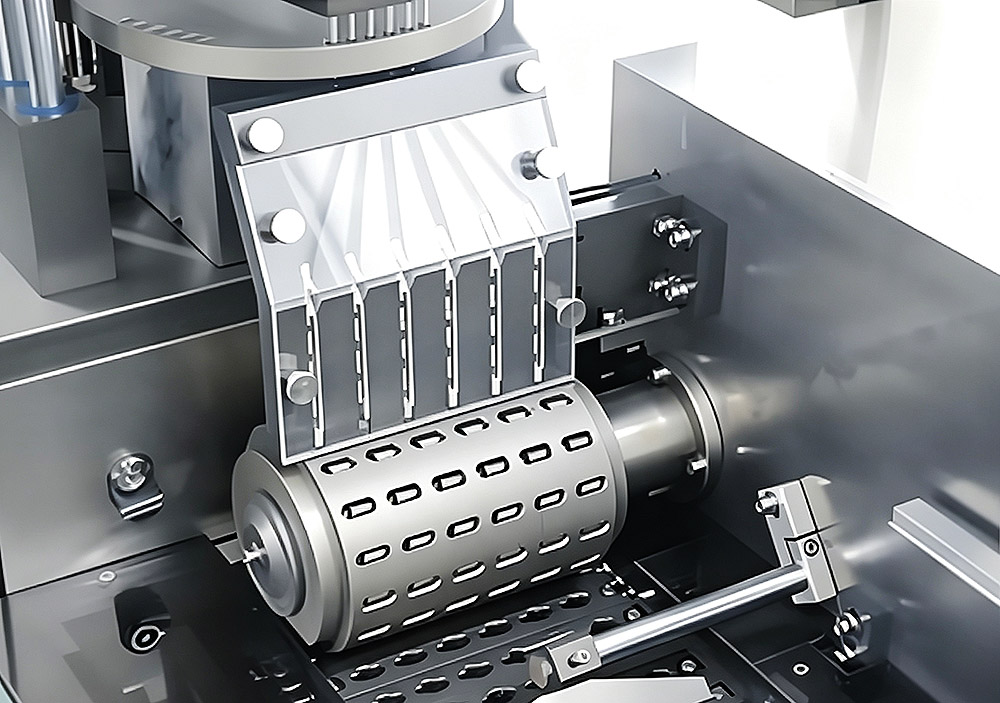
Capsule filling machines are generally categorized into manual, semi‑automatic, and fully‑automatic types, which are suited to different production scales. Compact manual units are operated entirely by hand and are ideal for R&D trials and small‑batch nutraceutical production on a benchtop, achieving outputs of 50‑100 capsules per hour. Semi‑automatic machines use motor‑driven filling and closing mechanisms but still require manual feeding of empty capsules, with outputs ranging from 1,000 to 5,000 capsules per hour. Fully‑automatic machines handle everything from capsule orientation to ejection without any manual intervention, delivering outputs of 10,000‑200,000 capsules per hour. There are also specialized models for liquid filling and enteric‑coated capsules, and some units can handle both powders and pellets. The common categories are listed below:
1.Manual Capsule Filling Machines: These are constructed with perforated acrylic or metal plates. Operators spread the powder over the plate, scrape it into the capsule bodies, place the caps, and press them closed manually. They are low‑cost but slow and labour‑intensive.
2.Semi‑Automatic Capsule Filling Machines: These are equipped with motor‑powered tamping and closing mechanisms, although empty capsules must still be loaded manually. They are suited for small‑to‑medium‑sized enterprises that need to balance output with capital investment.
3.Fully‑Automatic Capsule Filling Machines: These are the workhorses of large‑scale pharmaceutical plants. They integrate conveyor lines, automatic capsule feeding, real‑time weight monitoring, and self‑cleaning routines.
4.High‑Speed Rotary Capsule Fillers: This is a sub‑category of fully‑automatic machines. They use rotary turrets fitted with multiple filling stations to deliver extremely high speeds, often exceeding 150,000 capsules per hour, making them ideal for mass production of blockbuster drugs.
5.Liquid and Pellet Fillers: These machines lack powder‑tamping structures and instead process non‑powder materials using peristaltic pumps and vibratory feeders. They are indispensable for manufacturing softgels and bead‑filled capsules.
Main Applications in the Pharmaceutical Industry
Pharmaceutical manufacturers widely use capsule filling machines to produce prescription drugs, over‑the‑counter medicines, and clinical‑trial samples. Their greatest strength lies in their precise dosing capability: every capsule contains the active ingredient with only minimal deviation in milligram dosage. By adjusting the tamping pressure and filling depth, these machines can process a wide range of powders, from free‑flowing to sticky types. Additionally, the capsule shells protect heat‑ and moisture‑sensitive pharmaceutical ingredients. Typical products include antibiotics, antihistamines, antihypertensives, and analgesics. Five specific application scenarios are described below:
1.Antibiotic Capsules: Antibiotics such as amoxicillin are frequently encapsulated because of their good powder stability and the ability to adjust the dosage accurately according to patient body weight.
2.Cardiovascular Medicines: Many anticoagulants and statins are available in capsule form. Capsule filling machines ensure consistent micro‑dosing, which is critical for cardiac patients.
3.Hormone‑Replacement‑Therapy Products: These require extremely strict dosage tolerances. Fully‑automatic machines fitted with in‑line checkweighers automatically reject any capsules that fall outside the target‑weight range.
4.Pediatric Medications: Capsules can be opened and the tasteless powder mixed into food for children. Machines fill tasteless powder that is suitable for mixing with applesauce and other foods.
5.Clinical‑Trial Materials: During drug development, small‑batch samples with varied dosages are often needed. Capsule filling machines allow for quick dosage adjustment without reconfiguring the entire production line.
Applications in Nutraceuticals and Dietary‑Supplement Sectors
The nutraceutical industry has expanded rapidly over the past decade, and capsule filling machines have become core production assets. Most of the bottled supplements on the market, such as Vitamin D and probiotics, are manufactured using these machines. Capsules are easy to swallow, they mask unpleasant raw‑material odours, and they support multi‑ingredient formulations. Nutraceutical producers commonly choose semi‑automatic or fully‑automatic models to achieve million‑unit outputs while keeping manufacturing costs under control. Plant‑derived vegetarian capsules are also growing in popularity, and modern fillers handle them just as well as gelatin capsules. Five typical nutraceutical applications are listed below:
1.Multivitamin Capsules: These contain dozens of vitamins and minerals. Machines homogenize the blend and fill each capsule with a complete daily‑dose formulation.
2.Probiotic Capsules: Live bacterial strains are sensitive to temperature and humidity. Capsules provide air‑tight protection, and the gentle filling processes help preserve strain viability.
3.Herbal‑Extract Capsules: Turmeric, ashwagandha, and green‑tea extracts are widely used. Special metering screw feeding assemblies can be fitted to handle fibrous and oily powders.
4.Omega‑3 Fatty‑Acid Capsules: The raw materials are mostly liquid or semi‑solid. Dedicated liquid capsule filling machines use pump‑based filling to prevent oxidation during softgel or hard‑capsule production.
5.Sports‑Nutrition (Amino‑Acid) Products: Branched‑chain amino acids (BCAAs) and glutamine are mass‑produced for fitness consumers. Machines run at high speed to meet peak‑season market demands.
Other Industries Using Capsule Filling Machines
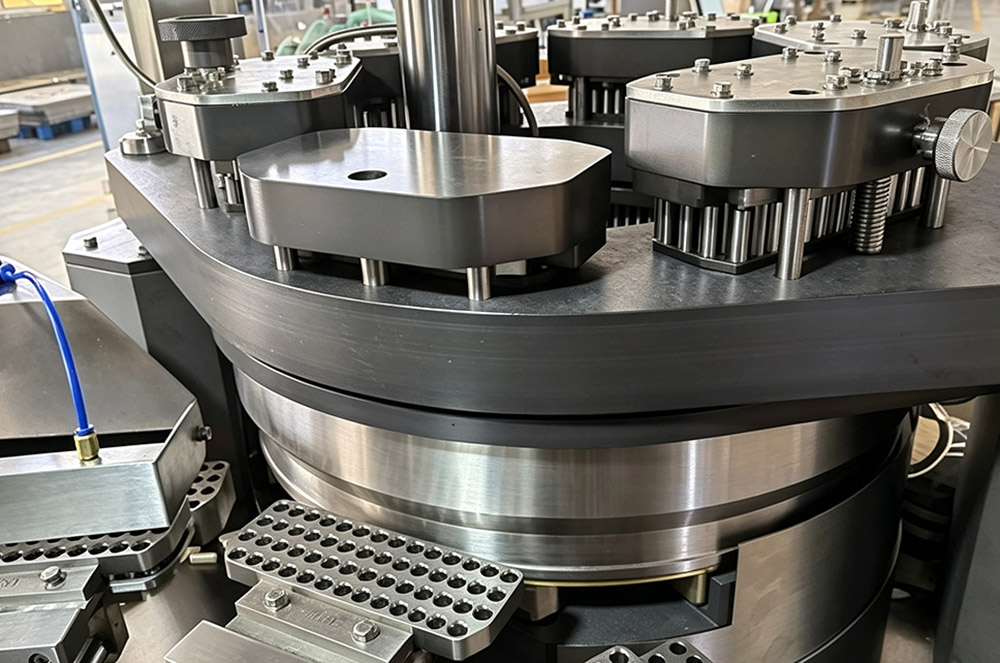
Beyond pharmaceuticals and nutraceuticals, capsule filling machines have a wide range of applications in other industries. Cosmetic manufacturers use them to produce single‑dose facial powders and serum pearls. The food industry uses them to make flavour beads, oversized coffee capsules, and portion‑controlled spice blends. Veterinary medicine also makes substantial use of these machines, with capsules filled with deworming agents and joint‑care supplements for pets. Research laboratories use small manual units for new‑formula bench‑scale trials before moving to production scale‑up. The versatility of the equipment is constantly improving, as manufacturers innovate to handle special materials such as sticky honey powder and abrasive minerals. Five niche‑use examples are given below:
1.Skincare Capsule Pearls: Certain facial exfoliating and brightening powders are made into dissolvable capsules. Machines fill ultra‑fine powders without damaging the particle structures.
2.Instant Coffee / Tea Capsules: These are larger in size but work on the same principle; metered coffee powder or tea extracts are sealed inside capsule shells.
3.Pet Supplements: Deworming and joint‑support products are encapsulated so that they can be easily mixed with wet pet food. Machines process identical powders to those used for human‑targeted nutraceuticals.
4.Agricultural Micronutrients: Capsules are used to encapsulate trace minerals for livestock. Machines handle high‑density materials that tend to clog alternative equipment.
5.Forensic and Chemical Testing: Laboratories prepare capsule‑form reference standards for calibrating analytical instruments, ensuring uniform composition across every reference sample.
How to Select a Suitable Capsule Filling Machine and Supplier
When purchasing a capsule filling machine, speed alone is not the only factor to consider; you must also match the equipment to your material properties, batch sizes, and budget. First, define your daily output: manual or semi‑automatic units are sufficient for below 5,000 capsules per day, while fully‑automatic rotary machines are preferred for outputs above 50,000 capsules daily. Next, evaluate the flow characteristics of your powder: sticky and damp powders require forced‑feeding and anti‑clogging structures. Change‑over time is also important; quick‑change tooling can save many working‑hours when you produce multiple products. For pharmaceutical manufacturing, stainless‑steel construction and CIP (Clean‑in‑Place) systems are non‑negotiable requirements for cleanliness. At the same time, you should assess the supplier's after‑sales reputation, spare‑parts availability, and training services. Five practical purchasing tips are provided below:
1.Evaluate Your Production Capacity: Clarify your production targets. Manual machines are suitable for <1,000 capsules/hour, semi‑automatic for 1,000‑10,000 capsules/hour, and fully‑automatic for >10,000 capsules/hour. Over‑specification wastes capital, while under‑specification restricts business expansion.
2.Material Testing: Ask suppliers to run your raw materials on their machines. Observe for material segregation, sticking, and fill‑weight fluctuation to avoid post‑purchase problems.
3.Compliance and Certification Verification: For pharmaceutical use, confirm that the machine complies with GMP and FDA requirements. For food‑grade applications, verify that the materials are food‑safe and that the structure is easy to disassemble for cleaning.
4.Maintenance and After‑Sales Assessment: Reliable capsule‑filling‑machine suppliers should provide on‑site installation, remote fault diagnosis, and a local stock of wearing parts such as tamping pins and bushings.
5.Evaluate Total Cost of Ownership: Look beyond the purchase price. Calculate energy consumption, cleaning duration, change‑over labour, and downtime losses. Low‑priced machines often incur higher long‑term overall costs.
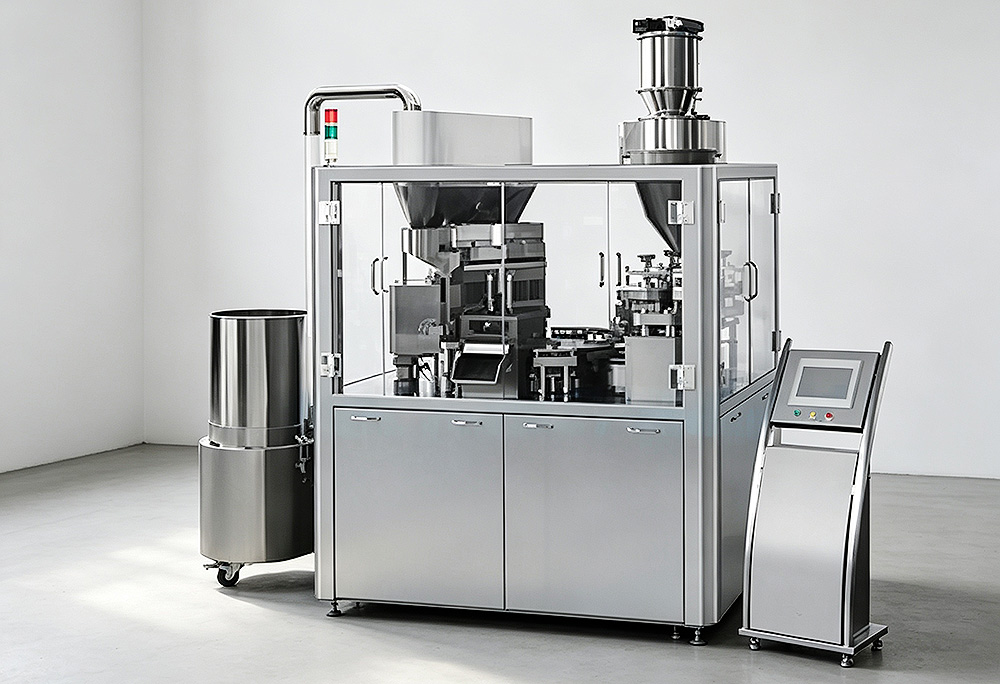
Key takeaways: The capsule filling machine is a multi‑functional, high‑precision device that converts loose raw materials into uniformly‑dosed, easy‑to‑administer capsule products. Whether for life‑saving pharmaceuticals, daily vitamins, or skincare capsule pearls, it delivers consistency and production efficiency that manual work cannot achieve. There are models available for every output level and material type, ranging from small benchtop manual units to high‑speed automatic systems. Choosing a trustworthy supplier helps you avoid costly losses and stabilize your production‑line performance. The next time you take a capsule, you will have a better understanding of its manufacturing process and the importance of dosing precision.
FAQ
1. What is the price range for capsule filling machines?
Prices vary greatly. Small manual units start at approximately 200,000. Semi‑automatic models generally cost between 30,000. The final price depends on output capacity, material construction, and optional features such as checkweighing and nitrogen purging.
2. Can one machine fill both powder‑type and liquid‑type capsules?
Generally, no. Powder filling and liquid filling require fundamentally different dosing mechanisms. A small number of modular machines do support dosing‑head swapping, but this solution is costly and not very common. Most manufacturers recommend using separate dedicated machines to preserve filling accuracy and prevent cross‑contamination.
3. How long does it take to clean a capsule filling machine?
The cleaning duration depends on the machine's design. Manual machines can be wiped clean within 15 minutes. Fully‑automatic machines with CIP systems require a full cleaning cycle of 1‑2 hours. Quick‑release tooling and smooth inner surfaces can drastically cut cleaning time, so it is wise to prioritize such configurations if you have frequent product change‑overs.
4. What is the maximum throughput of a capsule filling machine?
Top‑tier rotary machines can fill up to 200,000 capsules per hour, which is equivalent to roughly 55 capsules per second. However, such high throughput demands perfectly‑flowing powders and rigorous maintenance. For most mid‑sized enterprises, a throughput of 20,000‑50,000 capsules per hour is more than sufficient.
5. How do you select a reliable capsule‑filling‑machine manufacturer?
Prioritize suppliers with long‑term industry experience, positive customer feedback, and a global service network. Ask for industry‑specific customer references and visit their manufacturing facilities if possible. Qualified suppliers should offer material trial runs, comprehensive training, and solid warranties, and they should be transparent about lead‑times and spare‑part supply cycles.