
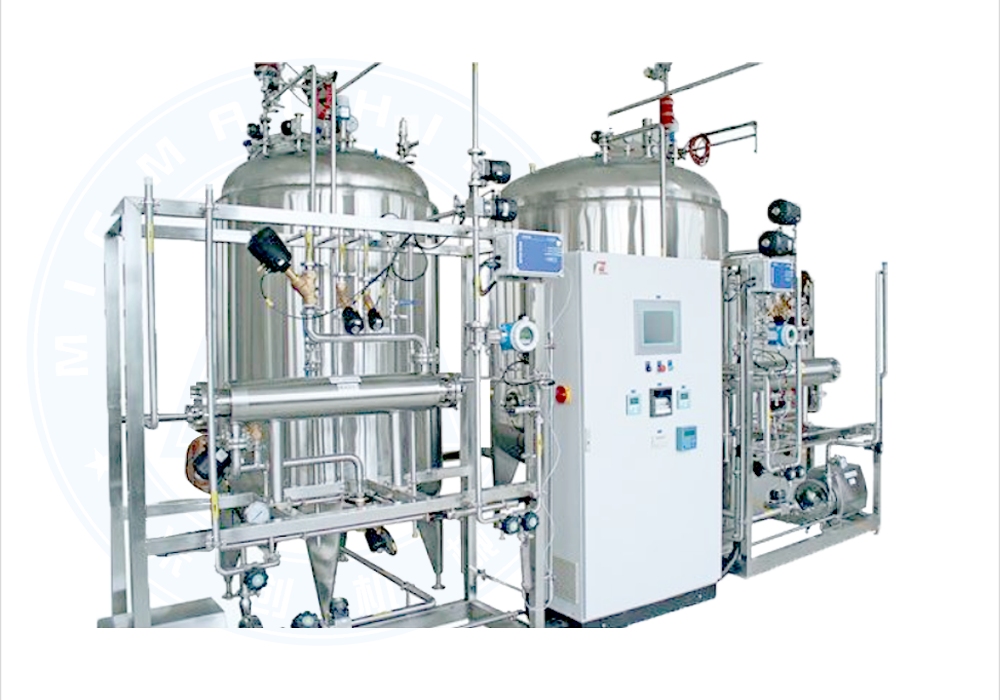
Distribution system pipeline
Distribution system pipeline
The Distribution system pipeline is tailor - made by the Distribution system pipeline manufacturer to fit customers’ on - site layouts and disinfection demands. Anchored in GMP, ISPE engineering guidelines, and FDA specifications, it optimizes space usage, streamlines operations, and deploys premium clean pipe fittings. Designed to eliminate dead ends and contamination risks, it ensures rational reflux control, aligning with user needs and verification standards for reliable Distribution system pipeline supply across industries.
feature
Compact installation, beautiful layout, reasonable use of space.
Process optimization and convenient operation.
Zero dead angle design.
Fully automatic welding.
Endoscopy detection.
Pressure test, pickling passivation treatment.
Application
- Industrial production: In industries such as chemical, petroleum, and pharmaceutical, it is used to transport liquid, gas, or gas-liquid mixtures to construct production processes, such as connecting equipment such as reaction vessels, separation towers, and storage tanks, to achieve precise material proportioning and synchronous supply to multiple workstations, ensuring continuous and stable production; it can also transport solid materials such as coal slurry and mineral powder, reducing transportation costs and pollution.
- People's livelihood protection: The city's water supply network delivers purified tap water to residents' homes to meet their daily water needs, support the city's economic operation, and also has the emergency response capability to deal with emergencies; gas pipelines safely transport natural gas and other energy to users, promoting the transformation of the energy structure; sewage pipelines collect and transport wastewater to treatment plants, and the rainwater and sewage separation design improves treatment efficiency, and sludge can also be utilized as a resource.
- Energy transportation: Long-distance oil and gas pipelines are used to transport energy across regions, ensuring energy supply in multiple areas; heating networks transfer heat energy, and through distributed heating stations, they achieve hierarchical regulation, energy conservation, and consumption reduction; chemical raw material pipelines transport various raw materials as needed, ensuring production safety and precise supply.
- Building systems include water supply networks, drainage systems, and gas pipelines within the building, meeting the building's water, drainage, and gas needs. Integrated utility tunnels centrally lay various pipelines for easy maintenance. Fire sprinkler systems play a role in extinguishing fires, while HVAC circulation pipelines achieve heat and cold transport and energy-saving control.
- Environmental protection: The sewage collection and treatment pipeline network collects sewage, wastewater, and rainwater separately, and discharges them in compliance with standards to prevent pollution; the exhaust gas collection and transmission pipelines conduct multi-stage purification and monitoring to prevent the spread of exhaust gas; the reclaimed water pipeline network is used for garden irrigation, etc., to improve the utilization rate of water resources.
- In the field of science and technology: it can be used as a particle beam transmission channel in particle accelerators, or in physical and chemical vapor deposition processes, and can also simulate the space environment to test satellite components, etc.
- Business and Logistics: Serving as a "pipeline" for enterprise product distribution, it helps business expansion, such as achieving rapid market penetration, cost optimization, and ensuring customer satisfaction. It leverages data-driven decision-making, risk management, and innovative market adaptation, as seen in models like Dell's direct sales, Zara's fast fashion delivery, and Amazon Logistics.
- Utility networks: In the distribution of public utilities such as water or gas, connecting trunk lines, distribution pipelines and fire hydrants, etc., to ensure the stable delivery of resources, such as drinking water pipelines and gas distribution pipelines, to ensure the needs of residents, industry and fire protection.
Please feel free to let us know if you need any help, we will provide a professional guidance for you! Contact Us