
How a San‑Antonio‑Based Manufacturer Upgraded Its Vial Filling Machine
How a San‑Antonio‑Based Manufacturer Upgraded Its Vial Filling Machine
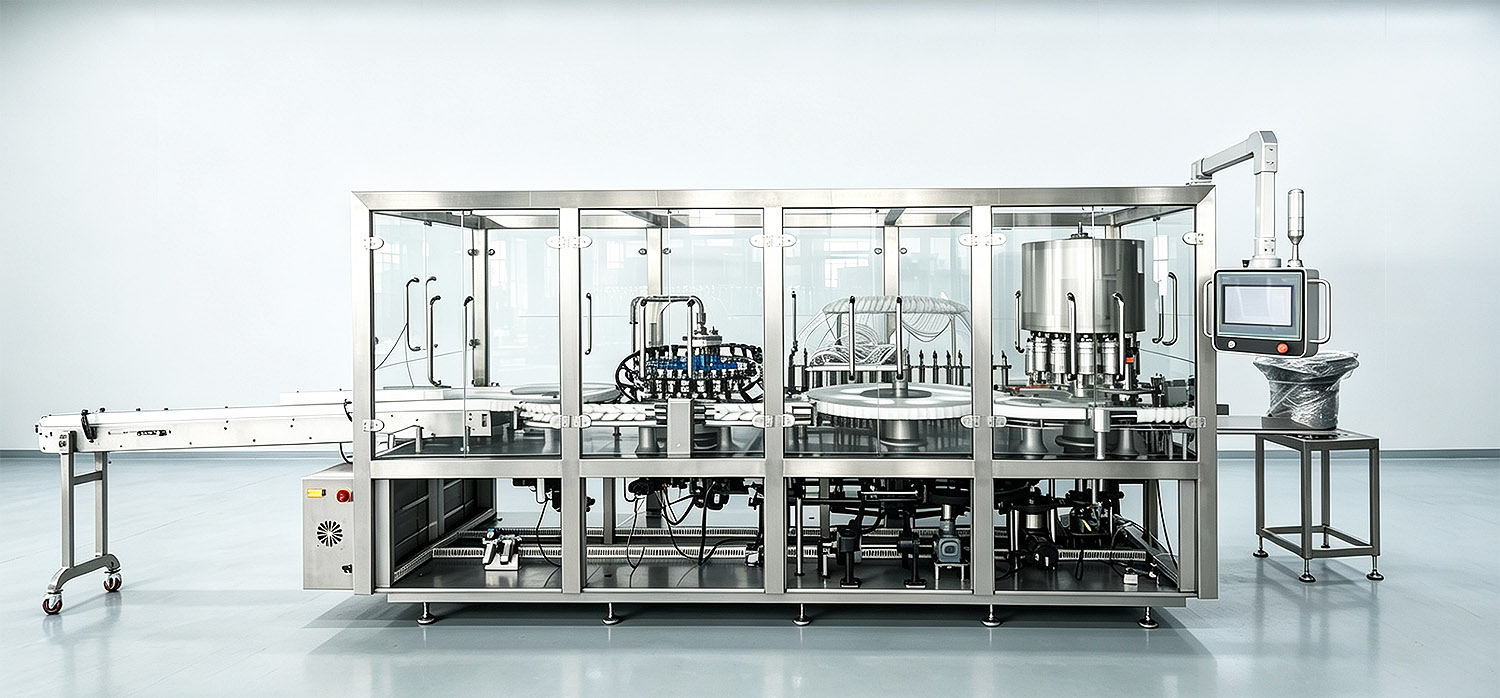
A mid‑sized health‑product manufacturer in Texas saw that its old semi‑automatic filling equipment could not keep up with rising order volumes. The company asked MIC Machinery for a reliable vial filling machine that was ready for production. The team then planned a small and compact upgrade. This project freed the customer from capacity limits and labour-heavy work. It also created a stable and repeatable automated filling workflow. The customer did not need to pay six figures for a full aseptic production line.
This case study records a real project for a vial filling machine. It covers the customer’s first pain points, the equipment setup we advised, the full installation and commissioning process, and the production gains the client measured. We removed the customer’s name, contact details, and contract information to protect confidentiality. All technical and commercial details below come from the real project.
Basic Project Information
|
Item |
Detail |
|
Customer Location |
San Antonio, Texas, USA |
|
Industry |
Healthcare & pharmaceutical product manufacturing |
|
Previous Equipment |
Manual/semi‑automatic vial filling bench |
|
Equipment Purchased |
1 set of automatic vial filling machine |
|
Target Output |
Small‑to‑medium‑batch liquid vial filling |
|
Contract Value |
USD 26,800 |
|
Shipping Term |
Ocean freight, FOB Shanghai |
|
Place of Origin |
Shanghai, China |
|
Destination |
San Antonio, Texas, USA |
The order was one self‑contained integrated unit. For growing manufacturers, automating the filling process before they buy a complete turn‑key production line is a very common first step. This vial filling machine gave them a simple start.
Customer Requirements & Pain Points
Before the customer worked with MIC Machinery, its team filled vials on manual benches. Operators placed each vial by hand, started the fill dose, and then moved the vial to the next station for capping. Many small and mid‑size manufacturers that scale up from pilot‑lab work face the same situation. This situation creates repeated challenges:
•Not enough throughput. Manual work could not keep up with order growth. The plant often worked overtime just to meet delivery deadlines. The vial filling machine later solved this.
•Frequent equipment failures. The old bench‑style unit stopped without warning again and again. Troubleshooting and repairs took a lot of time that should have gone to real production. A new vial filling machine was needed.
•Unstable filling accuracy. Manual dosing made fill volumes differ from vial to vial. This caused rework and led to many quality‑control alerts.
•Heavy labour reliance. Every vial needed constant manual handling. This tied up staff who could have worked elsewhere in the facility.
•No good starting point for automation. The customer was not ready to invest in a full aseptic filling line, but manual benches no longer met production needs. Many buyers who search for “reliable automatic vial filler for small‑batch production” face this same dilemma. They need a vial filling machine that fits their stage.
This is one of the most common enquiries from these buyers. They need a vial filling machine that bridges manual workflows and full‑scale production lines. They do not want six‑figure spending or half‑year installation cycles.
Custom‑Tailored Solution
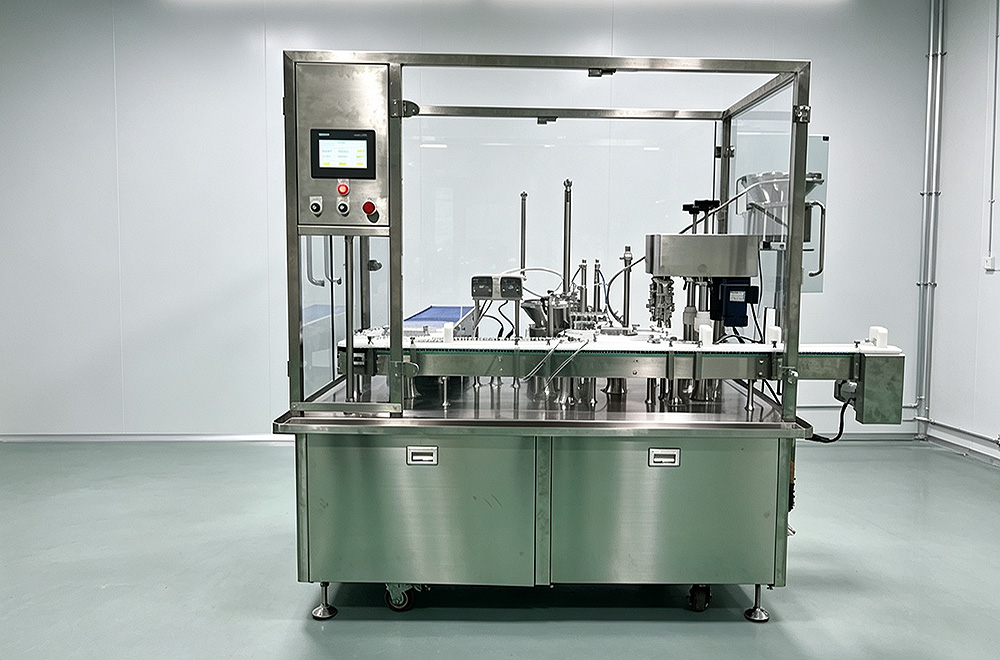
Our engineering team looked at the customer’s batch volumes, budget, and vial specifications. The team recommended the MIC Automatic Vial Filling and Stoppering Machine. This vial filling machine is an all‑in‑one standalone unit. It combines precise liquid dosing and inline rubber‑stopper insertion. It removes a separate stoppering step.
Key setups used for this project:
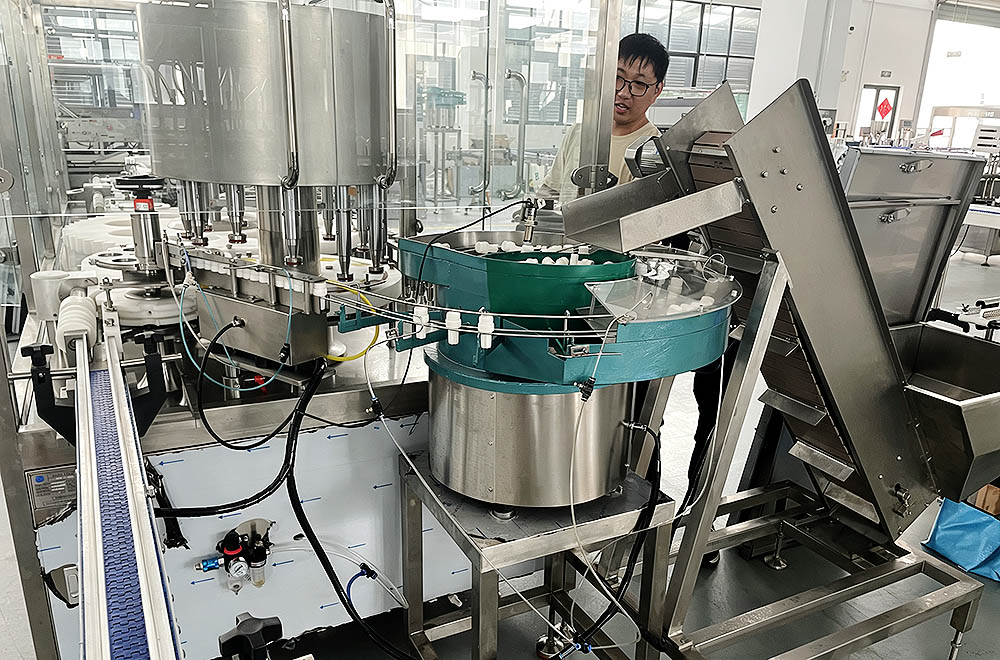
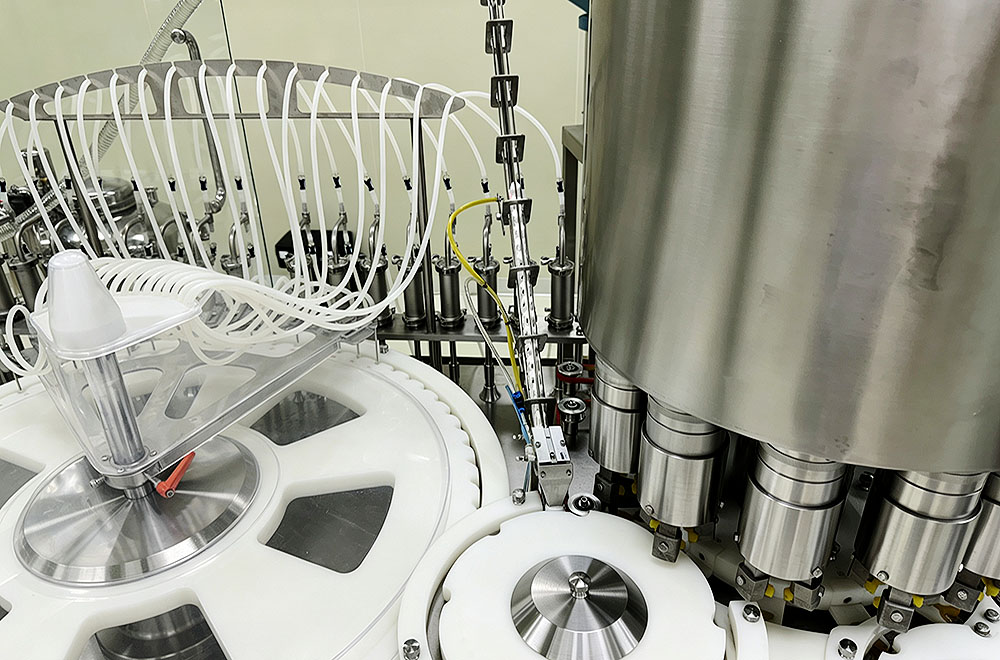
•Peristaltic‑pump dosing gives precise and repeatable fill volumes for liquids with different viscosities. It allows tool‑free change‑over for different vial sizes.
•Built‑in stoppering station. Filled vials leave the vial filling machine ready for capping. This removes one manual material‑handling step completely.
•304‑stainless‑steel product‑contact components make cleaning easy. They also help the vial filling machine meet general pharmaceutical‑hygiene standards.
•Compact machine footprint. The vial filling machine fits straight into the customer’s existing workshop layout. No plant‑floor reconstruction is required.
•PLC touch‑screen controls let operators save and recall production recipes for different vial sizes and fill volumes. One unit can support multi‑SKU production.
The project goal was clear. The customer needed an automatic vial filling machine that could fully take over the workload from old manual benches. The customer did not want to reconfigure the factory for oversized machinery.
On‑Site Installation & Commissioning
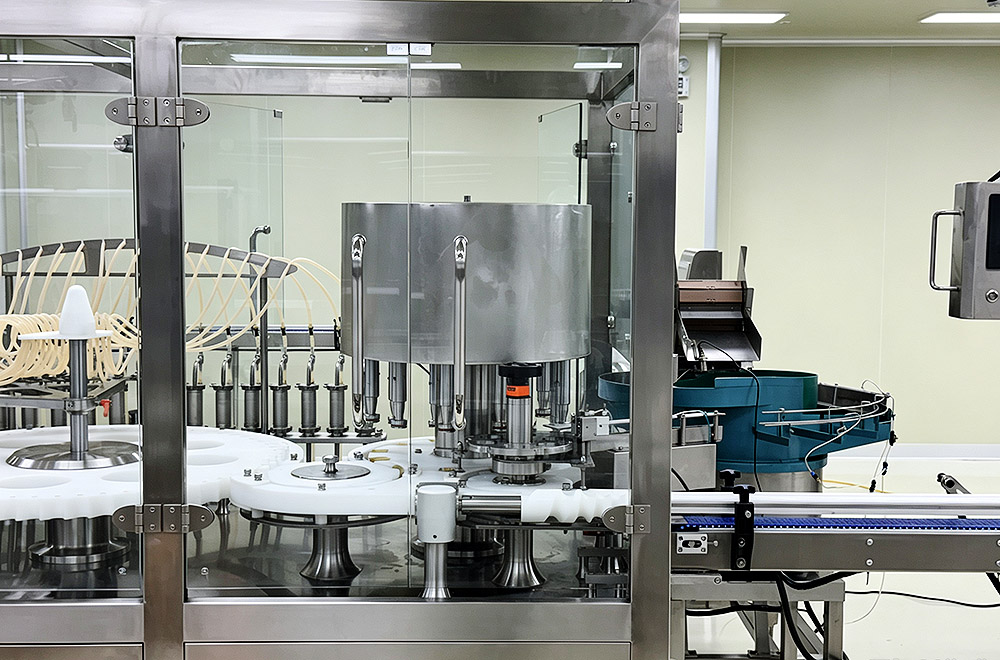
This order was for a compact standalone vial filling machine, not a multi‑machine complete line. So the team used remote‑guided commissioning instead of sending an engineer full time on site. For equipment of this size, this is a popular and cost‑effective way to start production.
Day 1‑2: Equipment Arrival & Unpacking
The vial filling machine arrived by ocean freight in heavy‑duty export wooden crates. The customer’s maintenance team unpacked it and checked it against the packing list. The team also took arrival photos to confirm there was no transit damage.
Day 3: Utility Connection & Machine Levelling
The team positioned and levelled the vial filling machine. They completed the power and compressed‑air connections. Our engineering team used a live video call to guide the customer’s technicians through every connection checklist item.
Day 4‑5: Remote‑Guided Commissioning
The customer’s team followed MIC Machinery’s official operation documents and live‑video technical support. They completed dry‑run cycles and calibrated the dosing pumps against target fill volumes. They also created the first production recipe for their chosen vial format on the touch‑screen HMI.
Day 6: Product Trial Production
The team ran real production material through the vial filling machine for the first time. They checked fill‑weight consistency across the whole batch. Our engineers stayed online to help fine‑tune pump speed parameters.
Day 7: Project Acceptance & Sign‑Off
Filling accuracy passed verification. The stoppering station was fully tuned. The customer signed acceptance documents to confirm production readiness. The team then completed full operational hand‑over to the customer’s production‑operations team.
This remote‑assisted workflow helped the customer start production about one week after the vial filling machine arrived. MIC Machinery’s technical support team stayed online the whole time. The team was ready for real‑time troubleshooting.
Production Outcomes
|
Metric |
Old Manual Bench Setup |
New Vial Filling Machine |
|
Average Throughput |
Approx. 35‑40 vials/min (operator‑limited) |
Approx. 90‑100 vials/min |
|
Operators Required Per Shift |
2‑3 personnel |
1 personnel |
|
Fill‑Volume Deviation |
Noticeable inconsistency caused by different operators |
Recipe‑governed, tightly‑controlled tolerance |
|
Vial‑Size Change‑Over Time |
30‑45 minutes |
Under 15 minutes |
|
Rework / Rejected Vials |
Regular occurrences |
Significantly reduced |
|
Unplanned Downtime & Breakdowns |
Frequent failures and repeated repairs |
Rare incidents |
|
Overtime Requirement |
Very frequent |
Minimal‑to‑none |
The customer reported one immediate improvement. The plant could fulfil full daily orders without extra staff or overtime hours. This was nearly impossible with manual workflows during peak seasons.
Customer Testimonials
Production Manager: “Our filling station was always trying to catch up with production deadlines. Now our schedule has some breathing room. The vial filling machine runs reliably shift after shift. It does not break down and eat away our production time like the old setup did.”
Maintenance Technician: “Our old bench needed constant attention just to keep running. Since we installed the new vial filling machine, unplanned downtime has almost disappeared. Now I can focus on preventive maintenance instead of emergency breakdown repairs.”
QA Lead: “Variable fill volume was our biggest quality risk when we worked by hand. After we switched systems, the number of vials flagged for rework dropped a lot.”
Plant Technician (Machine Operator): “Built‑in touch‑screen recipes make switching vial sizes simple. We no longer need to do a complete recalibration every time. Running this vial filling machine creates far less stress than the old bench.”
Request a Quote for Comparable‑Scale Production Lines
Every manufacturer has different filling needs. These needs include vial dimensions, batch volumes, and budget limits. MIC Machinery configures vial filling machines around real production targets. It does not push one‑size‑fits‑all standard units. That is why this project used a compact standalone unit, not a full complete line.
If you are reviewing vial‑filling equipment for your production capacity, we usually guide clients through these core points:
•Match machine speed to real order volumes. High‑speed lines give little value for small batches. On the other hand, under‑specified equipment quickly hits throughput ceilings.
•Select the right dosing technology: peristaltic pumps, piston pumps, or servo‑driven pumps. Product viscosity and required filling accuracy determine the choice.
•Plan ahead for future capacity growth. Many customers start with a standalone vial filling machine. They later add capping, labelling, or inspection stations as output grows.
•Regulatory and hygienic design needs matter. These needs include stainless‑steel product‑contact parts, easy‑to‑clean surfaces, and machine setups that support GMP‑compliant manufacturing.
•Global after‑sales support matters. This support includes installation guidance, operator training, spare‑parts supply, and remote troubleshooting, as shown in this case.
Share your vial dimensions, target fill volume, and daily output goals. Our team will then deliver tailored equipment configurations and quotations that match your real manufacturing demands.
Additional Vial Filling Machine Offerings from MIC Machinery
Your batch sizes, vial formats, and budget may make other configurations a better fit than the unit in this case study. Below are more options in our vial filling machine portfolio:
Vial Filling and Sealing Machine: This vial filling machine combines filling and sealing in one pass. It removes one material-handling step. It is similar in concept to the integrated stoppering solution used in this project, but it is optimized for sealing‑focused workflows.
Four Head Vial Filling Machine: This vial filling machine has four filling stations and a dual‑head capping‑and‑sealing assembly. It is designed for customers who have outgrown single‑head machines but are not ready for large‑scale high‑speed complete lines.
Double-head linear filling machine for vials: This vial filling machine uses a linear layout. It sits between compact single‑head units and large rotary systems. It is ideal for facilities with limited floor space.
Automatic Vial Filler: This vial filling machine targets manufacturers that have implemented entry‑level automation. It helps them move toward continuous high‑volume vial production.
Vial Packaging Line: This vial filling machine line is for clients that need downstream processing. It connects filling with later packaging stages into one production line.
You may also plan to add post‑filling labelling automation. If so, MIC Machinery’s labelling‑machine series is a logical upgrade after you implement filling capacity. Even if you exclude labeling equipment from your first purchase, it is worth including it in early project planning.
FAQ
1: How long does it take to receive a vial filling machine after I place an order?
For ocean‑shipped standalone‑machine orders, the typical lead time from order confirmation to goods arrival at your port is 6‑10 weeks. Production backlogs and maritime‑shipping routes can affect this time.
2: Can one vial filling machine handle multiple vial sizes?
Yes. Most MIC Machinery vial filling machines, including the model in this project, support recipe‑driven change‑overs. Operators can switch between different vial dimensions and fill volumes without extensive mechanical retooling.
3: Do I have to purchase a full complete line, or can I start with a standalone machine?
Many customers, like the one in this case, begin with one filling unit. They can add capping, labelling, or inspection stations step by step as output increases. You do not have to buy a full production line upfront.
4: What installation support can I get?
Support scope varies by order size. Small and medium standalone‑machine projects use remote video‑guided commissioning, which is the model used in this case study. For large multi‑machine production lines, we can arrange on‑site resident‑engineer services.
5: What filling accuracy can an automatic vial filling machine achieve?
Dosing‑mechanism design determines accuracy. Peristaltic‑pump and piston‑pump systems deliver high precision and high reproducibility. Their filling performance is far more consistent than manual filling workflows.
6: Are the machines built to pharmaceutical hygiene standards?
Yes. Product‑contact components are stainless steel with easy‑to‑clean surfaces. We can custom‑configure units to satisfy GMP production requirements.